


Renascene Influence On Dress. Continued
Description
This section is from the book "The Art Of Decoration", by H. R. Haweis. Also available from Amazon: The Art Of Decoration.
Renascene Influence On Dress. Continued
Compare the long plaited beards of the chief personages with the short and simple beards of the followers, Roman soldiers; the Gothic ' table dormant,' the little hound gnawing the rejected bones, and the general absence of perspective, with the advanced Renascence costumes. The simple roast fowl with larded bacon lie on a lordly silver dish, and the loving-cup goes round in the bridal party's honour - we will trust the latter have had or will afterwards get something to eat.
1 See note, p. 16.

Fig. 13. - Henry VIII. hat.
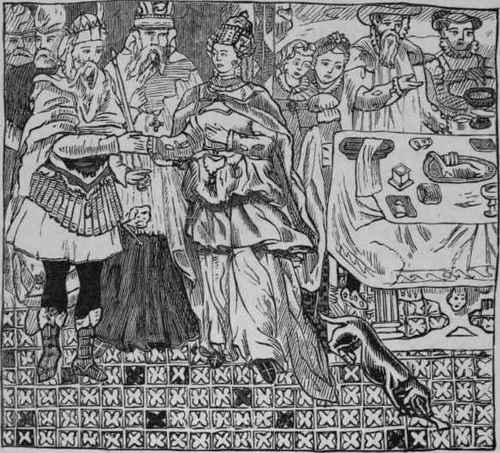
Fig. 14. - From early tapestry in the possession of the Rev. R. H. Haweis.
But Renascence influence on dress went farther than this. Men quadrupled their apparent muscle by branstuffed trunk-hose (fig. 15), cut into long slashes which recalled the warrior's plated protection, as in fig. 18, till their outline emulated, then excelled, the grotesquely developed figures which gesticulate on Greco-Etruscan pottery (fig. 16). The very lace was forced to be architectural, the heavy Spanish rose-point growing more raised and more solid as it seemed to recall a marble basso-relievo. Strangely enough, this was the decadence of a mode founded on art-research and enthusiasm for the grand antique.

Fig. 15. - Trunk-hose, with short waist and tabs derived from the classic.
To the same Greco-Roman excavations we trace the origin of the stomacher itself, the shot-bellied doublet, taken from the metal corslet with the magnified peak weighted with shot, and tabs. The tabs seen in Hollar's prints of middle-class women, square-shaped around the waist, but with a single round tab in front (fig. 21), long puzzled me. The square tabs are clearly traceable to the early Greek armour, belt and all; in fact, the whole bodice was not unlike fig. 19, when the stomacher gave way to the very short waist, itself drawn from the high-girt chiton. The first indication of the cape or scarf. called the 'falling whisk,' seemed to echo the shoulder pieces (fig. 17), which in later Greek took a stifler form (fig. 18), but the round tab in the centre, like the round stomacher, can, I think, only be attributed to some vague remembrance of the conventional drawing of heroic muscles, called rectus and obliquus externus (fig. 21).

Fig. 16. - Etruscan figure, from a vase.
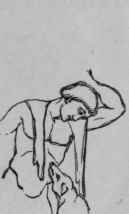
Fig. 17.
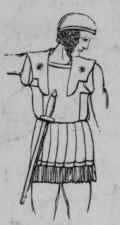
Fig. 18. Early Greek figures.

Fig. 19.
In fact, there is hardly any detail of costume belonging to the classics, which we cannot see echoed in England between the fifteenth and nineteenth centuries. The small shawl-like himation ( ) had its counterpart in the floating scarf so often seen in Renascence pictures - at times foolishly combined with a stiff bodice, as in 'Titian's Daughter' raising the casket above her head, and the Magdalene in Rubens's 'Descent from the Cross' - and a similar scarf came in vogue in Empire times. The slashed shoe of Henry VIII. and the high shoe of Cromwell were both copied from the classic, as I showed in my 'Pedigree of Shoes,' in the 'Art Journal." Sandals were simulated by trimming, as in the nineteenth century they were simulated by emasculated ribbons; while the hair went through various metamorphoses, in which one classic fashion succeeded another. The browband, with side-curls or with the 'bull-front,' a very common Roman hair-fashion, which always comes to the fore during a classic fit, was one of the Stuart modes. Our different renderings of the high Greek knot in Elizabethan and in Napoleonic times, is clearly shown in figs. 11 and 12, page 95. But as old Rome herself modified old Greek decorations according to her own passion for ornate self-display, so the costumes of Elizabethan pseudo-classicism developed in the direction of bulk; while those of the Empire, rather Spartan than Roman, developed in the contrary direction - nothingness.
1 'The Aesthetics of Dress,' Art Journal, April, May, and July, 1880.

Fig. 20. - Pease-cod bellied doublet, from Bertelli.

Fig. 21. - Figure of Hercules, showing the muscles which may have originated the round tab.
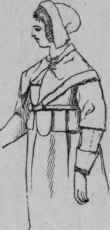
Fig. 22. - Tabs: from a print by Hollar.

Fig. 23. - Renascence version of a classic fashion.

Fig. 24. - Empire version of the same.
Very different versions, too, of that prettier old Greek hair-fashion visible on some Syracusan coins - the knot, with curls beside the face - may be compared in figs. 22 and 23; the one seventeenth century, the other early nineteenth century rendering. The same may be said of figs. 25 and 26, by-the-by: the first being true classic and the last the decadence of its copy, about 1855.

Fig. 25. - A classic fashion (from Roman bust;.
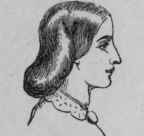
Fig. 26. - 19th century rendering of same.
And these two heads may be held symbolical of the inferior treatment of all matters artistic, which seems to distinguish ' Empire' from 'Stuart' classic furniture.


Continue to:


My Books

