


Chapter III. The Grotesque And Raphael Ornament
Description
This section is from the book "The Art Of Decoration", by H. R. Haweis. Also available from Amazon: The Art Of Decoration.
Chapter III. The Grotesque And Raphael Ornament
I HAVE before hinted that individual opinion ought to be respected, and I may hope for the indulgence of a few when I say that the grotesqueness of much classic art, notably that which was so popular during the Renascence, makes it unpleasant and unbecoming in rooms intended for daily use. This is especially visible upon the walls, for which many forms of art, charming elsewhere, are unsuited. Walls, though they may be bright, should never be obtrusive. They are a background, not a picture; they should contribute rest to the eye, because they are constantly on a level with it, and we cannot escape their influence. The grotesque1 is an element which is interesting when it comes unexpectedly and naturally, like caprices in a sweet nature, or trials in life which can be conquered and got over; but a life (or a friend) entirely made up of trials and caprices would be intolerably vexing, and too much of grotesque art is intolerable anywhere, but especially in a room one much inhabits, and wherein one should always find solace, calm, and delight.
The incongruities even in classic ornament, such as what we call Pompeiian, clever as that is, and cleverly as Renascence artists (nay, Raphael himself) caught up the same trick and manner, are to me tiring and unsatisfactory, like an uneasy dream, even when inspired by the hand whose supreme skill in this fashion, novel in his day, gave it for all time his name. The merely fanciful scrollwork, and the endive ornaments (an advance upon the acanthus) delivering themselves in unexpected places of chubby boys or grimacing heads, birds or nondescript dragons, or forming faces by their own curves even when beasts and birds are not introduced, as in fig. 27, are distinctly objectionable, I think, except in small quantities. The present cut, from a painted pilaster in a well-known church, is suggestive of fully six grotesque faces, and originally, I am persuaded that this suggestiveness was intentional. Much of the so-called 'Raphael ornament' on Italian pottery, friezes, etc, is wonderfully clever, good in colour, and admirable in its precision, ingenuity, and neat adaptation to the shapes of the objects it covers.
Still, a little of it goes a long way, and I should as little like to live in a room so decorated, even by Raphael, as I should in the gay rooms at Pompeii, so small that one could never get away from the clever little walls.
1 This word is said by some to re derived from the excavations or 'grottoes' at Rome, in which paintings were found of a character remarkable enough to coin a term for.

Fig;. 27. - 'Raphael ornament.'
The horrible creations miscalled 'Raphael,' which come into vogue by fits every few years - impossible conglomerations of boys, ribbons, swans, butterflies, and boneless dragons, mixed up without regard to relative proportions and weights, on curtains, gowns, chintzes, tea-cups, panels, tiles, even bonnet strings - are still less .adapted to sitting-rooms than the prototypes. Stencilling and freehand arabesques are best suited to long corridors and passages, where the images are quickly passed and forgotten after the momentary impression At the same time, since houses ought to reflect their owners' taste, if people like this kind of thing they should be allowed to have it; and we may fairly allow that, when good of its kind, it has a certain charm in certain places. Some people like it for its oddity; some for its endless variety of lines and tints; others like it for its associations with bright Italian days and brighter names. The studio of Mr. Alma Tadema, painted by himself, is perhaps the best example in England of modern Pom-peiian art.
The celebrated corridors in the Vatican at Rome, painted under Raphael's immediate supervision, are probably the finest known instance of the Renascence adoption of this kind of ornament.

Fig. 28. - Raphael ornament from the Loggia at the Vatican.
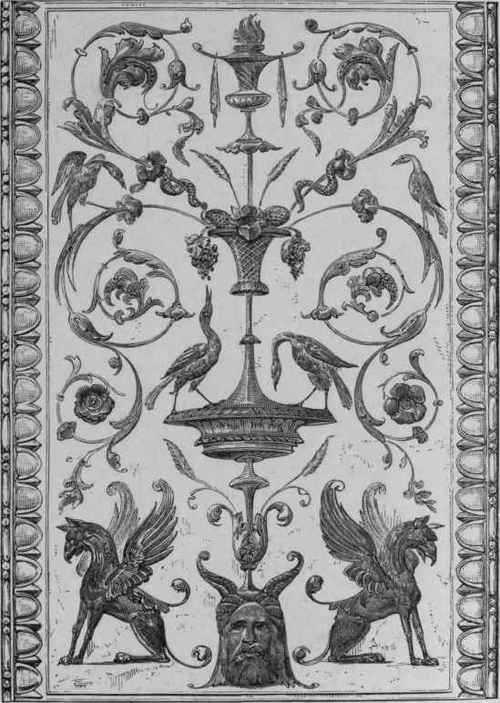
Fig. 29. - Raphael ornament from the Loggia at the Vatican.
To those who are attracted to this style I will give a few hints for the decoration of rooms.
Continue to:


My Books

