


Mosaics. Part 6
Description
This section is from the "Historic Ornament - Treatise On Decorative Art And Architectural Ornament" book, by James Ward. Also see Amazon: Historic Ornament - Treatise On Decorative Art And Architectural Ornament.
Mosaics. Part 6
In England, during the present half of this century, there has been several attempts to popularise mosaic decoration. Full-length figures of the chief ancient and modern sculptors, painters, and architects have been designed by Lord Leighton, Sir E. J. Poynter, E. Armitage, V. Prinsep, W. F. Yeames, F. W. Moody, and others; these have been executed in glass mosaic and in English ceramic mosaic, and form part of the decoration of the South Court in the Kensington Museum.
In the Houses of Parliament a mosaic has been executed from the design, "St. George," by Sir E. J. Poynter; and other examples are the mosaics on the monument to Prince Albert designed by Sir Gilbert Scott.
But the most important efforts during the last few years are the mosaic decorations in St. Paul's Cathedral.
From the year 1863 until 1892 the eight spandrels of the dome were filled with mosaics, the subjects being the four Evangelists, designed by Mr. Watts, R.A., and Mr. Brittan, and the four greater Apostles by the late Alfred Stevens. The work of these spandrels was carried out by Dr. Salviati of Venice.
In the spring of 1891 Mr. W. B. Richmond, R.A., undertook the great work of designing the cartoons, and of superintending the mosaic decoration of the eastern end of the cathedral, including the apse, the original sanctuary bay, and the choir.
The central panel in the roof of the apse is occupied with a representation of "Our Lord in Majesty," seated on a rainbow throne, and clothed in light-coloured robes. The background is composed of a great whirl of wings; the sun and moon are also represented. The panels on either side of this subject contain figures of the recording angels, which are Byzantine in style of design; as the whole of the mosaics are, but perhaps not so much in degree as the figures of these angels. Mr. Richmond had made a special study of the Ravenna mosaics, and was no doubt rightly influenced by the style of design and methods of execution of these early works.
The three saucer domes of the choir have subjects representing respectively the creation of birds, fishes, and animals of the land; and the pendentives of the saucer domes are each filled with figures of angels, their arms being extended, as if in the act of bringing down messages from heaven to the earth. Inscriptions in Latin, consisting of appropriate scriptural texts, explain the subjects of the pendentives.
The spaces at the sides of the clerestory windows are occupied with figures of the Sibyls, Prophets, builders of the Tabernacle or House of God, scenes from the Old Testament, and some secular figures.
The general effect of the mosaics is very rich, and the colouring exceedingly harmonious.
The Smalto Tesserae
The Smalto Tesserae used was made from opaque glass of many colours and shades, and the fractured edge was shown in every case as the surface of the mosaic; this was done in order to get greater brilliancy of colour, and to catch all the possible light that is reflected from the walls and floor of the church. Portland stone composed the panels, and brick was the background material of the saucer domes, and in order to get a bed for the cement and tesserae, these surfaces had to be cut away to a certain depth so that the mosaics would come flush when finished with the original surface. The tesserae were inserted into a bed of red mastic cement, made chiefly of a mixture of red lead and linseed oil, a cement which ultimately sets as hard as the stone itself. The execution of the work was entrusted to Messrs. Powell of London, who employed a large staff of skilled assistants in this successful achievement. The Saracens employed mosaic - as in the Alhambra in Spain - in the form of small tiles - azulejos - of glazed earthenware cut into geometric shapes, from which they made up their characteristic rectilinear patterns, and used this form of decoration to a great extent for walls, but rarely for floor pavements (Figs. 291, 292).
Some Beautiful Examples Of Mosaic Work
Some Beautiful Examples Of Mosaic Work in the nature of inlaid marbles and precious stones occur in the Mohammedan buildings in India, the chief of which are the Taj Mehal at Agra (Fig. 293) and the great palace at Delhi. The latter has been noticed in the chapter on Indian Architecture in the former volume, and an illustration of the inlaid marble hall is given at Fig. 329 in the same volume.
Fig. 291. Mosaic from the Alhambra.
Fig. 292. Saracenic Mosaic, from Monreale.
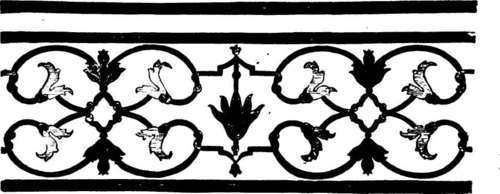
Fig. 293. Indian Mosaic, from the Taj Mehal.
Continue to:


My Books

