


Doors. Part 3
Description
This section is from the book "The Decoration Of Houses", by Edith Wharton, Ogden Codman Jr. Also available from Amazon: The Decoration of Houses.
Doors. Part 3
Great taste and skill were displayed in the decoration of door-panels and embrasure. In the earlier part of the seventeenth century, doors and embrasures were usually painted, and nothing in the way of decorative painting can exceed in beauty and fitness the French compositions of this period.1
During the reign of Louis XIV, doors were either carved or painted, and their treatment ranged from the most elaborate decoration to the simplest panelling set in a plain wooden architrave. 1n some French doors of this period painting and carving were admirably combined; and they were further ornamented by the chiselled locks and hinges for which French locksmiths were famous. So important a part did these locks and hinges play in French decoration that Lebrun himself is said to have designed those in the Galerie d'Apollon, in the Louvre, when he composed the decoration of the room. Even in the simplest private houses, where chiselled bronze was too expensive a luxury, and wroughtiron locks and hinges, with plain knobs of brass or iron, were used « instead, such attention was paid to both design and execution that it is almost impossible to find in France an old lock or hinge, however plain, that is not well designed and well made (see Plate XVII). The miserable commercial article that disgraces our modern doors would not have been tolerated in the most unpretentious dwelling.
1 See the doors at Vaux-le-Vicomte and in the Palais de Justice at Rennes.
The mortise-lock now in use in England and America first made its appearance toward the end of the eighteenth century in England, where it displaced the brass or iron box-lock; but on the Continent it has never been adopted. It is a poor substitute for the box-lock, since it not only weakens but disfigures the door, while a well-designed box-lock is both substantial and ornamental (see Plate XVII).
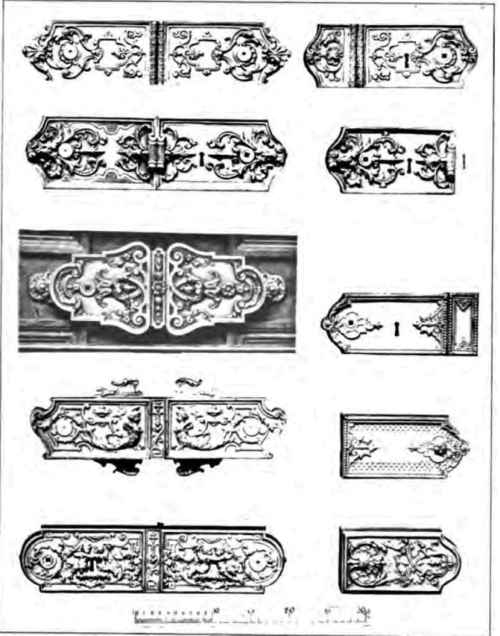
PLATE XVII. EXAMPLES OF MODERN FRENCH LOCKSMITHS' WORK.
In many minds the Louis XV period is associated with a general waviness of line and excess of carving. It has already been pointed out that even when the rocaille manner was at its height the main lines of a room were seldom allowed to follow the capricious movement of the ornamental accessories. Openings being the leading features of a room, their main lines were almost invariably respected; and while considerable play of movement was allowed in some of the accessory mouldings of the over-doors and over-mantels, the plan of the panel, in general symmetrical, was in many cases a plain rectangle.1

PLATE XIII. DRAWING-ROOM AT EASTON NESTON HALL, ENGLAND.
BUILT BY NICHOLAS HAWKKSMOOR, 1702. (EXAMPLE OF STUCCO DECORATION).
During the Louis XV period the panelling of doors was frequently enriched with elaborate carving; but such doors are to be found only in palaces, or in princely houses like the Hotels de Soubise, de Rohan, or de Toulouse (see Plate XVIII). In the most magnificent apartments, moreover, plain panelled doors were as common as those adorned with carving; while in the average private hotel, even where much ornament was lavished on the panelling of the walls, the doors were left plain.
Towards the close of this reign, when the influence of Gabriel l Only in the most exaggerated German baroque were the vertical lines of the door-panels sometimes irregular began to simplify and restrain the ornamental details of house-decoration, the panelled door was often made without carving and was sometimes painted with attenuated arabesques and grisaille medallions, relieved against a gold ground. Gabriel gave the key-note of what is known as Louis XVI decoration, and the treatment of the door in France followed the same general lines until the end of the eighteenth century. As the classic influence became more marked, paintings in the over-door and over-mantel were replaced by low or high reliefs in stucco: and towards the end of the Louis XVI period a processional frieze in the classic manner often filled the entablature above the architrave of the door (see Plate XVI).
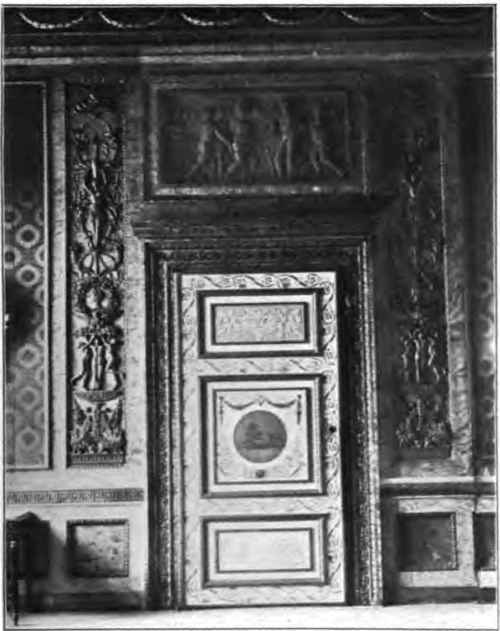
PLATE XVI. DOOR IN THE SALA DELLO ZODIACO, DUCAL PALACE, MANTUA. XV11I CENTURY.
Doors opening upon a terrace, or leading from an antechamber into a summer-parlor, or salon frais, were frequently made of glass; while in gala rooms, doors so situated as to correspond with the windows of the room were sometimes made of looking-glass. In both these instances the glass was divided into small panes, with such strongly marked mouldings that there could not be a moment's doubt of the apparent, as well as the actual, solidity of the door. In good decorative art first impressions are always taken into account, and the immediate satisfaction of the eye is provided for.
In England the treatment of doorway and door followed in a general way the Italian precedent The architrave, as a rule, was severely architectural, and in the eighteenth century the application of an order was regarded as almost essential in rooms of a certain importance. The door itself was sometimes inlaid,1 but oftener simply panelled (see Plate XI).
1 The inlaid doors of Houghton Hall, the seat of Sir Robert Walpole, were noted for their beauty and costliness. The price of each was £ 200.
In the panelling of doors, English taste, except when it closely followed Italian precedents, was not always good. The use of a pair of doors in one opening was confined to grand houses, and in the average dwelling single doors were almost invariably used, even in openings over three feet wide. The great width of some of these single doors led to a curious treatment of the panels, the door being divided by a central stile, which was sometimes beaded, as though, instead of a single door, it were really a pair held together by some invisible agency. This central stile is almost in variably seen in the doors of modern American houses.
Continue to:


My Books

