


Card Room Or Den Furnishing
Description
This section is from the book "The Practical Book Of Furnishing The Small House And Apartment", by Edward Stratton Holloway. Also available from Amazon: The Practical Book Of Furnishing The Small House & Apartment.
Card Room Or Den Furnishing
It is justifiable in such a room to depart from the usual scheme of furnishing, and indeed it is often desirable to provide one room in the nature of a delightful surprise, but not a shock. Chinese-red furniture may be prescribed here.
In imposing premises one may "go the limit" and have a decorator specially design such a Chinese room as that by Mr. Palmer Jones illustrated in Plate 63, but in limited quarters one must be more moderate in his desires. One feature there shown the writer would decidedly advise - a divan with down cushions. This could be covered with some such material as one of the printed linens shown in Plate 40, seeing that the red chosen properly accompanies the furniture.

PLATE 40. Black ground with flowers in gorgeous carmine red.
Smaller portions of design in cream and grey blue.
Three-fourths of breadth shown.

PLATE 40. Black ground Other colour in design are cream, brown, rose-red, light violet, pink and grey-blue.
Half breadth shown.
Chinese Effects.
In some American instances where red furniture has been suggested, not sufficient care has been exercised in keeping down the amount of this strongly advancing colour, and red and black draperies and accessories have been prescribed also. To secure the really decorative effect of any highly ornamental or colourful element it should not be overdone, but should have abundant relief. All that is advisable beyond the furniture itself and the one covering is to carry this colour elsewhere in very small portions by the use of a red bowl or red candles or some note of this hue in connexion with others in a hanging.
It is doubtful if any other wall would be an improvement over the straw-colour provided, when aided as will presently be suggested. A black rug and lustrous black satin for the chair-seats would be excellent, and these would aid in holding down the red. There are also many modern fabrics in Chinese designs which could be used for the seats if preferred, but it would be advisable to select something in a small design and rather neutral colouring, because of the feature the writer has principally in mind. The fabrics and embroideries of the Chinese are wonderful, and two hangings of either used upon the largest wall-spaces would, with what has gone before, produce a rich and individual room. Sometimes a fabric-covered screen is to be found that may be used as an overmantel ornament. These textiles arc usually of many blended or combined hues, so that no one colour is greatly prominent, and they are of many varieties. The best shops in the Chinese-quarters of large cities, decorators' establishments, and unusual shops are the correct places to look for such accessories. Naturally they are not cheap, and some of our modern textiles of Chinese design and varied colouring may be substituted if necessary.
With such things upon the walls the door- and window-hangings should be plain and nearly agree in hue with the wall-tone - our former friend the ecru Webster Poplin or something of this nature might be used.
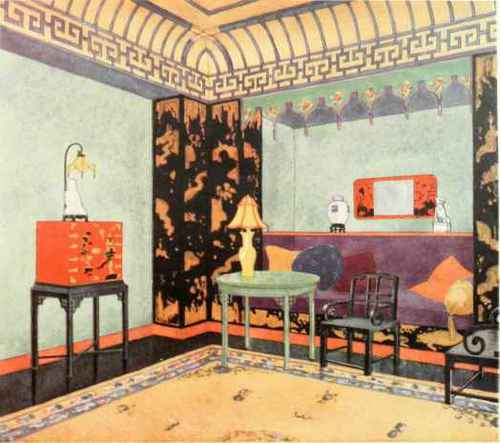
PLATE 63. CHINESE ROOM. DESIGNED BY W. J. PALMER JONES. LONDON.
By Courtesy of the Designer and of The Furnishing Trades Organiser, London, in which it first appeared.
Attention is drawn to the fact that in these schemes a very great variety of colour has been obtained: to mention one instance alone, in the modified red the following have been suggested in one room or another: rose, mulberry, coral, raspberry, creamy rose and Chinese red. Where red brick fireplaces or walls obtain, the accompanying red should be of that hue. In some cases vermilion or orange-reds may advantageously be employed.
It has been mentioned that in the tints prescribed for walls the writer has been conservative; where the furnishings are individual and colourful it is almost necessary that one should be, if the interiors are to be sensible, homelike and restful. In the next section a few other tones will be suggested, but he has purposely abstained from providing such schemes as red-orange walls with blue woodwork, and yellow walls accompanied by violet woodwork, because he does not care to have the householder come to grief. If the reader wishes these things he would do well to engage a decorator who specialises in strong colourings and not himself attempt to carry them through a series of rooms. As previously suggested, where positive wall-colouring is desired in one or two rooms it is always possible to deepen and strengthen the tint existing in the remainder of the premises, so preserving unity of general hue but securing a more striking effect. The woodwork may then be painted a contrasting colour. Special care will naturally be needed in choosing furnishings.
The effect of unity may be preserved even with varying colourings provided they are on the same order. If the prevailing tint is a cool grey then the walls of one or two rooms might, for example, be made either a grey-blue or a pistache green without disturbing the general scheme.
Continue to:


My Books

