


Neo-Classic Furnishing In England. Thomas Sheraton
Description
This section is from the book "The Practical Book Of Furnishing The Small House And Apartment", by Edward Stratton Holloway. Also available from Amazon: The Practical Book Of Furnishing The Small House & Apartment.
Neo-Classic Furnishing In England. Thomas Sheraton
The contrariety of human nature could scarcely be better illustrated than in the personality of Thomas Sheraton.
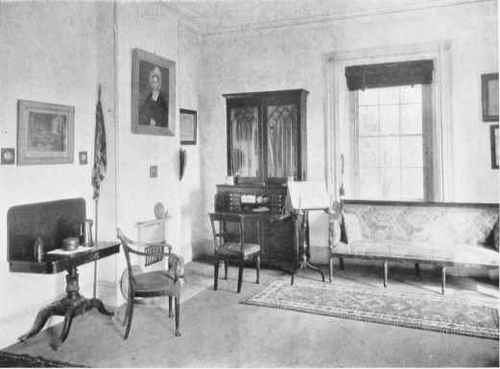
PLATE 134. A RESTFUL LIVING-ROOM WITH SHERATON AND AMERICAN EMPIRE FURN1TURE.
The late Sheraton chairs with reeded legs and lion's paw feel and the tripod lectern or music-stand are notable.

PLATE 135. A CLEVERLY-FURNISHED DINING-ROOM IN A SMALL APARTMENT.
Sideboard and table Sheraton.
Baptist preacher, tractarian, publisher, and teacher of drawing, as well as designer of furniture; virulent in his strictures on the work of his fellows; wielding a scathing pen against those "foolishly staring after French fashions" while drawing his own constant inspiration therefrom, - his feeling for beauty, his sense of proportion, his knowledge of construction were unsurpassed, and his furniture was the most exquisite in line and detail that England had produced. Chippendale was far more virile and various than he, but the work of Sheraton is the perfection of refinement. Without him the furniture of his country would have lacked that final touch of blithesome grace and charm so notable in the mobiliary elegance of France, translated thence by him to English soil, and still, somehow, through his own personality, transmuted into English furniture. In his cabinet-work he was not less successful in refining upon the staple forms of his predecessors and giving them a new and unmistakable individuality of his own. It is difficult to render homelike a mode so elegant and slender, but he accomplished it.
The settee in Plate 134 is of his most popular form, and very comfortable it is: the chairs are those of later years under Directoire influence - their source will readily be seen in examining the table and foremost chair in Plate 143. His more characterististic mode, with the baluster arms agreeing with those of the settee, is shown in Plate 131, but this chair is a very interesting American variant of the Sheraton form and of his time, and has square, tapered legs with spade feet instead of the more usual round, fluted leg as seen in the settee. Another fine settee is shown in Plate 97, and this is covered in striped damask, so popular in his time. A characteristic Sheraton sideboard and table appear in the charming little dining-room cut, Plate 135.
Several of Sheraton's most interesting qualities were necessarily noted in the brief treatment of Hepplewhite's productions. The furniture of both is largely illustrated in "The Practical Book of Period Furniture." Inlay was one of his favoured decorative processes.
Sheraton died in 1806 - the last of the great English designers of furniture. And in his later days arrived the deluge. Napoleon became First-Consul in 1799 and Emperor of the French in 1804. What French furniture then grew to be we shall soon learn; and with its fall came that of Thomas Sheraton.
There were several lesser lights in the constellation of great English designers of the eighteenth century, but their productions are not available in modern American commercial furniture.
Continue to:


My Books

