


Chapter IV. Adam, Sheraton, Empire
Description
This section is from the book "The Old Furniture Book", by Hannah Hudson Moore. Also available from Amazon: The Old Furniture Book.
Chapter IV. Adam, Sheraton, Empire
THE increased market offered to English merchants in the colonies, now more prosperous, produced in quick succession several cabinet-makers who worked in a different style from Chippendale, and made much very handsome furniture. Robert and James Adam, by training and profession architects, turned their attention to furniture which would be appropriate in rooms of Greek or Roman style. Their designs were all on classic lines, and were beautifully painted besides by the popular artists of the day, like Angelica Kauffmann and Pergolese, who, like Alma Tadema in our day, did not hesitate to expend their art upon fine pieces of furniture.
The Adam brothers introduced the use of composition ornaments coloured and gilded, which were feally a revival of the Italian process of "gesso" and which they had learned during their years of study in Italy They designed many mantelpieces; also decorated in classic style, and had a decided influence in moulding the taste of their contemporaries and successors. Satin-wood was introduced by them, or at least at this period, and was used for inlayng as well as for the manufacture of whole pieces of furniture. Most of it, when used as the wood of the entire piece, is decorated with medallions of marquetry of some darker wood, as tulip, rosewood, or mahogany.
The Adam brothers did not make any furniture themselves, but had it made by popular makers under their personal direction. In Figure 29 are shown three chairs of Adam design. The side chair retains its original covering of a heavy wool plush, with classic figures stamped in it of wreaths and maces. Its covering was also designed by Adam. This chair and the arm-chair like it are very delicately carved in low relief with a small leaf pattern. The legs are fluted and end in a form of spade-foot. The arm-chair on the top is very richly carved, and the entire woodwork is gilded. The covering has been restored. These three chairs are in the Museum connected with Cooper Institute.
In 1764 Robert Adam published his book dedicated to George III., and illustrated with most elaborate engravings by Bartolozzi and other fashionable engravers. For this graceful act Robert Adam was appointed architect to the king, and his rise was rapid and brilliant. James Adam had now completed his studies and was taken into partnership by his brother. In 1773 they began to publish engravings of their architectural works in serial parts. They continued to issue these until 1778, when the entire work was published under the title of "Works in Architecture by Robert and James Adam Esquires." It contains quite as many designs for furniture as some of the so-called furniture catalogues. While the outlines of the furniture are very graceful and delicate, their beauty is much increased by the skilful and artistic paintings of Angelica Kauffman and Zucchi by which they are embellished. Pergolese was brought from Italy to add still further to the beauty of their work. John Flaxman, at this time creating lovely classic designs in various kinds of wares for Wedgwood, also contributed to their success, and many of his plaques and panels were set in their furniture to its further adornment.
They were used not only in satin-wood, but in other furniture as well which was painted in the same colours as the Wedgwood ware. Whole rooms, walls, ceiling, and furniture were coloured to match, even the harpsichord and candle-stands being painted and decorated with Wedgwood plaques. Of the second book, furniture designs fill one volume, mirrors another, and girandoles a third.
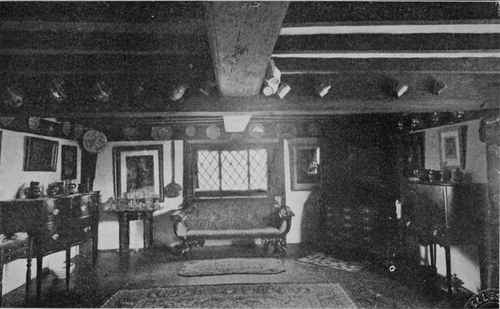
Figure 27. ROOM IN WHIPPLE HOUSE, IPSWICH, MASS.
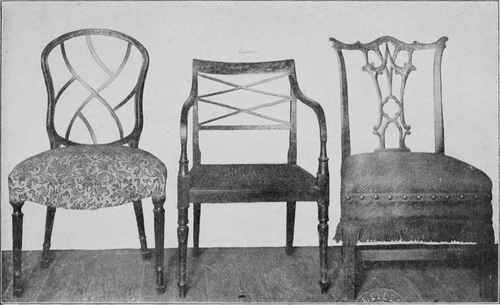
Figure 28. CHIPPENDALE, SHERATON, AND HEPPLEWHITE CHAIRS.
Robert Adam showed wonderful skill and aptitude in adapting classic forms to modern taste, and his pieces are never overloaded with ornament, but retain simple, graceful lines. He never considered any detail too small for his minute attention. Besides designing the woodwork of his furniture he also drew the patterns for the stuffs to cover them; even the little silk cushions on the arms of the chairs had the same care bestowed on them as the backs and seat. When he designed a bed, the counterpane to go on it was also made under his direction or designed by him, A little bag to hang on a lady's arm was not too slight an object to be made beautiful by his artistic hand. He paid the greatest attention to having the covering for upholstered furniture appropriate to the style of chair it went on, but he allowed himself great latitude in gilding, and, as we Have already said, in painting his furniture in colours. He also gave variety to his tables by the use of coloured marble tops. The Adam brothers designed some of the interior fittings for " Strawberry Hill." They also built Colzean Castle, designed Alnwick Castle, and many other splendid homes.
Thomas Shearer is a name not often heard in America, yet the book, "The London Cabinet-Maker's Book of Prices," published in 1788, contained many beautiful designs by him. This work provided more for the cabinet-maker himself than for the gentleman, to whom most of the previous works of this nature had been dedicated. There were many members of the London Cabinet-Maker's Society, but only three made the illustrations to the book, - Thomas Shearer, Hepplewhite, and a man named Casement, who furnished but two. Now, when there are so many banks and safe-deposit companies, we do not feel the need of secret drawers and repositories for storing our valuables. They were quite necessary a hundred years or more ago and much ingenuity was expended in concealing them from curious or prying eyes. We are also wont to consider recent times and conditions responsible for such shams and mockeries as folding beds, and articles of furniture that are not what they seem. In these early books of designs are not only folding beds, press-beds, and library bedsteads, but folding washstands and toilet-tables, as well as tables, toilets, and bureaus which concealed the mattress and bed furniture by day.
Continue to:


My Books

