


Bevelling
Description
This section is from the book "Woodworking For Beginners: A Manual for Amateurs", by Charles G. Wheeler. Also available from Amazon: Woodworking For Beginners.
Bevelling
To bevel the edge of a piece with the chisel, draw-knife, spoke-shave, plane, or even knife, first mark parallel lines to work to with a pencil-gauge (see Gauge) rather than a spur-gauge, so as not to leave a scratch to disfigure the work after the bevel or chamfer is cut (Figs. 477 and 485). Then pare the edge down gradually to these lines, or prepare the way by first scoring the wood with cuts (Fig. 615), being sure to trim off in the direction of the grain ; but in bevelling both end and side, as in Fig. 478, first cut the end, because of possible chipping at the corner, and in cutting the end you can work from each corner towards the centre. In paring a bevel across the grain, push the chisel as shown in Fig. 479, as it is the easiest and cleanest way to cut, and prevents splintering.

Fig. 477.
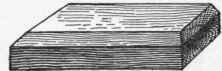
Fig. 478.
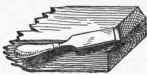
Right
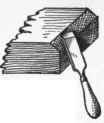
Wrong
Fig. 479.
A simple bevel (Figs. 477 and 478) is usually best made with the plane, whenever there is room to use it. Plane bevels in end wood from both edges and you can often slant the plane to good advantage like the chisel in Fig. 479. See also Chamfering.
Continue to:


My Books

