


The Mitered Picture-Frame. Part 3
Description
This section is from the book "Design and Construction in Wood", by William Noyes. Also available from Amazon: Design And Construction In Wood.
The Mitered Picture-Frame. Part 3
In selecting the wood for a picture frame, it is well for a beginner to choose some soft wood like white pine or yellow poplar, until he is used to working the necessary tools and can make the joints well. These woods can be stained in a great variety of ways. Later it is better to make frames of hard wood. Oak is the most common. Maple is good for a "silver gray" effect to be obtained by staining with the water stain of that name. Mahogany is excellent where the color can be made to harmonize. Care must be taken not to select woods having such a prominent "grain" as to divert attention from the picture itself.
Concerning the materials to be used for mats, "cover paper" is one of the most suitable. Ash gray will be found to tone well with a great variety of prints. Dull toned wall paper which has no pattern is often good. Grass-cloth comes in various colors, and this or raw silk stretched on cardboard makes a very effective setting especially for some Japanese prints.
Mounting the picture on the mat may be done in one of two ways: (1) The picture may be pasted directly on the mat. In most cases it will be found sufficient to fasten it in place by means of a line of paste, say ⅛" wide, on the top margin of the back of the picture. Before pasting the picture on the mat, locate it carefully and mark its location with fine pencil dots at the two upper corners. If the picture is to be mounted on the mat with paste all over the back, the mat must be of stiff enough material to hold its shape. If tliis method is used, the picture should first be dipped in water, the surface moisture dried off, paste applied uniformly over the back, the picture carefully laid in place and pressed under weight.
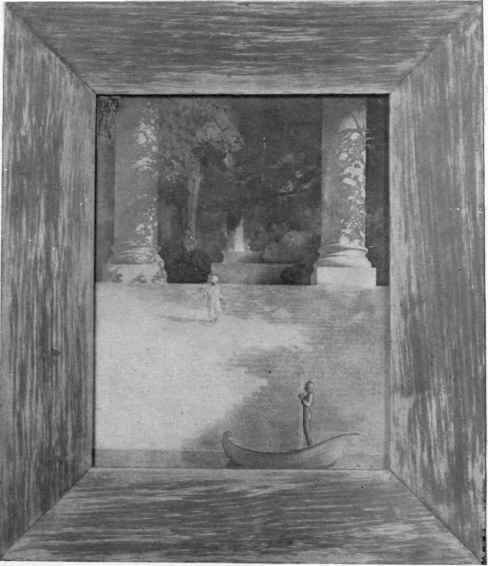
Fig. 69. Broad frame (pine), stained gray, oiled and rubbed with aluminium dust. Maxheld Parrish's "Prince Agib."
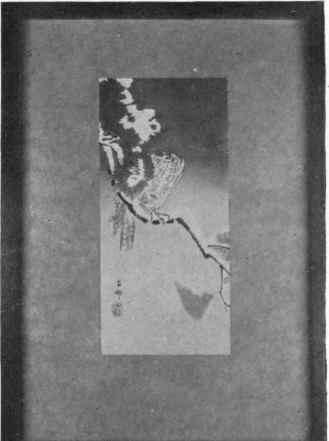
Fig-. 70. A narrow dark frame with gray mat.
(2) An opening the size of the picture, may be cut in the mat, and the picture placed under this. This "cut out" has the advantage of giving a soft border line formed by the shadow of the mat.
II. The Framing of a Japanese Print. The picture chosen to be framed, according to the following directions, is a Japanese print, Fig. 76. The frame is to be perfectly plain. The size of the picture is 9½"xl3½" The frame is to be 1" wide and ¾" thick. The materials required are as follows:
"White pine, ⅞"x 1"x4'0."
Picture backing, the same size as the picture, or mat, if the picture is to be mounted. The backing comes ⅛" thick.
1 sheet manilla paper.
1 light, picture glass, 9½" x 13½".
2 doz. brads, ⅞" No. 18.
2 screw eyes, Brooks No. 214, ½" (these have ¼" hole).
Maple veneering, 6" square, if available.
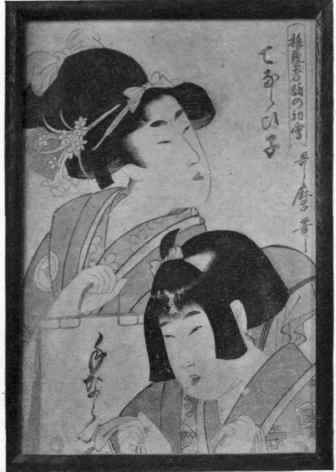
Fig. 71. Narrow black frame without mat.
11White pine is chosen for first frame because it is easiest to work accu-
Plane up the strips in two pieces, each long enough to make one long side and one short side of the frame. To determine the length of the members of a frame, add to the length of each dimension of the picture twice the width of the frame. In this case there will be needed two pieces about two feet long; thus, 9½" (width) + 2" + 13½" (length) + 2" = 23". Plane both pieces perfectly straight and the angles square, so that they will be 1" wide and ¾" thick. Test the straightness by sighting along the length, as in Handwork in Wood, Fig. 107. Be sure that the thickness and width of both pieces is uniform thruout. Unless the members are accurate the frame will not come together right. The next step is to plow out a rabbet (or rebate) along one arris of each piece, to receive the glass and the picture and the backing. This should be done with the rabbet-plane (See Handwork in Wood, p. 79). This rabbet should be ⅜" wide and ½"deep.
Continue to:


My Books

