


How To Whittle a Mountain Lion
Description
This section is from the book "Let's Whittle", by LeRoy Pynn, Jr.. Also available from Amazon: Let's Whittle.
How To Whittle a Mountain Lion
One of the cat family; also known as the puma, cougar, or panther, this animal is found throughout North America.
Use any type of wood 1 1/2 inches thick, 2 1/2 inches high, and 8 inches long, with the grain running horizontally. See Figure 103 for the pattern.
Begin carving the roughed-out blank at the top of the animal, noting how the hind legs are rounded and the back of the body is tapered toward the tail. Figure 104.
Figure 105 shows how the legs are extended in crouching. The rear legs are cut identically; for the front legs and finish, see Figures 106 and 107.
Work from the rear of the animal toward the head. The width of the ears from tip to tip is 5/8 inch; the widest portion of the nose, 1/2 inch, and the feet pads, 1/2 inch wide.
Give smoothness and litheness to this figure in your carving and finish the entire form with fine sandpaper to a high polish. Color with clear shellac. Do not sand the base, which shows roughness of terrain.
Puncture 4 holes on both sides of the nose with a common pin; dip toothbrush bristles in glue and insert.
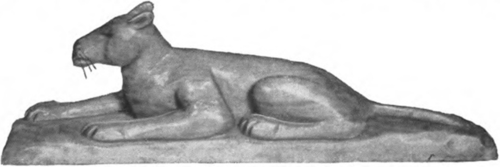
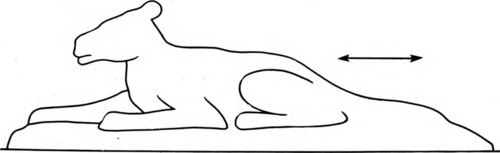
Figure 103
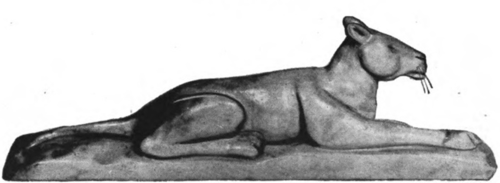
Figure 106
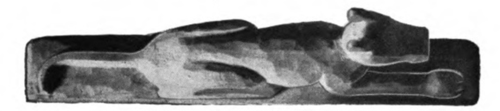
Figure 104
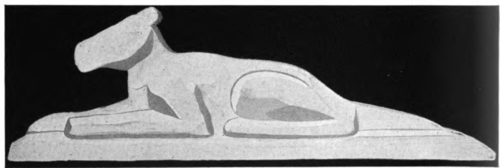
Figure 105
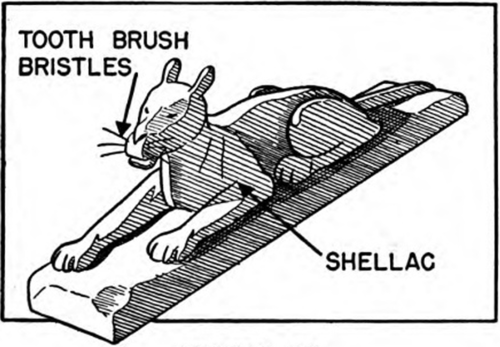
Figure 107
Representing texture is a very important part of the art of whittling. For instance, if you are making a billy goat or some similar animal with long shaggy hair, it is best to keep your surface rough, with knife marks showing; on the other hand, a seal should be smooth. Clothing is best shown with folds and creases.
Continue to:


My Books

