


Different Paths And Upasanas
Description
This section is from the book "Studies In Saiva-Siddhanta", by J. M. Nallasvami Pillai. Also available from Amazon: Studies In Saiva-Siddhanta.
Different Paths And Upasanas
Of course, we have read and heard people talk, about Karma-marga, Bhakti-marga and Yoga and Jnana-margas, as though there is little or no bhakti, or bhakti is not wanted in other margas, as though there are no actions or duties attached to the others, or all those who do not follow the Jnanamarga are only ignorant people. Does men's smearing themselves with ashes and namams, repeating God's names, constitute bhakti? Doe's not the relieving of the poor and infirm and the sick constitute part of one's religious duties? Is it the highest duty of the Yogi and Jnani that he considers himself superior to others, and thinks that he will be polluted by the mere touch of others, and that he has achieved a great thing if he has injured none?
And then we have heard of different Upasanas and Vidyas, Sandilya, Dahara, Sakala and Nishkala and Saguna and Nirguna; and there are people who would advocate the Saguna against the Nirguna and the Nirguna against the Saguna.
To begin a statement of my views. Hindus hold as an axiom that no study is of any benefit unless it can lead one to the worship of the supreme One.

And that we cannot be rid of the ills flesh is heir to, and cross the sea of births and deaths, and attain to everlasting joy unless we reach the feet of the Supreme Lord.
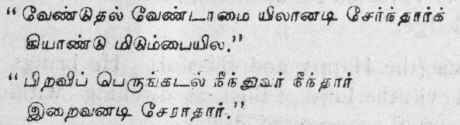
(The Kural).
To get rid of our ills and to attain to His joy is our goal.
That this human birth is given to us to work out our salvation and in this mundane plane, is admitted by all religions, Christianity included.
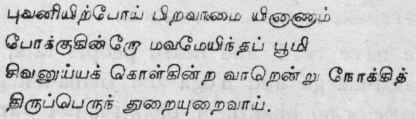
(Tiruvachaka).
How then can we attain to this end? This is the consideration of the Practical Religion. And our systematic treatises devote considerable space to the treatment of this question. This is the chapter on Sadana in the Vedanta Sutras and in the Sivajranabhodha.
As a necessary prelude to this, the nature of the Deity and of the Soul has to be discussed.
Continue to:


My Books

