


The Nature Of The Jiva. Part 8
Description
This section is from the book "Studies In Saiva-Siddhanta", by J. M. Nallasvami Pillai. Also available from Amazon: Studies In Saiva-Siddhanta.
The Nature Of The Jiva. Part 8
One of the aptest descriptions of a human being is that he is a mirror," and we must begeour readers to go through the whole pamphlet to note how beautifully he draws out this parallel.
He notes the second principle which governs this process, namely, the law of assimilation or identification. "The law '. of assimilation is the second and by far the most impressive truth which underlies the formula of sanctification - the truth that men are not only mirrors, but that these mirrors, SO far from being mere reflectors of the reflecting thing they see transfer into their own inmost substance and hold in permanent preservation the thing that they reflect. No one can know how the soul can hold these things. No one knows how the miracle is done. No phenomenon in nature, no process in chemistry, no chapter in Necromancy can even help us to begin to understand this amazing operation. For think of it, the past is not only focussed there in a man's soul, it is there. How could it be reflected from there if it were not there? All things he has ever seen, known, felt, believed of the sorrounding world, are now within him, have become part of him, in part are him - he has been changed into their image."
Following the language of Professor Henry Drummond, the formula of sanctification would read as follows.
"I see God, I reflect God, I become God-like, Godly, I am God." I close with only one quotation from St. Arunandi Sivachariyar which sums up the whole teaching.
"Say, 'I am not the world and am separate from it.' Say also, 'I am not the unknowable Supreme One.' Then as He is ananya with you, melt in love in all humility, and practise soham (I am He); and He will appear as yourself, and your mala will all cease, and you will become pure, just as the poison is removed by Garudadhyana. So it is the old Vedas teach us to practise this mantra 'Aham Brahmasmi'."
Praise be to Meykanda Deva.
"'Oh Yes! when I reach the Alps', he hath said to me I always pray.' He would betake himself to some quiet corner, among that grand scenery, and fall on his knees. He was praising God in the work of His creation, the Alps, and bowed in simple praise of it."
This is what is reported of the saintly Ruskin, and the noble feeling given expression to above, clearly explains the wide-spread system of worship obtaining among the Hindus, We refer, of course, to the system of setting up places of worship to the Most High on the highest mountain-peaks and most magnificent hills. And the more inaccessible and difficult of reach these hills are, the more sacred do they become in the eyes of the people. And there can be no possible doubt that some of these pilgrimages call forth no small amount of endurance, toil, patience and expense, which the people will never show, unless they are animated by an equal amount of fervid piety. There can be no doubt whatever also about the elevating influence of Nature in her grandest and magnificent aspects. The sense of elevation and freedom, purity and beauty, awe and reverence, one feels when one reaches one of these mountain-tops must be felt and not told, yet writers have holden forth about the marvels of a sunrise or sunset on Mount Blanc or on the Himalayas, and one cannot but cry out at such sights from his heart of hearts.

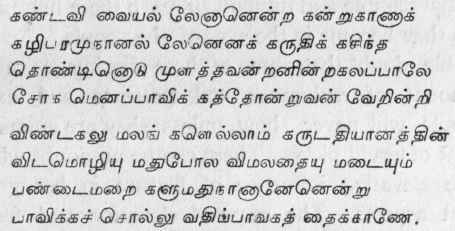
*A friend of ours mentioned to us how the picture at Tiruvannamalai, with the setting sun the flaming hill top and myriad lights, called to him at once these lines. Yogis have a different explanation of the triple light.
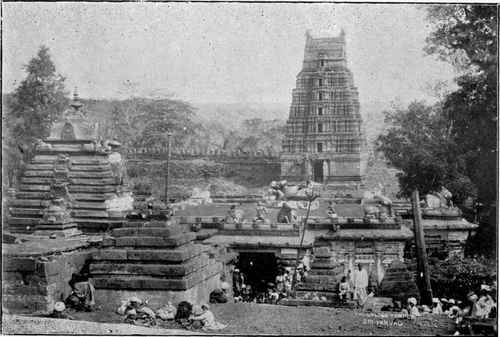
In fact, the Siva Linga is nothing but the hill-top in its origin, and the custom of worshipping God on mountain-tops was current among the Jews and the Romans. And to Moses, God appeared as fire and light on mountain-tops, accompanied with thunder, clouds and lightning, the true picture of Siva, as Girisa and Kapardin. And the highest peaks in India had, from the beginning, been dedicated to the worship of Siva and Parvati, on Himavat, on the Vindhya, on the Western Ghats, on the Central Ranges, on the Eastern Ghats and on Mainaka, etc. Of these, the , most sacred, of course, is Kailasa, and when we find that even St. Appar did not succeed in finding this Mountain Abode on earth, we will be correct in stating that this Mount Kailasa does not represent any material plane, but certainly means the Highest Summit of Man's spiritual, moral and intellectual elevation, reaching which, after leaving his sense of his own greatness (Ahankara), he will surely unite in that Abode of Eternal Peace, Beauty and Bliss. But mortals identify this Supreme Abode with this and that mountain-peak, in particular, with Mainaka in Ceylon, with the Rock at Trichy, with the Hill of Kalahasti, with Sri Parvatam, with Himavat, etc, and there is a purpose in view.
Man cannot reach up to the Highest Ideal all at once. He must climb, must be made to understand by slow degrees, mark each as the highest, and then ascend higher and higher, not condemning what he has already reached, but always looking up higher and higher, until he shall have reached the highest of these hills.
Of these hill-shrines, none is more sacred than the hill called srl Saila, Sri Parvata, Sri Mallikarjuna and Mahanandi. Its importance may be guessed from its appellation itself "Parvata", "The Mountain." It is so called by its pre-eminence, whereas all other hills are distinguished by peculiar names. And for one thing, this hill is much more difficult of approach, and presents a much grander scenery than those below in the south. The people and princes of ages gone by have expended their wealth and labour in building and beautifying this Holy Shrine, though their degenerate descendants simply sit with folded hands and see the disintegration of this noble edifice.
Continue to:


My Books

