


How To Be A Bird Landlord
Description
This section is from the book "Time Out for Living", by Ernest DeAlton Partridge and Catherine Mooney. Also available from Amazon: Time Out for Living.
How To Be A Bird Landlord
To many people the most interesting part of bird lore is that of building birdhouses and renting them out to the feathered folk. Offhand one might think that the houses are given to the birds free, and that they are not rented at all. Remember, however, that the birds pay in many ways for the use of such houses. They sing, they provide an interesting show, and above all they do a tremendous amount of work eating insects and weed seeds. Some farmers have found that it pays better to have birdhouses in their orchards than to spend money on sprays. Certainly the farmer is lucky if he can encourage large groups of birds to pick over his trees in search of eggs and larvae of the pests that destroy his fruit.
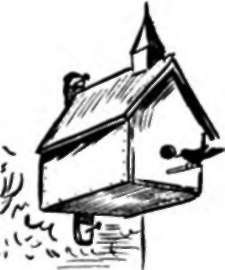
A Small House for a Small Bird.
There are a few tricks worth knowing about birdhouses, how they should be built and where they should be placed. These tricks will help you to succeed in enticing your feathered friends to accept your hospitality. You will find some of the government bulletins listed at the end of this chapter very helpful. Here are a few general hints:
1. Be sure that the roof does not leak. Birds like to be protected from unpleasant weather, just as human beings do.
2. The entrance hole should be about two-thirds of the distance from the bottom, to keep the young birds from climbing out of the nest before they can fly. Once they fall out, they are almost helpless before prowling cats and spying hawks.
3. Bore several holes in the bottom of the house. If water comes in through the entrance or some other way, it will drain out.
4. Place the birdhouse where it will be out of reach of cats. It is also well to have it far enough away from your house so that the birds will not be afraid to use it. Keep your distance until they have become accustomed to their quarters.
The accompanying illustrations show two different kinds of houses that can be built very easily. Note that the entrance holes are small. They should not be more than one inch in diameter if you wish to entertain bluebirds, house wrens, or other small birds.
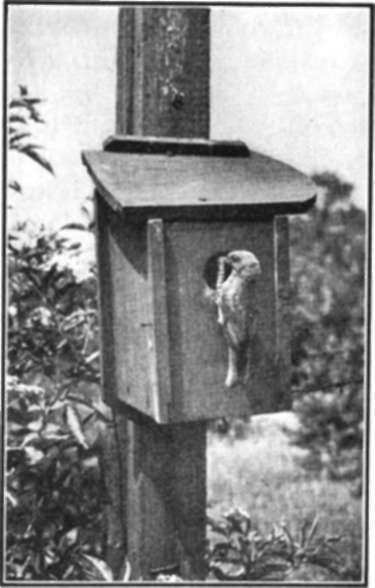
Another Type of Birdhouse.
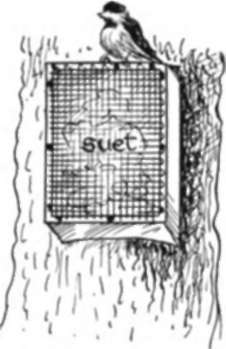
A Feeding Station may be quite simple.
Continue to:


My Books

