


Messages Down The Ages - Egyptian And Mayan
Description
This section is from the book "Time Out for Living", by Ernest DeAlton Partridge and Catherine Mooney. Also available from Amazon: Time Out for Living.
Messages Down The Ages - Egyptian And Mayan
Ever since men were able to talk, different people in the different parts of the world have been trying to invent new ways to say what was on their minds. And what a task it was! The Egyptians carved pictures in the granite of their tombs and monuments - soldierly men of action marching in orderly rows across the sides of giant buildings telling tales of war and peace along the limpid Nile. Such was the harmony of design in these pictures that the Egyptians won the distinction of being the most beautiful writers in the world. Like the Mayan hieroglyphics, the writing was at first quite easily understood; but when the writers began to use symbols, they presupposed ideas and knowledge of the pictured facts. The writing could be read while people lived who knew and could explain the meaning.
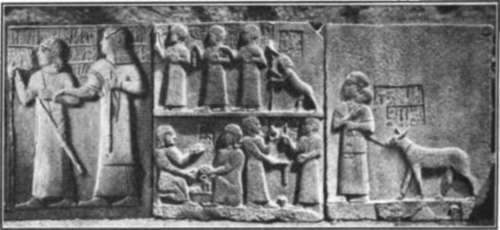
The pictorial writing of the Egyptians was beautifully executed.
Just as we today understand the meaning of the figure of a dove, or a laurel wreath, or a Grecian mask, a cross, a crescent, or a four-leafed clover, so the symbols of the hieroglyphics had a thought behind them. Ages after the meanings of the symbols had been forgotten a valuable key, the famous Rosetta Stone, written in three languages, one of which was remembered, helped us solve the riddle so long hidden.
Some of us can go to our nearest museum and see relics of these ancient forms and try to work out some of the stories pictured. Others who cannot go to such a museum need not be discouraged. Just try some rebus writing.
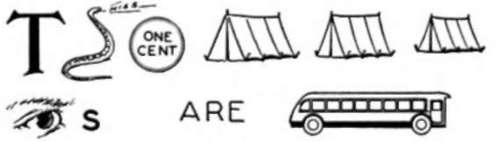
A Rebus. Can you figure it out?
Continue to:


My Books

