


Packs
Description
This section is from the book "Time Out for Living", by Ernest DeAlton Partridge and Catherine Mooney. Also available from Amazon: Time Out for Living.
Packs
Experienced hikers do not all agree upon the best kind of pack. There are many different ways of carrying food and shelter on your back, and just which one is best depends upon many things, such as the kind of country in which one hikes, the shape of one's back, how far one hikes, and whether the pack is to be purchased or made at home.
The purpose of a pack is to carry food and equipment long distances. Therefore the pack should be comfortable and serviceable. It should fit on the back comfortably with a heavy load. There are three types of packs that will be considered briefly here: sacks, baskets, and frames.
Pack Sacks
There are several kinds of pack sacks. One of the most practical is the rucksack, a sack used extensively by hikers in Europe. These sacks are popular because of the many conveniences they furnish. They fit comfortably on the back, are waterproof (very important for a pack), and have several large pockets for storing small packages. Pockets make it easy to find articles that are used often on the trail without unpacking the contents of the bag.
A Norwegian Rucksack
Notice the many pockets.
A genuine rucksack is quite expensive, but there are other pack sacks that do not cost so much. One of these is the Duluth sack, a large bag with wide shoulder straps that is particularly good for packing bedding and food together. The main thing to look for in a pack sack is good, substantial material - waterproof by all means, and wide, comfortable straps for the shoulders.

Pack Baskets
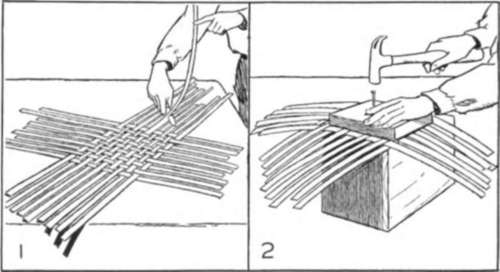
In the Adirondack Mountains experienced hikers swear by the Adirondack Pack Baskets. These baskets are light, clean, and in many ways convenient things to carry. Best of all, they can be made for a small cost right at home with very few tools. Hundreds of hikers have made their own baskets and used them for many years.
The pack basket is carried on the back with two wide web straps and is made in such a shape as to fit the back well. The pack is not complete without a canvas top for shedding rain. This top makes a handy wash basin when not in use on top of the pack. One criticism of the basket is that it will not keep equipment and food dry in a driving rain unless it contains a waterproof bag inside.
Continue to:


My Books

