


Part 12. Waiting For Inn. Chapter Twenty-Seven. Whats Right About Writing
Description
This section is from the book "Time Out for Living", by Ernest DeAlton Partridge and Catherine Mooney. Also available from Amazon: Time Out for Living.
Part 12. Waiting For Inn. Chapter Twenty-Seven. Whats Right About Writing
One of the most enjoyable things a person can do is to share an experience with others. Hiking over hill and dale, playing a lively game, giving an unusual party - all the things suggested in this book - fill us to the brim with pleasure, but perhaps the greatest joy of all is to face an admiring audience willing and anxious to hear you spin a yarn. There is no satisfaction equal to it! There they sit full of anticipation, fearful of missing one single word, and you have the thrill of the great artist as you weave your spell of magic words to play upon their heartstrings.
Unfortunately in this day and age, there are not many moments like this. The world is so full of things to be done and people are so busy trying to attend to this and that little detail that they end up busily engaged in things not very important in life after all, and are quite lonesome and forlorn. It really is a rare occasion today when folks can sit down quietly and hear your tale without any interruptions. Phones will ring, radio programs will sound very inviting, certain good movies will be playing within easy driving distance, motors will roll up to the door enticing you to the open road, agents of all kinds will call at the door attempting to sell you anything from brushes to round-the-world trips, or the dog next door will practice his latest aria from "Bark-and-howl."
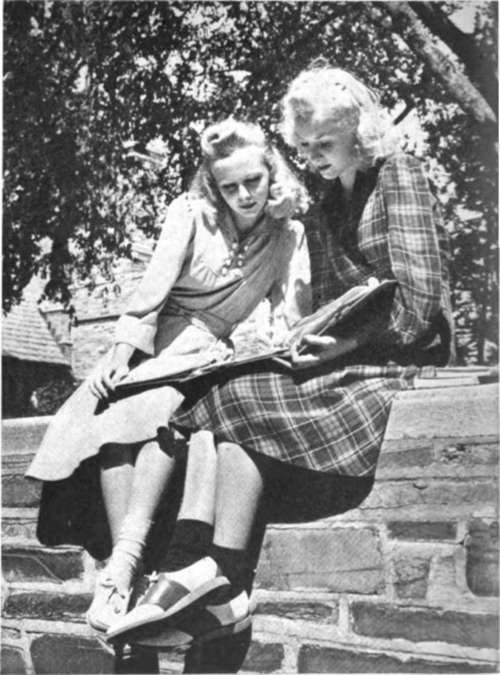
Writing Can Be Fun Anywhere.
So the best advice is not to talk if you seek really lasting satisfaction. Jot it down! You'll find that the most polite, receptive,
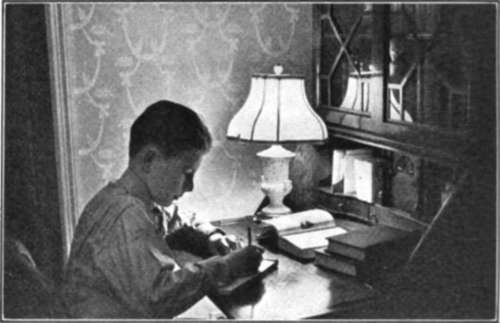
Jot It Down! sympathetic, and understanding audience today is nothing more than that great servant of mankind -paper. Any kind of paper at all will do - a scrap torn off the package from the neighborhood store or a worn notebook in your pocket.
Lincoln must have known the value of paper as he jotted down his short but memorable speech at Gettysburg, Humbly and with intense feeling, he set forth one of the most effective speeches ever to be penned by man. Perhaps he was comforted to have it well received and preserved on that piece of paper, a contrast to that later hour in the day when he faced the throng and repeated to them its message. No feeling of satisfaction possessed him then. He felt deep in his heart a sense of failure. There was a mixed reaction in the crowd, and, later, in the newspapers reporting the speech.
Though men had seemed to feel no spark of his emotion, some say that the bit of paper thrust deep into his pocket was his only consolation and that, as he crushed it firmly in a desperate grip, he still felt the strength of his undying convictions surging through him. That bit of paper is still the best monument to Lincoln. No man can ever build one in stone equal to it. It marks the summit of his greatness. No bas-relief upon a mountainside, no marble temple of rare Greek design can ever match the message on that piece of paper. Such is the power of human expression.
Emily Dickinson felt this same satisfaction when she wrote her charming verses. Brought up in a strict New England home years ago, she had the urge to write the perky little thoughts that danced so merrily into her mind and filled her full of gypsy longings. Afraid to have her friends find out about this "nonsense," she jotted lines on any paper handy and hid the slips in an out-of-the-way place such as a jar, a pitcher, a closet shelf, or behind family paintings. Today, when we enjoy her many delightful poems, we feel the pleasure she must have had while playing her game of thoughts and words.
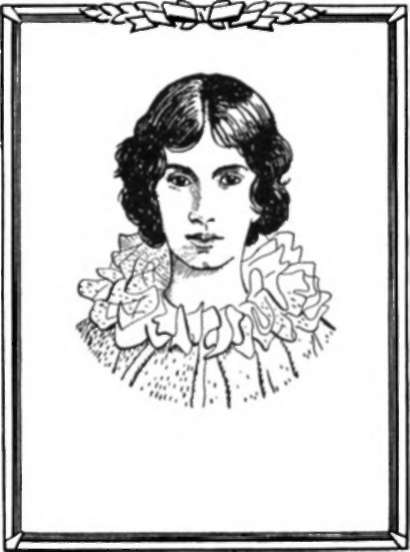
Emily Dickinson.
One of the Oldest Things under Heaven. This is not a new idea either, this business of jotting things down. Man has been doing it for ages and ages. He wished to express himself in writing and found in it untold contentment. Even many thousands of years ago, when primitive men were busy dodging mastodons and saber-toothed tigers they were interested in stories. They were not content with seeing them acted out in pantomime, but they actually drew on the rocks and stones about them authentic sketches of horses, bears, woolly rhinoceroses, and fishes.
We see evidences of this urge of early man in some of our contemporaries, who, instead of using up the reams and reams of paper the giant mills turn out for us, feel that they must disfigure sidewalks and sides of houses with their works of art, especially in spring and summer. Perhaps if someone took them all in hand and made a game of it, the markings would become more orderly. They might decide to join some good hiking club and put meaningful marks for hikes on wayside trees, thereby dressing up a trail and guiding people on their way.
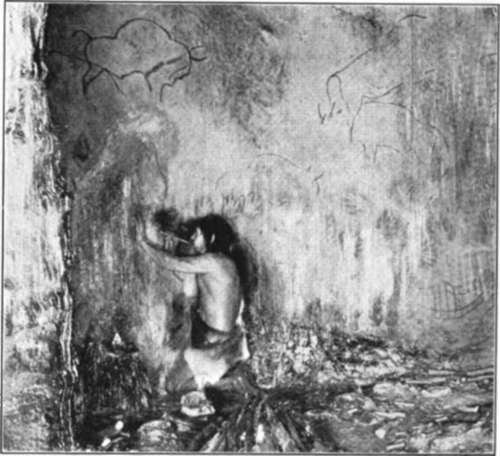
Prehistoric man wrote his stories on the walls of caves. Some of his drawings have been discovered. They marked a great step forward in human progress.
Continue to:


My Books

