


Menu Planning And Feeding The Troop
Description
This section is from the book "Handbook For Scoutmasters. Volume 1 & 2", by Boy Scouts of America. Also available from Amazon: Handbook For Scoutmasters.
Menu Planning And Feeding The Troop
The job of the Assistant Scoutmaster in charge of commissary is an exceedingly important one. Good food is essential if the camp experience is to be a success. But like a lot of other important jobs this one is fun if you go about it in the right way. It is largely a matter of careful planning and following certain fundamental principles.
Necessary Food Elements
The food served in camp must contain the necessary elements to satisfy the three functions of proper diet: It must supply (1) fuel energy for the "engine," (2) body-building materials, and (3) the substances that regulate the body processes.
It is not sufficient to ask: "Is there enough to eat?" You must also have an affirmative answer to the other question: "Is what is there properly balanced?"
Anybody can open a few tins and sling some sliced bread from a waxed paper package on the table. It takes imagination and initiative to prepare a good meal, and there are other things besides hunger that are satisfied from a wholesome meal properly and neatly served.
Boys want good, tasty food, and something substantial enough to fortify a well-nigh bottomless cavern against the ravages of hunger, during those hours between meals when an active boy uses up energy at a tremendous rate. A group of boys of Scout age requires more food than do grown men because they need more to compensate for the rapid loss of bodily heat, for replacing broken down tissues, and to provide for their continually growing bodies. A boy of Scout age in camp needs as much food as a man working at hard labor; this is from one-third to two-thirds more than what the so-called "white collar class" need whose actual physical work is light.
A Scoutmaster once served a camp breakfast of cereal, toast, jam and milk to the boys and for the leaders he added fruit, bacon and eggs. As a matter of fact, the boys needed the extras more than the leaders did.
Developing The Diet
A good diet depends not so much on the amount of money it costs as on the nutritive value of the different foods selected for it. Diets may vary considerably in type and in expense and still be satisfactory for good nutrition, provided the assortment of foods is wisely chosen.
How to make this wise choice, then, is the point. And for help in choosing we can do no better than to turn to the findings and recommendations of the food experts of the United States Government. The following brief description of the ingredients that form a liberal and suitable diet is, therefore, based upon material developed by Rowena Carpenter Schmidt and Hazel K. Stiebeling, of the Bureau of Home Economics, U. S. Department of Agriculture, and used through the courtesy of the U. S. Bureau of Home Economics. For more detailed suggestions, Farmer's Bulletin 1757 "Diets To Fit The Family Income" may be secured for five cents from the Superintendent of Documents, Government Printing Office, Washington, D. C.
Nutritive Values Of Food
The nutritive value of a food may lie chiefly in its quality as a builder of body structure or tissue, because of the protein or the minerals it contains. Or a food may be especially useful because it supplies vitamins or minerals needed for proper functioning of certain body processes. Or because of the fat, sugar, or starch a food contains, it may be valuable as a source of energy, expressed in calories.
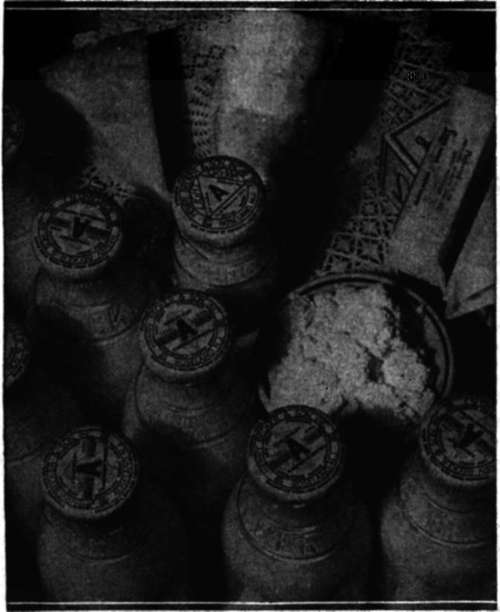
Of all foods, milk is the item that contains the best balanced distribution of necessary elements.
Though some foods are useful for more than one nutritive quality, no single food or single group of foods furnishes all of the kinds of building, regulating, and energy-yielding materials in an ideal proportion for the human body.
The Liberal Diet
The diet of the Scout camp should be a liberal one, of a high standard, providing generously for all the food requirements. Such a liberal diet contains an abundance of fruits and vegetables, eggs, and lean meat as well as a generous allowance of milk, along with moderate quantities of cereals, fats, and sugars. This combination allows for better-than-average nutrition, because it provides more than amply for the items necessary for growth, health, and general well-being. At the same time, it offers an assortment pleasing to the eye and the palate, and allows for a great deal of diversity from meal to meal.
The liberal diet plan provides the variety in the course of the day or the week shown on page 734.
Food Selection
Intelligent food selection for diets of any cost requires some knowledge of food values. Growth, vitality, and the ability to keep going depend on foods that serve all of the necessary purposes.
For convenience in presenting some facts about foods in terms of their contribution to a good diet, foods may be combined in the following groups:
(1) Milk and cheese
(2) Fruits and vegetables
(3) Eggs, meat, poultry, and fish
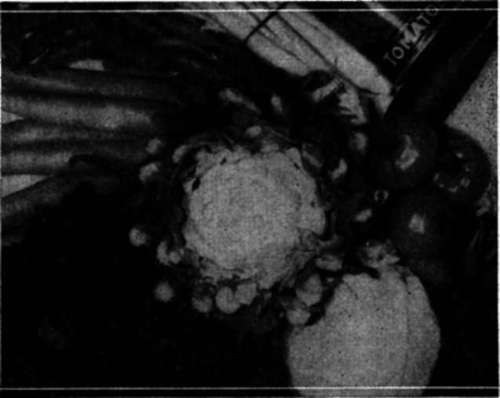
Vegetables provide vitamins and minerals and make the meals varied and appetizing.
(4) Cereals, breadstuff's, sweets, and fatty foods.
(5) Accessories, such as seasonings, baking powder, etc.
Milk and Cheese
For individuals of all ages, milk and cheese are of prime importance in the diet because of their exceptional food value. No other single kind of food has so much to offer to good nutrition as milk and its products. Milk has in itself building, regulating, and energy-yielding properties. It is an excellent source of protein for building muscle. It is also the best food for calcium or lime, needed for the building of teeth and bones and for the upkeep of the
Elements Of The Liberal Diet
As developed and suggested by the Bureau of Home Economics, United States Department of Agriculture.
Milk:
One quart daily for each Scout (to drink, or in cooked food).
Vegetables and Fruits:
Six to seven servings daily: One serving daily of potatoes or sweet potatoes. One serving daily of tomatoes or citrus fruit. Two and one-half to three servings daily of vegetables, at least half of which are leafy, green, or yellow kinds. Nine to ten servings a week of fruit (once a day, sometimes twice).
Eggs:
Four to six a week; also some in cooking.
Meat, Fish or Poultry:
Once a day; sometimes twice.
Butter:
At every meal.
Bread, Cereals, and Desserts:
As needed to meet calorie requirements, or as desired so long as they do not displace the "protective" foods (milk, vegetables and fruit, eggs) structures throughout life. Milk also contains phosphorus and other minerals in considerable amount, and has in it some of each of the vitamins now known to be necessary for normal growth and well-being.
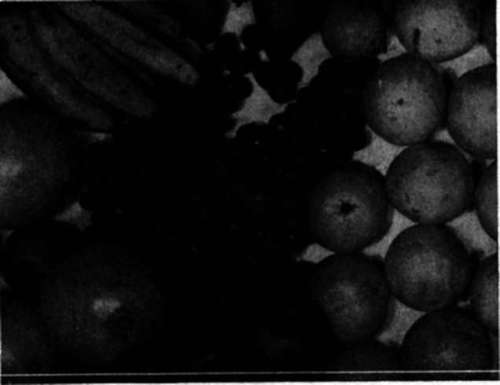
Fruits fit into all the meals of the day and are always welcome whether raw or cooked.
Boys of Scout age should be provided with one quart of milk daily. To have a suitable quantity of milk each day is more important than to have a certain form of milk. Where free choice is possible, the milk supply for the week may be obtained in the form of whole, bottled, pasteurized milk, cream, some form of cheese, and sometimes ice cream. Where it is not possible to obtain pasteurized milk, evaporated, or dried milk may replace part or all of the fresh milk without reducing the portion of milk.
Besides for drinking plain or as hot drinks like cocoa, milk has numerous other uses in the menu, which make possible its distribution throughout the day. Milk may thus be used with cereals and stewed fruits, in cream sauce with various vegetables and meats, in such soups as tomato soup, clam chowder and creamed vegetable soups, in gravies, in mashed and scalloped potatoes, in custard sauce and in numerous puddings.
In making substitutions to provide a variety of forms of milk, the following list of approximately equal food values may come in handy:
One quart fluid whole milk.
Seventeen ounces of evaporated milk (one tall can holds 14 1/2 ounces).
Four and one-half ounces dried whole milk.
Five ounces of American cheese is about equivalent to a quart of fresh fluid milk in calcium, phosphorus, and protein content.
Vegetables And Fruits
Of the great number of vegetables on the market some contain a good deal of starch, such as potatoes, sweet potatoes and corn, while the seed vegetables, such as dried beans and peas, contain in addition to starch considerable amounts of vegetable protein. Vegetables as well as fruits contain sugar. But it is because of their minerals, vitamin and indigestible residue, and their flavors, textures, and colors that fruits and vegetables are valued most highly in the diet.
Leafy, green, and yellow-colored vegtables, tomatoes, and the citrus fruits (oranges, grapefruits, lemons, tangerines) are among the most important of all vegetables and fruits for their richness in minerals and vitamins. It is for their vitamin A and for iron especially, but also for vitamin G, that the green leafy vegetables, other green kinds, and the yellow ones should be included frequently in the diet. All fruits and vegetables furnish a little of Vitamin B. For Vitamin C, tomatoes and the citrus fruits, raw cabbage and raw turnips are valuable. Since Vitamin C is easily destroyed by heat (except in the case of acid foods) some raw fruit or vegetables or tomatoes (raw, cooked, or canned) belong in the diet every day. Quick cooking in the smallest possible quantity of water and the practice of serving all cooking liquid save much of the vitamin and mineral content of vegetables.
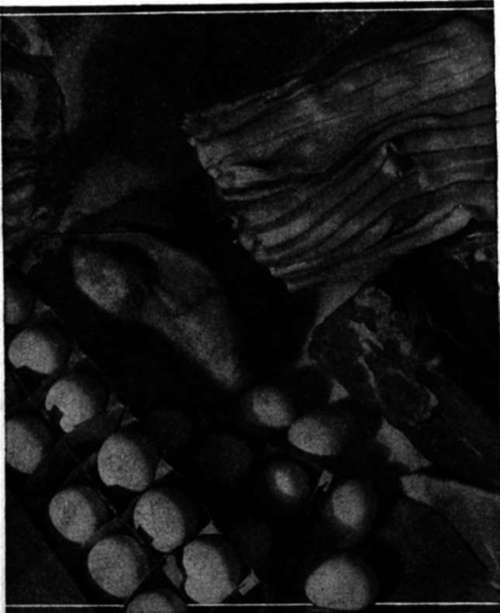
Eggs, lean meat, poultry, and fish, ere all good protein or muscle building foods.
Many canned vegetables and fruits are at some seasons much cheaper than the corresponding product in its fresh state and have the advantage of requiring very little fuel, time and effort in preparation.
Vegetables and fruits fit into all the meals of the day. Vegetables may be served raw, alone or with fruits in salads, boiled, plain or in a cream sauce, baked and in soups. Fruits, besides being eaten raw, may be stewed and included in a variety of desserts.
Eggs, Lean Meat, Poultry, And Fish
Eggs, lean meat, poultry, and fish, are all good protein or muscle-building foods, and because of their flavor, and in some cases, texture, they lend much interest to the diet. In addition to protein, all of these foods supply some of the important minerals and vitamins. They all contain the pellagra-preventing factor, and eggs are particularly good for Vitamin G. Eggs, lean meat and poultry are valuable for iron, and saltwater fish for iodine. Eggs, liver and oily fish such as salmon, are better in vitamin and mineral values than are some of the other meats and fish.
The cuts of meat chosen can make as great a difference in the cost of a diet as the number of pounds of meat included. A very liberal diet may include prime roast of beef, tender steaks or chops, leg of lamb, roast of veal, ham, chicken, calves' liver, and the more expensive kinds of fresh fish. Yet, to be liberal, the diet need not be made up necessarily of an expensive assortment of meats. There is, for example, little or no difference in nutritive value between choice lamb chops, leg of lamb and lamb for stewing, or between chicken for roasting and fricassee chicken—yet the price varies considerably.
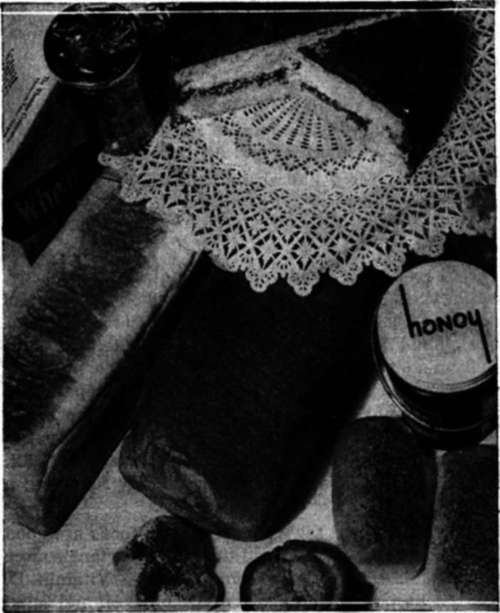
A boy needs plenty of fuel to keep up his energy. He gets it through cereals, breads, sweets and fats.
Cereals, Sweets, And Fats
Grain products, sweets, and fatty foods are high in calories and are therefore good sources of energy. Flours and cereals are not only good energy foods but are important for protein too, and those made from the whole grain or from most of the grain are valuable for some of the vitamins and for iron as well.
In buying for a liberal diet, the selection of flour, meal, rice, macaroni, spaghetti, breakfast cereals, and bakery products may be made up to please the individual taste.
Refined sugars supply only the material for energy, while the unrefined forms, such as molasses, maple, sorgo and cane syrups, retain some of the minerals of the plant juices from which they are made. Jams and marmalades similarly contain much of the nutritive values of the fruits that went into their preparation. Sweets should be used in connection with the meals only. Candy between meals is apt to dull the appetite for the more important food elements. If served at all, it should be as a dessert or immediately following a meal.
All cooking and table fats and fatty foods are good fuel foods. Butter is in addition an important source of Vitamin A and also contains some Vitamin D. Butter, bacon, various shortenings, olive oil and salad dressings are possible choices for the liberal diet.
Accessories
Salt, spices, vinegar, mustard, baking powder, cocoa, and other articles of the diet grouped as accessories contribute for the most part only flavor or in some way add palatability in the preparation of food.
Onions, garlic, celery, parsley, lemons, all of which are foods rather than accessories, are useful, too, in making the diet appetizing.
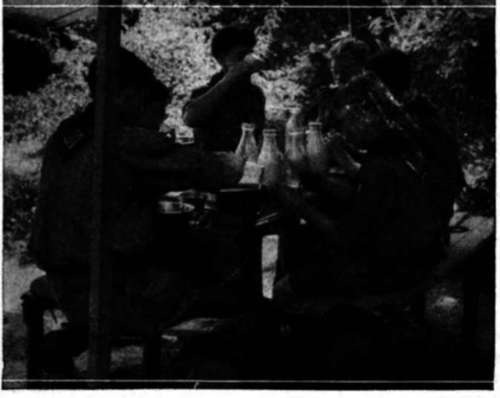
A quart of milk a day per Scout looks like a big order for some camps, miles away in the wilderness, but how about dried milk?
Continue to:


My Books

