


Coast Ice Deposits
Description
This section is from the book "An Introduction To Geology", by William B. Scott. Also available from Amazon: An Introduction to Geology.
Coast Ice Deposits
In high latitudes with intensely cold winters, great fields of ice (the ice-foot) are formed by the freezing of sea-water along the shore. The ice-foot becomes loaded with great masses of rock, part of which is thrown down from overhanging cliffs by the action of frost, part picked up from the shoreline by the ice forming around it. In summer the coast ice breaks up and floats away with its load of blocks and boulders, distributing them over the sea-bottom just as icebergs do. In storms great masses of coast ice are often driven on the shore, where they may pile up to heights of fifty feet or more, carrying some of the boulders above the levels at which they were picked up. The coast of Labrador is covered for long distances with boulders thus transported, as are many other Arctic shores. Great masses of rock are thus transported in the Baltic, and the divers report that in the Copenhagen Sound the sunken wrecks of vessels are covered with ice-borne blocks.
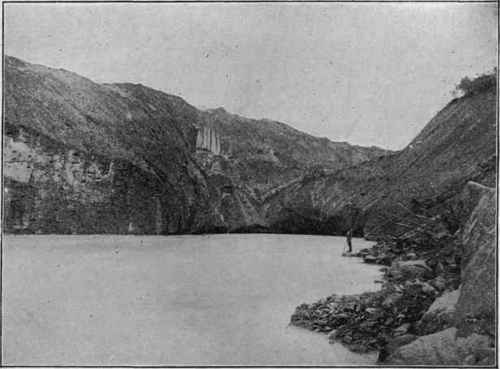
Fig. 122. - River issuing from the Malaspina Glacier, Alaska.
(U. S. G. S).
Continue to:


My Books

