


The Topographical Influence Of Joints
Description
This section is from the book "An Introduction To Geology", by William B. Scott. Also available from Amazon: An Introduction to Geology.
The Topographical Influence Of Joints
As we have repeatedly had occasion to observe, all firm and co herent rocks are divided by sets of joints into blocks of varying sizes and shapes, each kind of rock tending to display a certain degree of characteristic uniformity in the shape and size of its joint-blocks. There is, however, much latitude in this respect, for jointing is largely determined by the stresses of compression, tension, or torsion, to which the rock has been subjected after its formation. In whatever manner they may have been formed, joints exercise a very important control in the development of topographical details. The reason for this becomes obvious when we reflect that joints are lines of weakness, along which the rocks are especially liable to attack, and that master joints are important structural planes, akin to faults, which persist for long distances and often penetrate to very considerable depths from the surface.
One of the most important kinds of control exerted by joints is in conditioning the drainage lines of a given region. The general direction in which the drainage of any region is carried is determined by the prevailing direction of slope existing when the river system was established, but the flow of minor streams is very often dependent upon the direction of the joints in the rocks through which they flow. In several regions where the matter has been carefully examined, as in France, Connecticut, and Wisconsin, it is found that the network of streams closely coincides with the network of.dip, strike, and diagonal joints, which have a constant trend over wide areas. The Au Sable Chasm, so frequently referred to in preceding pages, pursues a zigzag course through the eastern part of the Adirondack uplift; in part this course is along a fault-plane, which is again forsaken to follow a line of master-joint.
An especially notable case of joint-control is seen in the gorge and Victoria Falls of the Zambesi in South Africa, cut through an enormously thick volcanic plateau of basaltic lava, an account of which is given on page 144 and need not be repeated here.
Suffice it to say that the course of the gorge has been determined by the master-joints, the river endeavouring to keep a southerly course, but repeatedly deflected by the joint-planes. The great chasm is cut along a line of fault, which yielded readily to abrasion, and may be traced into the sloping cliff at each end. At the present time the western cataract of the Victoria Falls, called Leaping Water, has discovered another line of weakness and has cut its bed fifteen feet below the level of the other falls, manifestly preparing the way for the excavation of a new zigzag.

Fig. 242. - Gorge of the Zambesi below Victoria Falls, South Africa.
Another respect in which joints are important is in controlling the details of topography, for the obvious reason that it is along the joint-planes that rocks yield to the attack of the denuding agencies, most of which loosen and detach the joint-blocks. Evidently, the form of surface left after the detachment of the blocks is conditioned by the joint-planes. In the plutonic igneous rocks there is great variety of form and size in the joint-blocks. Granite is often divided by three sets of nearly rectangular joints, one of which is horizontal or gently inclined, and widely spaced so as to form large rectangular blocks. When this is the case, weathered granite cliffs look like old masonry and rise in step-like terraces. When the joints are very close together, the rock breaks up into small angular blocks. In other examples, only the vertical joints are strongly pronounced, and then wild and craggy cliffs and needle-like summits result from weathering. The characteristic granite domes so frequently found, to which reference has already been made, are due to exfoliation of granites in which the joints are few and widely spaced.
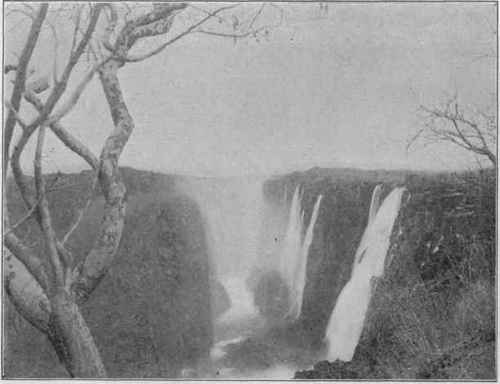
Fig. 243. - The Chasm, Victoria Falls of the Zambesi.
Columnar jointing in sheets is chiefly vertical, and hence pro- . duces vertical faces, which change and follow any curvature that may develop in the columns. Most lavas are closely and very irregularly jointed, so that they are rapidly broken up by frost. Such rocks, when exposed in mountain tops, give rise to sharp ridges, jagged, irregular peaks, and very rough slopes, portions of the rock where the joints are more widely spaced and the blocks larger, yielding less rapidly to destruction, and projecting as ridges and buttresses. Aside from rectangularly jointed granite, with well-defined horizontal division planes, masses of igneous rock yield rough, irregular, and craggy surfaces. On the other hand, the direct influence of joints is often masked by the effects of chemical decomposition produced by water descending along the joint-planes, in consequence of which a freshly exposed surface is often already rotted and ready to yield to the rain and wind. Thus, with general characteristic features, igneous rocks give an infinite variety of details in form.
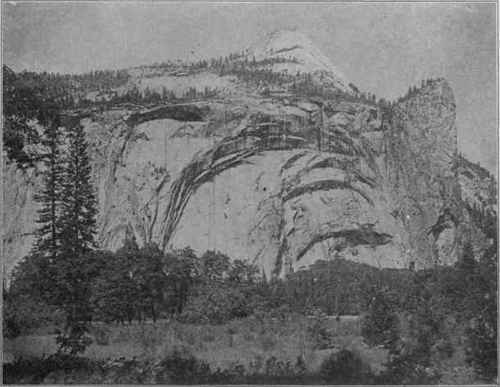
Fig. 244. - Granite dome, Yosemite Valley, Cal. (Photograph by Sinclair).
In stratified rocks the joints are usually vertical to the bedding-planes, and when the strata are hard and do not crumble easily on weathering, the surfaces are vertical in horizontal strata, which thus give rise to flat-topped, vertical-sided mesas, and pyramidal mountains. Inclination of the strata changes the position of the joint-planes, resulting in escarpment, dip slopes, and the other classes of forms already described. The fact to be emphasized here is the share which the joints have in producing these forms.
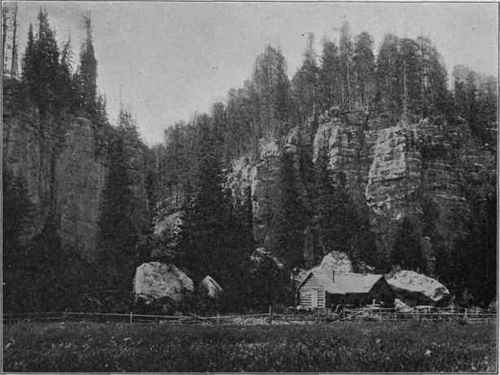
Fig. 245. - Limestone cliffs, Black Hills, S. D. (U. S. G. S).
The crystalline schists are, for the most part, jointed in a highly irregular manner, though gneiss sometimes has rectangular blocks, like those of granite. As a result of this confused jointing, the schists give rise to forms which display a maximum of irregularity.
Under given climatic conditions, each kind of rock weathers in a characteristic manner, and this manner is, in large degree, determined by the joint-blocks into which it is divided.
Continue to:


My Books

