


Chapter II. The Grip
Description
This section is from the book "The Golf Swing, The Ernest Jones Method", by Daryn Hammond. Also available from Amazon: The golf swing, the Ernest Jones method.
Chapter II. The Grip
The view that the execution of the golf swing depends on hand and finger action brings out emphatically the immense importance of the grip. The grip is seen to be at the root of the matter; for clearly the player's control over the club depends primarily upon it. His hold of the shaft must be firm yet it must be flexible. Here are two qualities which appear to be incompatible with each other, and it is the golfer's first duty to acquire that method of gripping the club which will allow him to bring these apparently incompatible qualities together in sweet accord.
The old-fashioned palm grip gave power, but not flexibility or "touch."* The double V grip gives both power and touch, but not unity of action to the two hands. The interlocking grip conduces to that unity of action, but only at the expense of both power and touch (for it puts the powerful forefinger of the left hand almost out of action). The overlapping grip, however, has all the qualities and none of the defects of the other varieties. Its superiority might, indeed, be inferred from the fact that it is the grip of almost every professional golfer and of nine first-class amateurs out of ten.
* The writer speaks always of the normal case, and takes no account of what long practice or genius may accomplish with any method under the sun.
It is unfortunately the fact, however, that the majority of golfers who use an overlapping grip entirely miss one of the essential features of this form of grip. They realize that the little finger of the right hand is to be allowed to ride over the forefinger of the left hand, so that the hands may have some chance of acting as one, and they realize that the overlapping grip is a finger grip. What they do not realize is that the very essence of the grip is the dominating part played by the forefinger and thumb of each hand.
The advice usually given - though never practised by the expert - is that the first step in gripping the club is to lay the shaft along (that is, parallel with the joints of) the fingers of the left hand. The position indicated is shown in Fig. 7 and the consequent positions of the hands at the top of the up-swing are as shown in Figs. 8 and 9. The position in Fig. 8 is unusual, because the player instinctively realizes that such a position would give him no control of the club, and allows the shaft to move into the palm of his hand as the up-swing proceeds. The result is that that which set out to be a finger grip becomes a palm grip, a grip lacking in flexibility and the capacity to produce high speed in the club-head.
The true finger grip is to be achieved, not by laying the club along the fingers of the hand, but by the following method:
1. Lay the face of the club-head against the ball, allowing the club to take its natural lie.
2. Take hold of the shaft with the thumb and forefinger of the left hand, pressing them together (Figs. 12 and 13). Note that the V made by them on the top of the shaft is a short one, the crook of the forefinger being pronounced and slightly lower than the tip of the thumb.
3. Wrap the other fingers round the shaft (Figs. 14 and 16).
Note. - (a) The back of the hand is not on the top of the shaft, but at the side of it - that is, facing toward the hole. As the player looks down, he should see the knuckles of the first and second fingers, but not more than a suggestion of the knuckle of the third finger. If the back of the hand is further on the top of the shaft, the wrist and forearm will be stiffened, and the swing will consequently be cramped. If the back of the hand is further to the side (that is, more toward the hole), then the left wrist will tend at the beginning of the up-swing to bend outward (a movement known to anatomy as the "extension of the wrist-joint," and utterly out of place in the golf swing: Fig. 20). If, however, the club is gripped as shown in Figs, 17 and 18, and the proper mental picture of the processes involved in the up-swing has been conceived, the fingers in initiating the movement of the club-head will automatically bring the wrist and forearm into the ideal position. There will be no "extension of the wrist-joint," and the hand and forearm will turn as shown in Fig. 21.
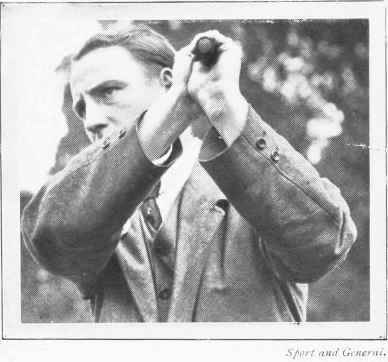
Fig. ii. - The ideal finish of the shot. The second, third and fourth fingers are extended to the same extent as in Fig. 1.
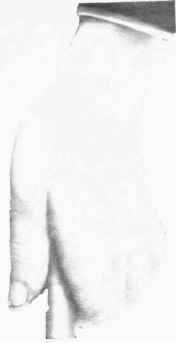
Fig. 12 - How the club is gripped.
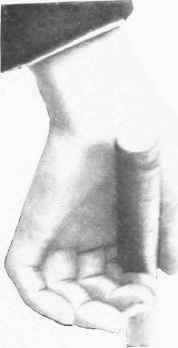
Fig. 13. - Another view.

Fig. 14. - Note position of forefinger and thumb.
(6) Though the back of the hand is not on the top of the shaft, or facing the sky, the V between the thumb and forefinger is on the top of the shaft. It will probably require some little practice in order to get the V into this position without bringing the back of the hand too far over the shaft.
(c) The grip is dominated by the pressure of the forefinger and thumb, the second, third, and fourth fingers contributing in decreasing order to the control of the club so obtained.
(d) If the fingers and thumb are opened out, the shaft will be found to lie, not along the finger joints (Fig. 7), but along a line from the tip of the forefinger, across the lower part of the second finger, the root of the third finger, and the cushion of the palm (known in palmistry as the Mount of the Moon). See Fig. 15.
4. Having mastered the grip of the left hand, place the right hand about the shaft so that the little finger rides easily over the forefinger of the left hand, and the thumb and forefinger grip the shaft in similar formation to that of the thumb and forefinger of the left hand. The knuckles of the first and second fingers are visible to the player, the V between the thumb and forefinger is on the top, or almost on the top of the shaft, and the grip is secured mainly between the crook of the forefinger and the thumb, though the second, third, and fourth fingers, in descending order, play their part.
To sum up, the grip (Figs. 17 and 18) is dominated by the forefingers and thumbs of both hands, the other fingers fulfilling a necessary but ancillary function.
The reader will be able to satisfy himself by experiment, without a club, that if he closes all the fingers of his hand as tightly as possible, he will stiffen the wrist and forearm and even the upper arm, whereas if he grips as firmly as possible with the forefinger and thumb he can retain a completely free wrist, forearm, and upper arm. Such freedom of action, coupled with control of the club, means the playing of good golf, whereas a conscious tension at any point in the mechanism other than the grip of forefinger and thumb is an obstacle to good golf. It is on these grounds that so much importance is attached to the question of gripping the club.
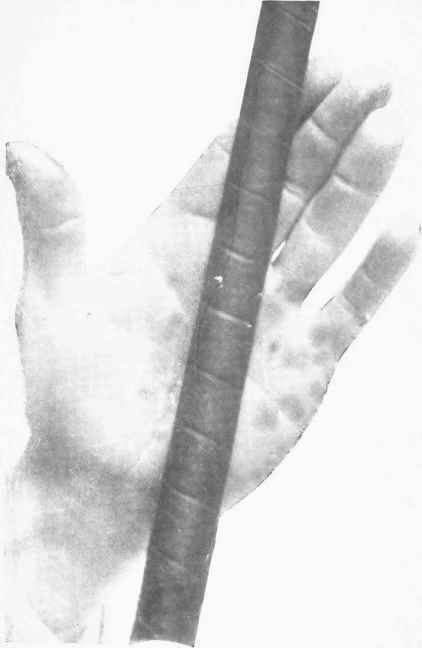
Fig. 15. - The line of the shall across the left hand when the hand is opened after gripping the club as in Fig. 16.
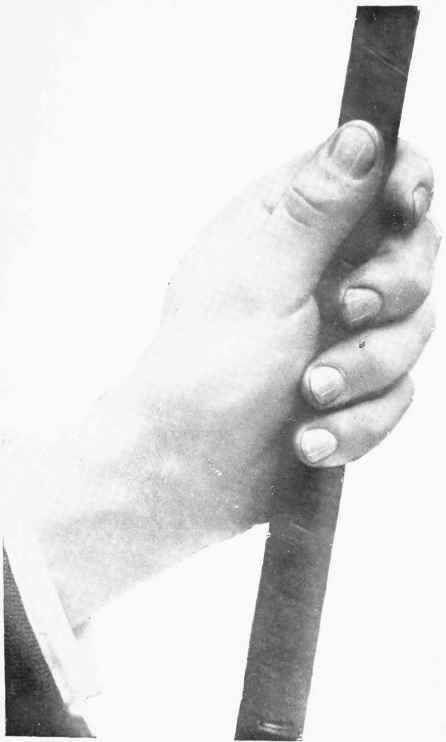
Fig. 16. - A proper hold of the shaft.

Fig. 17. - The ideal grip.
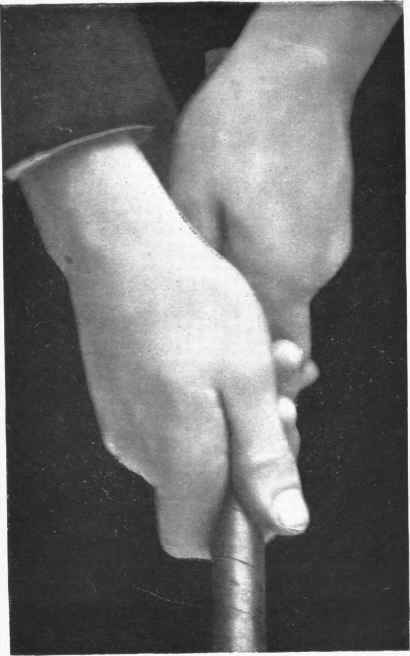
Fig. 18. - The ideal grip.
Figs, 10 and 11 indicate the respective positions of the hands and fingers at the top of the up-swing and at the end of the follow-through. They show that the grip is preeminently a finger grip, and they make clear the nature of the work done by the second, third, and fourth fingers. From this point of view Fig. 10 should be compared with Figs. 8 and 9.

Fig. 19. - Wrong position: left wrist bent outward.
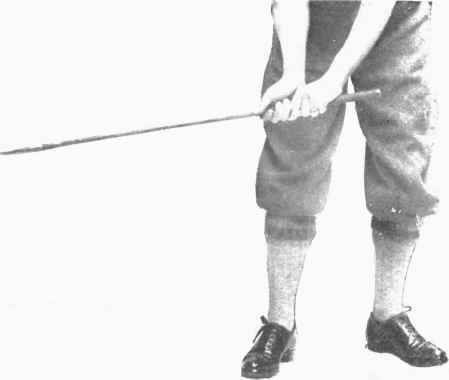
Fig 20 - Wrong position: left hand over-turned.

Fig. 21. - Correct position.
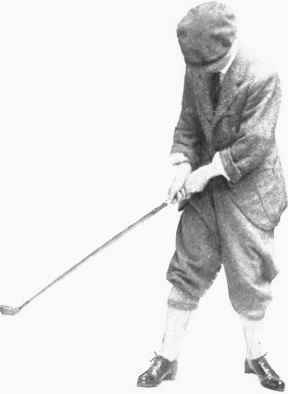
Fig. 22. - Left hand has not forced club-head back.

Fig. 23. - Proper action of left hand.
Continue to:


My Books

