


Lake Como. Part 4
Description
This section is from the book "Lake Como - John L. Stoddard's Lectures", by John L. Stoddard. Also available from Amazon: John L. Stoddard's Lectures 13 Volume Set.
Lake Como. Part 4
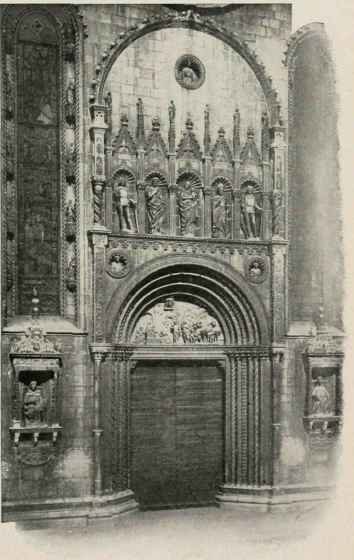
Facade With The Pliny Statues.
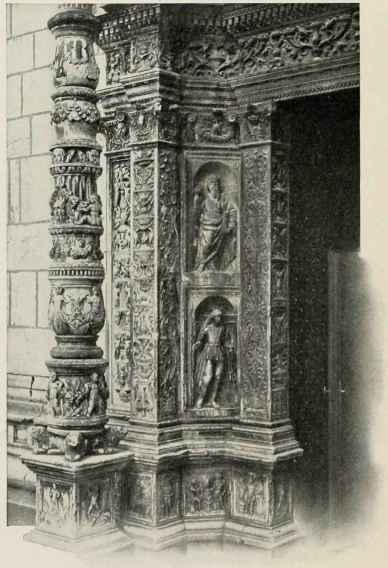
A Doorway Of The Cathedral.
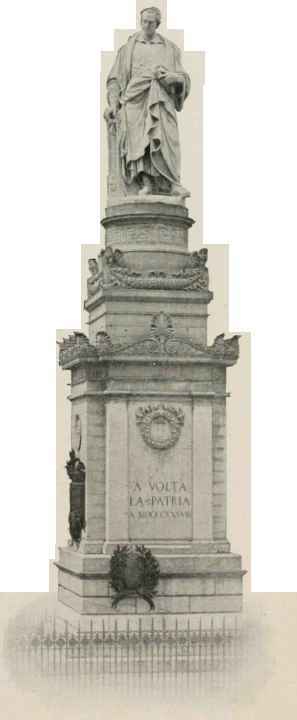
Monument To Volta.

Like An Alpine River.
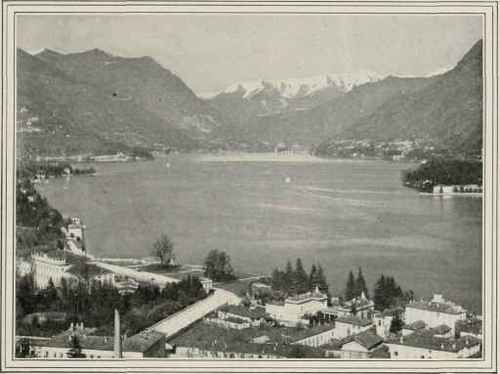
Villa-Studded Shores.

Villa Margherita, Cadenabbia, Where Verdi Once Resided.
One notices with astonishment how far up on the mountain sides are many of the villages, - built when perpetual danger drove them to the heights. For, through the dreary centuries when barbarism triumphed here, incessant wars and deeds of piracy made residence on the shore-line perilous. 'Tis well that nature hides so soon the cruel scars of man. Beneath the silver gray of these old olive trees and the perennial verdure of the pines how many unsuspected tragedies have been enacted! How many lovely flowers now bloom from soil often drenched with blood! The first halt, made by the steamboat on its northward voyage from Como, is at the famous pleasure resort, - Cernobbio. Here a luxurious palace, built in 1568 for Cardinal Gallio, the son of a humble fisherman of the place, was subsequently occupied for several years by the unfortunate Queen Caroline, wife of George IV. of England, whom he in vain endeavored to divorce, and who died three weeks after having been refused admission to Westminster Hall, at the ceremony of his coronation. This building, after various vicissitudes, has now been transformed into a Grand Hotel still called by its old-time name, - the Villa d'Este. It has, moreover, the secondary title of "Hotel of the Queen of England"; and whether its popularity with English travelers is due to the "strange witchery of a name," or to the stranger incidents connected with the life of the unhappy princess who resided here, certain it is that in spring and summer Albion's sons and daughters are more numerous in this hostelry than visitors from any other land.
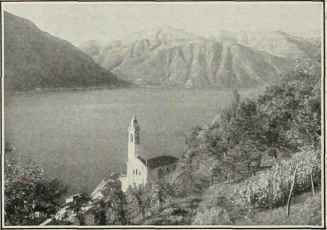
A High-Perched Village.
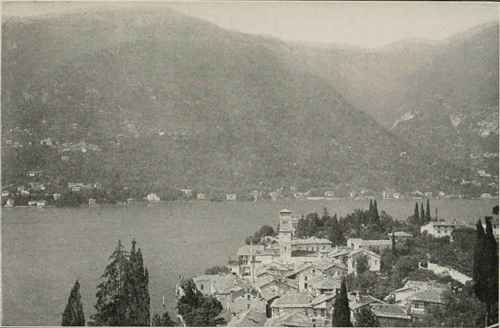
Lake Como, Near Torno.
The tourist who has chosen this for his place of sojourn on the lake, can make, at will, a charming combination of the row-boat of the present with the romance of the past. Seating himself, on any pleasant morning, in a pretty barca, the measured strokes of picturesque oarsmen can soon sweep him backward to the memories of two thousand years. Perhaps the greatest fascination of Lake Como is the fact that on its waters souvenirs of classic days present themselves at every turn. Thus, almost opposite the Villa d'Este, stands the imposing Villa Pliniana, the site of which is unsurpassed in historic interest by any other on the lake. At any moment, as you are rowing toward it, some trifling circumstance may cause your boatman to exclaim "Per Baccho," - words which were heard here two millenniums ago. Yon passing steamer bears upon its side the title "Lariano," reminding us that Larius was the name by which this lake was always designated by the Romans. In fact, the ancient title still remains in use. If we may trust the explanation of this word which Cato gives of it, Larius is derived from the Etruscan Lar, which signified princely, or the first in rank. Facile princeps certainly Lake Como is to-day in the esteem and love of thousands of admirers, and Virgil's verdict is confirmed by nearly every visitor to Italy, for he enthusiastically called it in his "Georgics" "Te Lari maxime," a proof that he considered it the finest of Italian lakes.
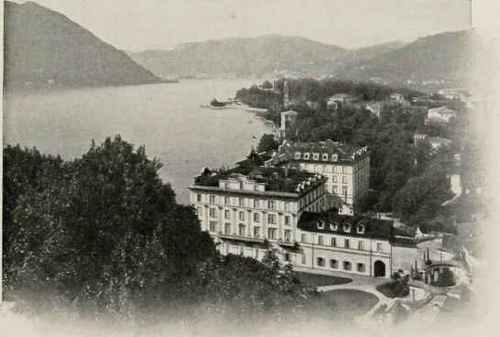
Cernobbio And The Villa D'Este.
Yet it was on a steamer traversing the stretch of water near the Villa Pliniana, that a tourist asked me: "Why should this lake be thought superior to so many others? Water is water everywhere, and land is land. Surrounding hills and mountains differ, it is true, in height, but the effect is much the same. Why, therefore, should we rank Lake Como so much higher than, for example, Emerald Lake in the Canadian Rockies?" The answer was, of course, that, even conceding that both have an absolute equality in picturesque environment and natural beauty, one sheet of water does, and the other does not, possess historical associations. Between them, therefore, yawns the gulf which separates the scholar from the savage. One furnishes memorials of Caesar, Virgil, and the Plinys. The other calls to mind the North American Indian and his wigwam. A freer life can certainly be led upon the banks of the Canadian lake than on the shores of Como; but that is true of all backwoods, contrasted with a library or drawing-room. Both are unquestionably beautiful and thoroughly enjoyable in different ways; only to one belong the birch canoe, the fishing-punt, and bathing in the minimum of clothing that the law allows, while to the other naturally fall historic villas, curtained barges, the liquid Latin tongue, and charming gardens haunted by the memories - and often actually embellished by the sculptured forms - of Daphne and Apollo. Perhaps the gravest fault observable in the rising generation is contempt for retrospection. Filled with an optimism born of self-complacency, and firmly tethered to To-day, it ridicules or quietly ignores the slowly gathered wisdom of the past. Hence, since a suitable perspective is the origin of reverence, it is precisely want of reverence that causes the decline in manners and ideals conspicuous at the present time. Without that quality, or at least without a sympathetic imagination, a tour through historic lands is like attending a concert, when completely deaf. One sees the motions of the players, but one hears no sound, and what enraptures others seems a bore. Travel was once, and ought to be to-day, despite a flood of vulgar witticism to the contrary, a reverential pilgrimage to shrines of nature, art, and history. But times have changed in this respect. The really serious tourist must constantly combat the modern tendency to sneer at sentiment, belittle works of art, and yawn at ruins. It is a sad result of suddenly acquired wealth and lack of proper education that droves of gilded calves in human form have been let loose upon the classic highways of the world.
Continue to:


My Books

