


The Dolomites. Part 9
Description
This section is from the book "The Dolomites - John L. Stoddard's Lectures", by John L. Stoddard. Also available from Amazon: John L. Stoddard's Lectures 13 Volume Set.
The Dolomites. Part 9
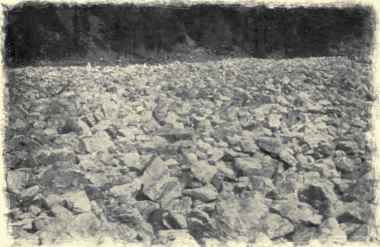
A River Of Stones Among The Dolomites.
Pieve di.Cadore is superbly situated on the side of a mountain, high above a pearl and beryl-colored river, and has a view that could not fail to have delighted Titian's soul. The little town seems, naturally, given over to the worship of the demigod who has conferred upon it such a lasting fame, the most conspicuous memorial of him being a bronze statue in the centre of the principal square, which represents him at his work, palette and brush in hand. Close by it stands the house whose mural tablet states the occurrence here of the master's birth in terms more positive than those of its competitor in Campo di Sotto. Somehow I felt, while lingering here, a kind of pity for that modest hamlet in the flowery meadow, which also claims the immortal artist for its own. That has so little to display, while the renowned and fortunate Pieve has so much! Here, for example, one beholds not only the bronze monument but also the authentic house where Titian as a child resided, and a museum containing several paintings by his hand, many engravings of his works, a number of his autograph letters, and even the patent of nobility conferred upon him by Charles V., and signed by the imperial hand. With all this opulence of Titian-relics, it seems almost unkind in Pieve to deny to little Campo di Sotto the glory of his birth. At present, however, it laughs to scorn the pretensions of its rustic rival.

Monument To Titian At Pieve Dl Cadore.
As I was standing by the monument, a golden-haired child came running out of the old Titian house. Clambering up the side of the ancient fountain, she seated herself upon its rim, as the boy Titian himself may frequently have done more than four hundred years ago. At all events, he must have looked off dreamily here upon the purple mantle of Mount Antelao, and possibly drew sketches of it on the broad stone coping. Whoever had predicted then the wonderful career that awaited the young lad would certainly have been thought a madman. For Titian's life must rank among the very happiest and most fortunate that the world has known. It would be hard to find another in which length of days, continuous successes, and the highest honors were so lavishly bestowed. His childhood, it is true, was humble, but never seriously pinched by poverty; and from obscurity he quickly rose to most exalted heights of luxury and fame. He was in truth a favorite of the gods; for, although early marked by exceptional genius, his marvelous gifts did not, as has so often been the case, unbalance him and render him eccentric. Even the graces were not wanting in his physical endowment; for he was eminently handsome, and possessed the elegant manners of a grand seigneur. The idol of the public, adored by women, courted by doges, popes, and emperors, who all felt flattered to be painted by him, he led in perfect health, until the age of ninety-nine, a life as brilliant and harmonious as his colors. A polished man of the world, and fond of pleasure, he was invariably self-controlled. Painting was ever his first love and favorite pursuit, and from his studio the master rarely lost a day. Moreover, most remarkable of all, instead of being wearied to satiety by his unending flow of fortune, and turning to the world the blase' face of one for whom no new delight remains, Titian seems always to have been cheerful. No doubt the reason of this was, in part, his good health and a naturally buoyant temperament; but it came chiefly from his tireless love of art, and his ability to gratify that love with a preeminent and never varying success.
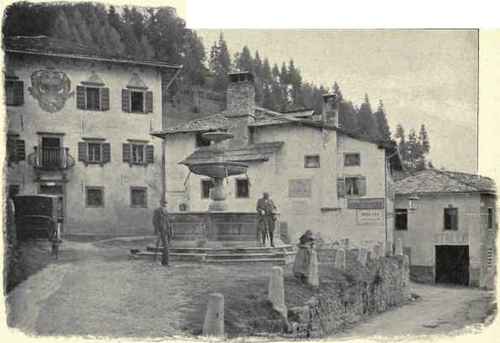
Titian's reputed birthplace at pieve.
At the end only came a swift and terrible eclipse. In 1576, when the plague ravaged Venice, till out of her one hundred and ninety thousand inhabitants fifty thousand perished, the white-haired artist, whom another summer would have made a centenarian, attempted to escape from the death-stricken city to his loved Cadore, but it was too late. A cordon of troops surrounded the lagoons, and no one was allowed to leave the infected area. Accordingly, the grand old master turned back to his house to die; and it is horrible to reflect that, since his son and servants had already perished, a number of those ghoulish thieves, who always lurk like vultures in the wake of a calamity, broke into the studio and bedroom of the dying man and looted them before his closing eyes.
Continue to:


My Books

