


The Dolomites. Part 10
Description
This section is from the book "The Dolomites - John L. Stoddard's Lectures", by John L. Stoddard. Also available from Amazon: John L. Stoddard's Lectures 13 Volume Set.
The Dolomites. Part 10
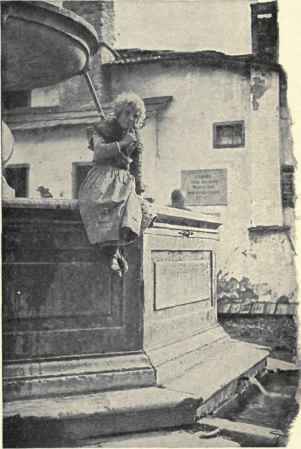
Child Life In The Home Of Titian.

Titian In Old Age.
Every one knows the splendid monument reared to Titian's memory in the Church of the Frari in Venice. Authorities differ as to whether his body was really placed there, or was thrown into the common trench with those of others who had died of the appalling pestilence. Those who maintain that he was buried there, assert that, in consideration of his fame, the Senate made in his case an exception to the rule of refusing honorable interment to the victims of the plague. It matters little now to him or us. Even the stately monument, which represents in beautiful relief, behind the figure of the artist, several of his greatest works, serves but to emphasize the fact that Titian is not dead. He lives in every glowing canvas that enriches European capitals, - from the superbly decorated halls of Catherine Second's Hermitage beside the Neva to Philip Second's grand collection at Madrid, and from the National Gallery by the Thames to the unrivaled palaces of Florence and of Rome. He lives, too, in the thousands of engraved and photographic reproductions of his works, which make the untrav-eled world familiar with his genius. O priceless privilege, to live thus, generation after generation, in the homes and hearts of millions, whose lives are softened and uplifted from their sordid cares by his sublime portrayals of subjects human and divine!
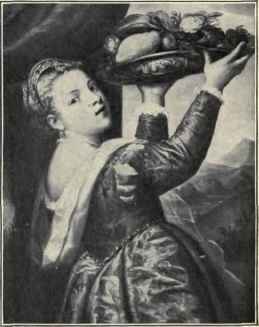
Portrait Of Titian's Daughter, Lavinia.

Titian's monument in the church of the frari, venice.
The climax of his power, as well as the culmination of Venetian art, was reached in his "Assumption," - that rapturous ascent, to a reunion with her Son, of the triumphant Mother of the Crucified. Aside from the splendor of its coloring, the conception and drawing of this picture stamp it as a masterpiece. The upturned face of the mature Madonna, the ecstasy expressed by parted lips and outstretched hands, and above all her upward motion as she sweeps toward heaven, encircled by a nimbus of adoring cherubs, can never be too often studied or too highly praised. Even if wholly separated from the accompanying figures of the angels and apostles, the Madonna alone would express the motif of the painting. Apart from its religious and historical significance, also, it is a glorious symbol of the human soul in its rare hours of inspiration, leaving dull earth and lifting with itself even the material body as it rises to communion with the Infinite.

Titian's " Assumption Of The Virgin," Venice.
Ever since - more than twenty-five years ago - I first read Whymper's thrilling record of his mountain conquests, entitled "Scrambles among the Alps," I have had great respect for reasonable mountain climbers, especially for those who, like Professor Tyndall, combine the pleasure of adventure with scientific observation of the rocks and glaciers of the upper world. Indeed, to a modest extent, I have myself enjoyed in Switzerland a bit of Alpine climbing here and there, involving moderate ice work under the direction of a guide. But when I looked upon the Dolomites, and thought of scaling their precipitous and fragile pinnacles, I instinctively recoiled. To take occasionally two or three hundred yards of dangerous climbing up a couloir, or to surmount an icy cliff by steps cut in its crystal surface by the ringing ax, when these are transient incidents in the conquest of a mountain, is one thing; but to attempt, with toes and finger nails, to climb gigantic perpendicular walls and towers of corroding stone, thousands of feet in height, is quite another. Yet there are probably as many alpinists at work to-day among the Dolomites as in Switzerland; and most of them are not content to scale these mountains in the easiest way, but if there be a steeper and more perilous pathway to the summit, it is invariably chosen.
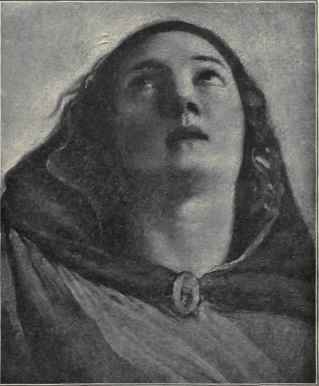
The Head Of The Madonna.
Continue to:


My Books

