


Spain. Part 22
Description
This section is from the book "Spain - John L. Stoddard's Lectures", by John L. Stoddard. Also available from Amazon: John L. Stoddard's Lectures 13 Volume Set.
Spain. Part 22
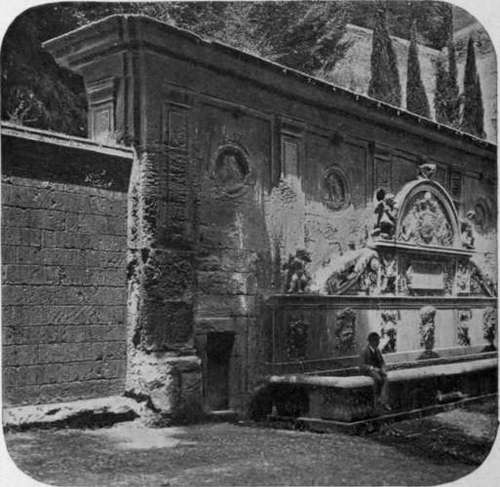
On The Alhambra Hill.
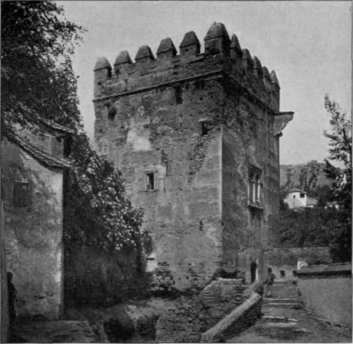
One Of The Vermilion Towers.
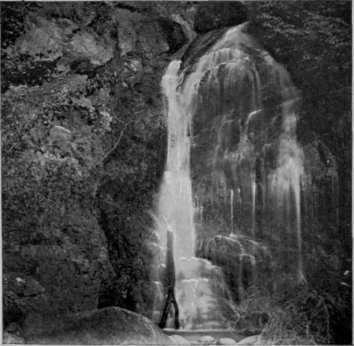
Loosed From The Mountain Fastnesses Above.
Approaching finally the terminus of these curving avenues, we stood before a large square tower of imposing aspect. It is the entrance to the Granadan Acropolis, and bears the title of the Gate of Justice, because the Moorish sovereign formerly sat here to dispense justice to his subjects, - a custom always common in the East, and one repeatedly mentioned in the Hebrew Scriptures. An inscription over the doorway reads: "May the Almighty make this portal a protecting bulwark, and write down its erection among the imperishable actions of the just!"
Beneath the arch is an altar dedicated to the Virgin; and it was before this that the first mass was said after the conquest of Granada, while the Moors, with tear-dimmed eyes, were traversing the mountains on their way to Africa. This tower, like all the rest of the Alhambra battlements, is severely plain, but such external plainness is characteristic of most Eastern architecture. The Orientals superstitiously avoid the evil eye of envy, and rarely show the world the treasures they possess. So it was here. Externally the Alhambra was a frowning fortress; internally it was a voluptuous palace. Without, one looked on unattractive walls; within, one found the most enchanting ornamentation that the world has seen. The Alhambra resembles, therefore, a valiant warrior, - fierce and unyielding in the heat of battle, yet full of tenderness in hours of relaxation.
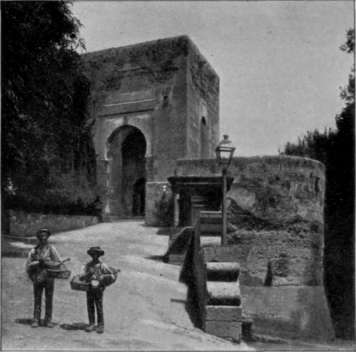
The Tower Of Justice.
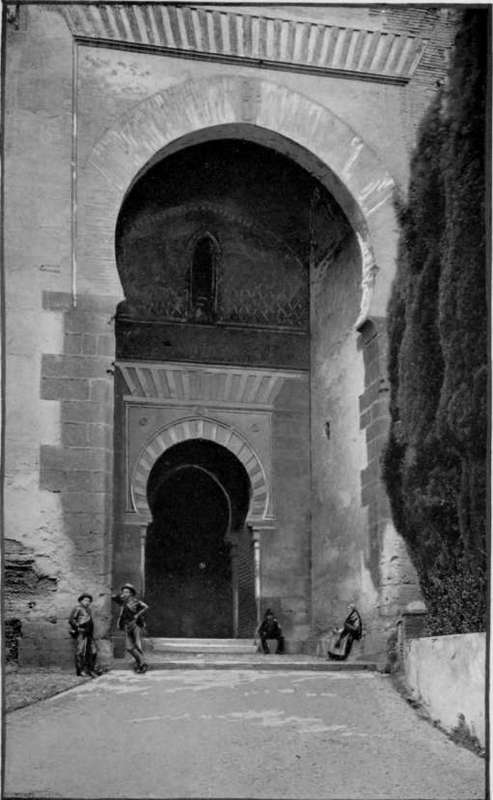
The Gate Of Justice.

The Alhambra's Belt Of Masonry.
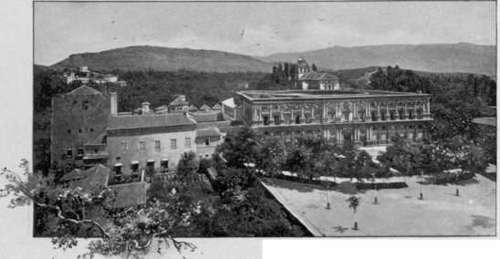
Palace Of Charles V And The Alhambra.
Passing beyond this Gate of Justice we found ourselves in an extensive area, like the courtyard of a castle. "Where is the Alhambra?" I asked in disappointment; for I had expected to step at once into its famous halls. Instead of that, before us rose, from a mass of shrubbery and flowers, the ruined palace of Charles V, - begun but never finished by that emperor, who had resolved to build here something better than the Alhambra. Accordingly, in obedience to that royal whim, a large part of the Moorish palace was torn down to make room for this structure, which seems as much out of place within these walls as did the Christian chapel in the Mosque of Cordova.
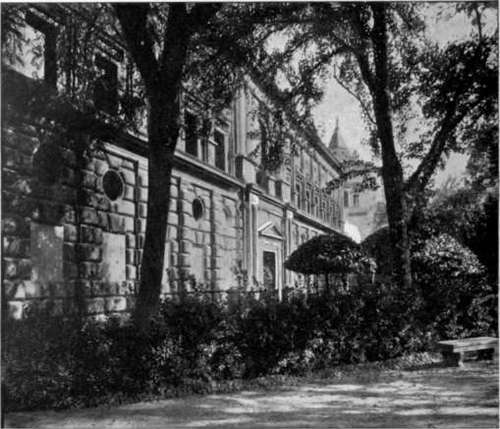
The Palace Of Charles V.
The interior of the ruined palace of Charles V is a place where travelers sometimes feel a trifle nervous in the evening.
In fact, during my stay on the Alhambra Hill, a great excitement was caused one morning by the declaration of a French gentleman that he had been dogged by footpads here the night before. He said he had been forced at last to run from them, arriving pale and breathless at the hotel door. Investigation proved, however, that the reputed footpads were agents of the Government, ordered to keep close watch on relic-hunters, and they had deemed the Frenchman's fear a proof of guilt.
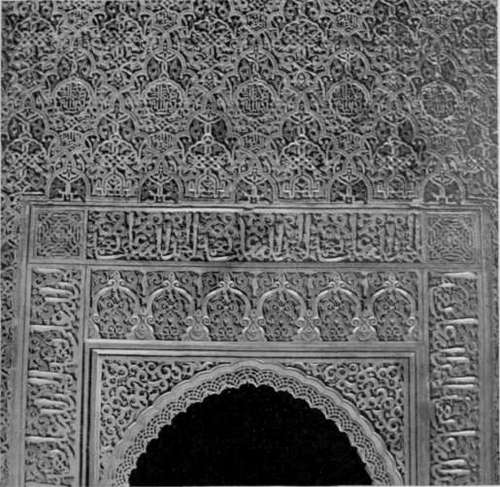
Ornamentation Of The Alhambra.
Leaving this useless ruin, we eagerly passed through a modest doorway and stood in the Alhambra itself. At once, as though by a magician's spell, we seemed to have passed from Europe into Asia. We were in the Court of Myrtles. The blue dome of the sky was above us, and beneath were marble slabs, whose spotless whiteness was once surpassed by the snowy feet of the fair sultanas who lightly trod them, for this was the bathing-place of the wives of the caliphs.
Continue to:


My Books

