


The Dr. Miller Method Of Cell Getting
Description
This section is from the book "Honey Getting", by Edward Lloyd Sechrist. Also available from Amazon: Honey Getting.
The Dr. Miller Method Of Cell Getting
Prepare a standard frame with three triangular pieces of foundation about two inches wide at the top and reaching two-thirds of the way to the bottom bar. Put it in the hive of a breeding queen. To avoid having drone comb built in it, take out of the hive, either for a few days or permanently, all but two frames of brood and put this prepared frame between them. In a few days or a week, this frame will be half filled with virgin comb on which bees readily build queen cells. It will contain young larvae with an outer margin of eggs.
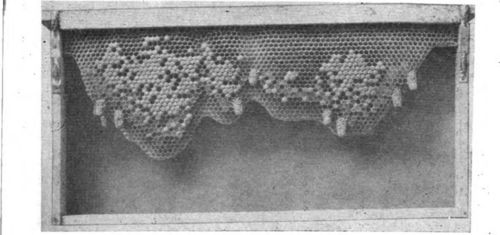
This is the way they do it. Cells produced by the Dr. Miller method.
Trim away with a sharp knife all the outer margin of comb which contains eggs except a very few nearest the youngest larvae. These outer rows of eggs will be hatching almost immediately and will be just right for queen rearing. This is simple. Any beekeeper can do it the first time he tries, and it is all that is necessary to take the place of artificial cell cups.
Now put this prepared frame into the middle of a very strong colony from which the queen has been removed, and the bees will build as good cells as you can get in any other way. The soft new comb with abundant room at the edge for cells, suits the bees so well that few, if any, cells will be started on their own combs.
Some apiarists, however, prefer to take all the brood away from the colony at the time it is made queenless, placing the queen, if a valuable one, with a frame or two of brood and plenty of adhering bees, in an empty hive while the cell building is in progress.
When the colony has been without queen or brood for an hour or so, it will be ready to rear cells on the prepared frame which is then given it.
In about ten days, the ripe cells are ready to be cut out and used wherever needed.
Continue to:


My Books

