


Morbid Changes In Nervous System
Description
This section is from the book "Alcohol, Its Production, Properties, Chemistry, And Industrial Applications", by Charles Simmonds. Also available from Amazon: Alcohol: Its Production, Properties, Chemistry, And Industrial Applications.
Morbid Changes In Nervous System
These are very variable in character and degree. Most commonly there is some thickening of the membranes, with wasting of the nervous tissues, notably in those parts of the brain which are supposed to be specially related to the higher mental activities. These appearances, however, are not distinctive of alcoholism. Further, the diseased conditions seen in the brain of patients dead of delirium tremens are quite similar to those found in cases of alcoholism where there is no delirium tremens, and they are neither constant nor very definite. Hence it appears that in chronic intoxication the nervous tissues may be damaged in ways which, while pro-
1 Mott, Arch. of Neurol., 1907, 3, 424, quoted in "Alcohol, its Action on the Human Organism," p. 98.

1.
2.
3.
4.
5.
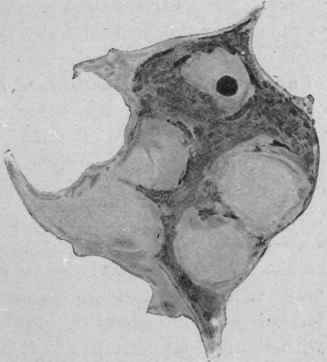
6.
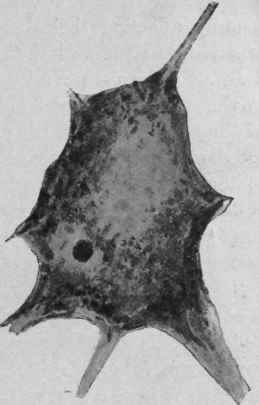
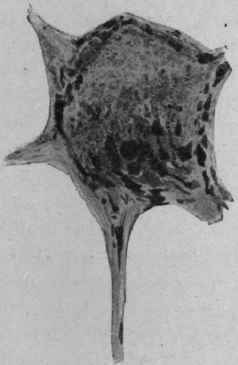
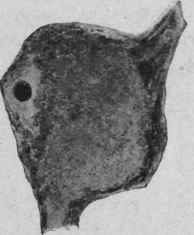
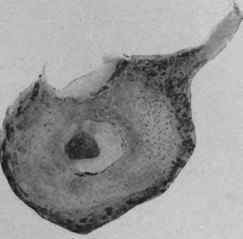
Fig. 47. - drawings of nerve-cells
(Stained with methylene-blue), showing degenerative changes. No. 1, a normal cell. No. 2 shows disappearance of colouring matter and displacement of nucleus. Nos. 3, 4, 5, and 0 show varying degrees of degradation of the cells. (Horsley and Sturge.) foundly affecting their healthy functioning, are not revealed in any visible structural change.
In alcoholic peripheral neuritis, degenerative changes are found in the nerve-fibres, and also not infrequently in the related cells of the spinal cord. Such alterations of the nerve-cells and -fibres are demonstrable through the microscope, and even in some degree to the naked eye. The diseased cell becomes swollen, its nucleus is displaced towards the margin, its extensions shrivel and vanish, empty spaces occur in the protoplasm, and finally the cell disappears.
"The explanation of these changes seems to be that alcohol is a powerful protoplasmic poison, having a selective affinity for the delicate cells of the nervous system, with whose functions and capacity it interferes at a very early stage, finally causing gross alterations in the tissue."1
Continue to:


My Books

