


How To Cook Beef
Description
This section is from the book "Mrs. Lincoln's Boston Cook Book", by Mary J. Lincoln. Also available from Amazon: Mrs. Lincoln's Boston Cook Book.
How To Cook Beef
Good beef should be bright red, well marbled with yellowish-white fat, and with a thick outside layer of fat. The flesh must be firm, and when pressed with the finger no mark should be left. The suet should be dry, and crumble easily.
A side of beef is divided into the hind quarter and fore quarter. The hind quarter consists of the round, the rump, and the loin. The fore quarter is divided into the back half and the rattle rand. In cutting up a hind quarter, the flank is first removed. The cut should slant two or three inches toward the tip. The upper part of the flank has the ends of the short ribs, and is used for corning. The lower end of the flank has no bones. This may be stuffed, rolled, and boiled, either fresh or corned. The round is separated from the rump in the line from 7 to 9. The aitch bone (7) lies between the back and middle cut of the rump and the top of the round. It is usually sold whole; it makes a good roast for a small family, considering the price (10 cents), and is the best piece for a beef stew.
The first cuts of the vein (9) which joins the face of the rump make good steak. The top of the round is the inside of the thickest part of the leg (8½, behind 8 in the diagram). As seen on the counter, it is above the bone. It consists of one large section or muscle with a thick edge of fat. The best round steaks lie between this point and the ridge of fat. The third slice is considered the best. After cutting beyond this ridge comes the beginning of another muscle, which is very tough. One may easily detect, by the separation of this narrow strip of meat along the top of the slice, whether the meat came from the best part of the top of the round. It may be the best the marketman has; but it is not the best cut, though often palmed off in place of the third slice. The under part of the round has two sections or muscles, the one nearest the bone being larger than the outside section. The skin is thin, with very little fat. Steaks from this cut are sometimes sold as good round steak to the ignorant buyer; but keep in mind that in the top cut there is one large muscle with thick fat, instead of two smaller muscles and thin fat, and you will not be deceived. This under cut of the round is excellent for braising. It is well shaped, requires no trimming, and is the cheapest cut, as every scrap of it may be eaten. Below this, as we follow down the leg, are nice pieces for stews, pie meat, etc.

Fig. 17. Aitch Bone.

Fig. 18. Round, showing the beginning of the tough muscle on the top.
The marrow bone, running through the round to the shin, contains the best marrow. The next best is in the foreshin. The hind shin differs from the fore shin in having a thick tendon, which separates entirely from the end of the leg, and unites again at the joint, forming a loop by which the hind quarter is hung on the meat hook. The middle cut of the shin may be used for stews and braising, and the lower part for soups.
The rump is usually separated from the loin, and divided into the back, middle, and face of the rump. The back of the rump, one of the best pieces for roasting, has part of the backbone and sometimes the rump bone, as some marketmen will not cut it out before weighing. The small end nearest the loin has the most tender meat.

Fig. 19. Back of Rump.
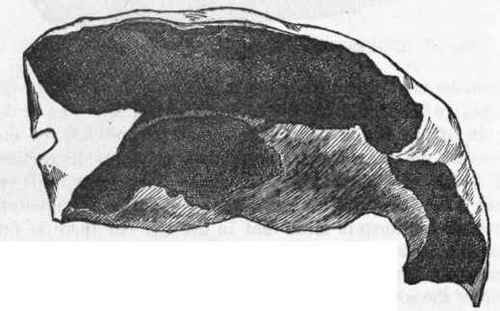
Fig. 20. First Cut of Sirloin, showing the bulging mnscle on upper edge.
The middle cut has no bone, but it is not tender. It is better for braising than for roasting. Sometimes the rump is not divided, and is cut into steaks. If cut parallel with the backbone, ft will be tough. If cut at right angles, and from the end nearest the loin, it makes the best steaks, and is well worth the extra price charged for cutting in this manner. The face of the rump has a thick piece of fat in the middle, often purposely covered by a thin cutting from the tenderloin. This is a cheap piece for roasting, but not of the best quality.
The sirloin is separated from the rump in a slanting direction. Never buy the first slice, as it always has a small narrow bone near the top in addition to the rib, and a larger portion of tough flank and gristle than the middle or second cuts. As it lies on the counter you may easily tell if it be the first slice by the small bone; and if you press on the top of the meat near the middle, a small section of meat bulges out. This is the end of the muscle forming the face of the rump and vein, and is very tough. The second cut of sirloin has the most tenderloin, and only a straight rib at right angles with the backbone. Any part after the first slice is taken off, until you come to the tip, is called the second cut, and is sold for roasts or steak. The tip is very juicy. The whole hind-quarter is hung up by the shin, the juices all flow down, and the tip holds a large portion. The muscles which are the least used have the most tender fibre and the least juice. These muscles, lying along the loin or middle of the backbone, above the ribs, and forming the top of the sirloin, are more tender, but less juicy, than those of the rump and round. The tenderloin, lying along the middle of the back under the sirloin, from below the tip to the face of the rump, is protected by its bed of suet below, and its roof of bones above. It is a muscle very little used, is very tender, but dry, and entirely without flavor. This is removed whole, and sold as the long fillet; or divided, and the smaller part, lying under the rump, sold as the short fillet.

Fig. 21. Sirloin Roast, second Cut.
In cold weather it is economy to buy a large sirloin. Remove the fillet, or tenderloin, and cook that first, as it spoils easily; corn the flank, or use it for a stew; and roast the upper part. If very large, roast it slightly the first time, and it may be roasted again for a second dinner.

Fig. 22. Tip of Sirloin.
Continue to:


My Books

