


Recipes For Pigeons. Part 2
Description
This section is from the book "The Epicurean", by Charles Ranhofer. Also available from Amazon: The Epicurean, a Complete Treatise of Analytical and Practical Studies on the Culinary Art.
Recipes For Pigeons. Part 2
(1962). Pigeons Garnished With Montglas Cases - Stuffed (Pigeons Farcis Garnis De Caisses Montglas)
Fasten a wooden foundation on a dish, it to be one inch high and not too wide: cover with cooked paste (No. 131) or noodle paste (No. 142) decorated on the top with a piping in relief and having a wooden or tin triangle or conical-shaped support in the center, also covered with paste and bored on top so that a skewer can be inserted. Bone the breasts of three young, clean pigeons by splitting them lightly through the back, hut leaving the legs and thighs attached to the bodies; season the inside meats and fill the breasts with baking liver forcemeat (No. 81) combined with a third as much raw forcemeat (No. 89), a few spoonfuls of cooked lean ham ami as much cooked truffles, all to be well chopped; sew up the back, truss as for an entree (No. 178) with the legs thrust inside the body, bard over and wrap each one in a small buttered cloth, then cook in a good poller stock. As soon as the pigeons are clone, drain, unwrap and retighten the cloth more firmly; put them back into their stock to leave Cool, then drain again and when unwrapped, wipe them carefully with a cloth.
Now detach the breasts from the ramp of each pigeon to cut into lengthwise slices, return them to their original position and then place the birds in a sautoir with a part of their stock reduced to a half-glaze warm them in the open oven basting frequently. Remove the pigeons to a small baking sheet, smooth the cut parts nicely and cover the breasts with a not too thick Mornay sauce (No. 504), so the form of the pigeons remain intact; place them for a moment in the hot oven to have the sauce adhere, then dress them at once in a triangle almost standing upright against the support; on top of this insert a small skewer garnished with truffles; surround the bottom of the dish with a chain of small china cases filled with montglas (No. 747), then covered with a layer of forcemeat and poached in a bain-marie; when serving this entree send also a sauce-boatful of the reduced pigeon stock thickened with a little sauce.
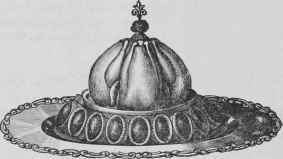
Fig 379).
(1963). Pigeons, Huntress Style - Breasts (Filets De Pigeons Chasseresse)
Raise the fillets from six pigeons leaving the minion fillet adhere, pare and suppress the skin, then salt and lay them in a sautoir with butter and lemon juice; place this on a hot fire and as soon as they are firm to the touch, remove to place under a weight: then pare again and cover one side only with a salpicon of sweetbreads, truffles and mushrooms mingled with well-reduced allemande sauce (No. 407). Cover this salpicon with chicken quenelle forcemeat (No. 89) diluted with a little cream. Dust the tops with bread-crumbs and grated parmesan cheese, mask with butter and lay the breasts in a sautoir, having the bottom covered with thin slices of fat pork, set it in the hot oven and when the breasts are of a fine color and very warm, dress them in a circle, pouring a Diana sauce (No. 460) in the middle.
Continue to:


My Books

