


Recipes For Serving Fresh Fruit At Meals
Description
This section is from the book "Practical Cooking And Serving", by Janet McKenzie Hill. Also available from Amazon: Practical Cooking and Serving: A Complete Manual of How to Select, Prepare, and Serve Food [1919].
Recipes For Serving Fresh Fruit At Meals
The English custom is to serve fruit at the close of the breakfast, but, dietetically considered, the beginning of the meal is preferable in point of propriety.
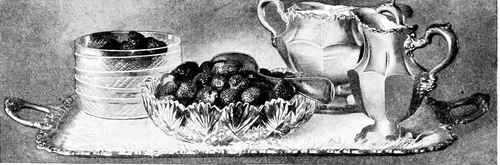
Theoretically, acid fruit should not be combined at the same meal with starchy food, for the digestive action of the ptyalin of the saliva is inhibited in the presence of an acid. On this account the sweet fruits, dates, figs and bananas, are to be given first place as breakfast fruits; while mildly acid fruits, pineapples, grapes, peaches, pears, some varieties of apples, preferably cooked, sweet oranges and berries are indicated as a second choice. Acid fruits should accompany meats. Fruit is almost universally eaten with sugar, but the combination cannot be considered hygienic, being very liable to produce malfermentation in the alimentary tract.
Apples Recipe
Apples may be polished for table service, but unless cooked they are eaten preferably between meals. The different ways in which they may be acceptably cooked for the table is almost limitless.
Pears Recipe
Pears may be polished, and when fully ripe, being of finer texture than apples, they are more readily digested, and hence are better adapted than raw apples to table service. They are chiefly valuable on account of their aroma and flavor.
Strawberries Recipe, French Fashion
Select clean, ripe berries. Remove neither hulls nor stems, but with soft brush touch the surface of each berry gently, as also the sepals on both sides, to remove any sand. Garnish with strawberry leaves and blossoms. Serve with a spoonful of sifted, powdered sugar, from a separate dish. If the berries have not been fresh-gathered, chill before serving. Serve at breakfast, or as the first course (appetizer) or last course (dessert) of a luncheon.
Strawberries Sugar And Cream
Continue to:


My Books

