


Red And White Currants (Ribes Rubrum)
Description
This section is from the "American Horticultural Manual Vol2" book, by J. L. Budd. Also available from Amazon American Horticultural Manual, Part Two.
Red And White Currants (Ribes Rubrum)
Albert (Prince Albert)
A vigorous upright variety; bunch rather short but compact; berry medium to large, pale red, and ripens late. A favorite variety for canning. Another thing in its favor is that it holds its leaves until the wood-cells are perfectly stored with starch in autumn.
Cherry
Very large; color dark red; clusters short but berries double the size of Red Dutch; quite acid. Popular in States east of the lakes and in the Mountain States.
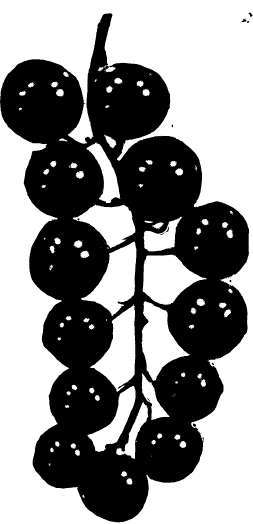
Cherry. Fay.
Fay
About as large as the Cherry, and nearly the same in quality; but the Fay has longer clusters and usually is far more productive than Cherry. Its fault is the pendulous habit that drops some of the fruit branches to the ground.
Holland (Long-Bunched Holland)
Size of berry medium, but bunches unusually long; ripens quite late. The vigorous habit of bush and the large thick leaves that hang on late without mildew has made the variety popular across the continent.
London Market
Berry medium in size; cluster quite compact, on a long stem. The bush is upright, with healthy foliage, and is less injured by leaf spot, twig borers, and other troubles than most other varieties.
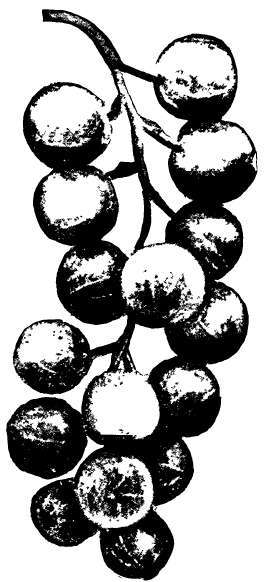
Marvin (Marvin White)
Bunch medium; berry larger than White Grape, but of same color. It varies from the latter mainly in size and some additional acidity. New York.
North Star - Somewhat smaller than Red Dutch but with longer stems, and fruit is more compact; quality not equal to Red Dutch.
Pomona
Size of bunch and berry about the same as Victoria; color bright red. The claim is made by growers that it has fewer seeds and is sweeter than any other variety. Indiana.
Red Cross
Said to be a cross between the Cherry and White Grape; berry as large as Victoria and about as acid; color lighter red than Cherry and later in season. A new variety, coming into favor.
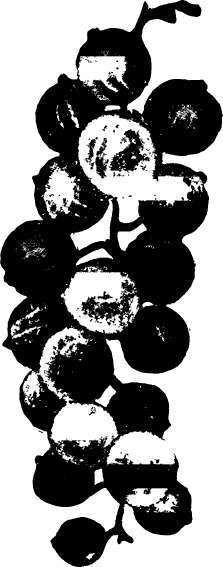
Red Cross. Versaillaise.
Red Dutch (Red Grape, Erroneously)
Larger in berry and bunch than the old-fashioned red variety; bush quite upright, but slender in terminal growth. A favorite for jelly-making and canning.
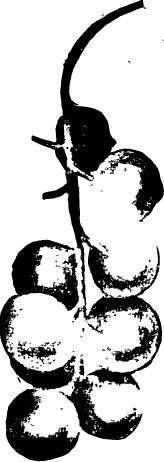
Red Grape
Small to medium, with smaller bunch and lower quality than Red Dutch. This has been often sold for Red Dutch. Not popular anywhere. Foliage not shining as with Red Dutch.
Ruby (Moore's Ruby)
Bunch larger than Cherry, but berry is some smaller; quality equal to Prince Albert; bush vigorous, and is a heavy bearer. Popular for home use and marketing.
St. Giles
A new variety from France, said to be larger in berry and bunch than the Fay, with quality of Red Dutch; bush vigorous and quite upright. It is coming into favor as a commercial variety.
Versaillaise
Much like Fay in size and color, but the bush is an upright grower. In most localities very productive. Commercial in several States; most growers prefer it to Fay.
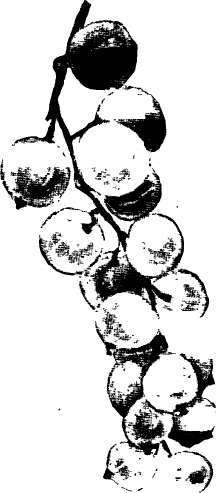
Victoria. White Dutch.
Victoria (Raby Castle)
Above medium in size of berry and length of bunch; color bright red. Season, later than Red Dutch.
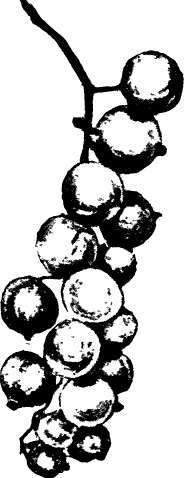
The foliage retains its color and health as well as Long-bunched Holland.
White Dutch
Habit of bush, size of berry, and length of cluster are much like Red Dutch; color darker in shade than White Grape; quality very good. It is less acid than the red varieties, and is commercial in many States.
White Gondouin
Of size and quality of White Dutch, but the bush is not as healthy or vigorous, and it is not double-starred anywhere in the Union by the American Pomological Society.

White Grape. Wilder.
White Imperial
A variety now popular for dessert use in New York. Size of berry and bunch about like White Grape, but the bush is more erect and the fruit is much sweeter.
White Grape
Larger in berry and longer in cluster than Red
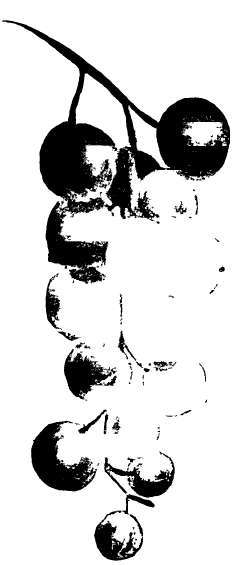
Dutch when under good culture. The best dessert variety yet tested, on account of its mild acid and excellent flavor. Grown in all the northern States for home use and market.
Wilder
Berry nearly as large as Fay with very good quality; bush vigorous, healthy, and heavy bearing. It has rapidly advanced in favor with home and commercial growers.
Continue to:


My Books

