


1. Eucalyptus calophylla
Description
This section is from the book "A Research On The Eucalypts Especially In Regard To Their Essential Oils", by Richard T. Baker, Henry G. Smith. Also available from Amazon: A Research On The Eucalypts And Their Essential Oils.
1. Eucalyptus calophylla
(R.Br., in Journal Geographical Soc., 1831, 20. Schau., in Pl. Preiss., i, 131.)
Red Gum
Systematic. One of the largest trees of Western Australia, with a rough bark, shortly fibred, and irregularly furrowed and broken. Leaves ovate-lanceolate, shortly acuminate; the venation distinct, lateral veins are nearly transverse and closely parallel, the intramarginal vein almost touching the edge. The flowers, red or white, form a terminal corymb or panicle, and are comparatively large. The calyx is pear-shaped, about 1/2 inch long; the operculum being quite depressed.
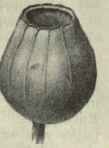
*Fruit. Large, on a pedicel nearly 1 inch long, urn shaped, occasionally ribbed, contracted at the orifice ; rim well countersunk ; valves deeply sunk; about 1 1/4 inch long and 1 inch broad.
This fruit is typical in shape of the "Bloodwood" group and probably the largest of that section, the size easily differentiating it from its congeners, except, perhaps, E. Planchoniana and E. ficifolia, both of which it closely resembles.
Habitat. -Western Australia.
ESSENTIAL OIL. - Leaves and terminal branchlets for oil distillation were forwarded to the Museum from the Darling Range, Western Australia, by the Agricultural Department of that State, and the results were published in the Pharmaceutical Journal, September, 1905. The yield of oil was 0.25 per cent. The crude oil was of a dark red colour, and had a turpentine-like odour, with little resemblance to that of ordinary Eucalyptus oils. It consisted largely of pinene, which was mostly dextro-rotatory. The third fraction contained a considerable amount of cymene, judged by the odour and physical properties. Cymene has been proved to occur in the oils belonging to this class of Eucalypts, but sufficient of this oil could not be spared to provide chemical proof. The sesquiterpene occurs in considerable amount, as proved by the reactions, and 10 per cent. of the oil distilled above 2450 C. Phellandrene was not detected, and cineol only in traces in the portion distilling about 1760 C. Constituents boiling between 1850 and 2450 C. were practically absent, as only two or three drops came over between those temperatures, so that aromadendral and piperitone do not occur. The comparative insolubility in alcohol also showed the oil to contain a large excess of terpenes. The dark colour of the oil was readily removed by agitating with dilute aqueous soda. The esters easily saponified in the cold, while at a high temperature they decomposed; the principal ester was evidently geranyl-acetate.
* The illustrations of the fruits are all drawn to natural size, which, of Course, may vary somewhat but the general contour will be found to be fairly constant.
The crude oil had specific gravity at 150 C. = 0.8756; rotation aD + 22.9°;
refractive index at 200 = 1.4731, and was insoluble in 10 volumes 80 per cent.
alcohol. The saponification number for the esters and free acid was 10.5. On rectification the following four fractions were obtained: -Between 159-1620 C, 37 percent, distilled; between 162-1720, 32 per cent. came over; between 172-245o, 13 per cent. distilled, and between 245-
2640, 10 per cent. distilled.
These fractions gave the following results: - | ||||||||
First fraction, sp. gr. at 15o C. | = | 0.8619 ; | rotation aD | + | 33.4° | |||
Second | ,, | ,, | ,, | = | 0.8616; | ,, | + | 29.4°. |
Third | ,, | ,, | ,, | = | 0.8650; | ,, | + | 15.8°. |
Fourth | ,, | ,, | ,, | = | 0.9254; | light did not pass well. | ||
In a paper read by us before the Royal Society of New South Wales, October, 1901, " On the Relation between Leaf Venation and the Presence of Certain Chemical Constituents in the Oils of the Eucalypts," the following appears, page 117: -
" We are not aware that the oil has yet been distilled from the leaves of E. calophylla, but from the chemical evidence and the botanical characteristics of leaf venation, it is very probable that when distilled, pinene will be found to be an important constituent of the oil, and that phellandrene will be absent."
This was in relation to a species growing 3,000 miles away. The results of this investigation bear out the correctness of that surmise, which was, of course, based upon the facts obtained during the investigation, for the first edition, of a very large number of species of Eucalyptus. From the numerous confirmatory results obtained since that paper was written (and later with the kinos) it appears that there is a very close relationship, not only between the botanical characters, but also the chemical constituents of the various species of Eucalyptus, belonging to this group.
Continue to:


My Books

