


V. Loose Bodies In Joints
Description
This section is from the book "A Manual Of Pathology", by Joseph Coats, Lewis K. Sutherland. Also available from Amazon: A Manual Of Pathology.
V. Loose Bodies In Joints
These occur most frequently in the knee joints, but also in the hip, shoulder, maxillary, and other joints. They consist generally of mora or less rounded pieces of tissue, and we may have fibrous tissue, bone, cartilage, and adipose tissue entering into their composition. They are nourished by the juices of the joint and may even grow in their detached position.
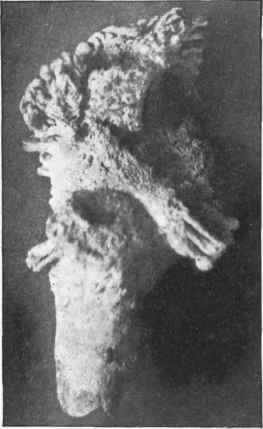
Fig. 300. - Heads of ulna and radius from tuberculosis of elbow. The parts are greatly deformed by caries and by the new-formation of bone in the form of osteophytes.
The loose bodies have various origins, but usually arise by separation of pieces of tissue which may either be parts of the normal cartilage or bone, broken off by violence, or else parts of abnormally prominent structures which have in the movements of the joints been torn off. Thus the synovial fringes may enlarge by excessive growth of adipose tissue or even of cartilage in them, or by inflammatory new-formation. Again, in chronic rheumatic arthritis, the prominent bony excrescences are liable to be broken off.
Continue to:


My Books

