


Breast Cancer. Curative Treatment
Description
This section is from the book "Cancer Manual For Public Health Nurses", by National Cancer Institute. Also available from Amazon: Cancer Nursing: A Manual For Public Health Nurses.
Breast Cancer. Curative Treatment
The patient with early cancer of the breast which is considered curable will probably have a radical mastectomy, or a combination of radiation and a radical mastectomy. Recently, however, there has been a revival of interest in the use of simple mastectomy plus radiation to achieve a cure. Studies are now underway to determine the value of this procedure. Those who advocate this procedure report that the survival rate is as good as with radical mastectomy, and that the patient has the added advantage of being less incapacitated.
Nursing Care
The patient who has had a simple mastectomy has little difficulty in moving the arm on the operative side because the muscles which abduct and adduct the arm (the pectoral muscles) have not been entirely removed as they are in the radical operation. However, it is important for the patient to keep the arm on the side of the surgery in active use and not to "favor" it in any way.
The woman who has had a radical mastectomy has a more difficult problem due to the necessity for training new muscles to take over the function of the removed pectoral muscles. In most instances the patient will have been started on some form of exercise during the period of hospitalization. This may consist of informal activities such as combing and brushing the hair, assisting with bathing, etc., or a set of definite exercises performed at specified intervals. Since there is much variation as to the kind and amount of exercise as well as the timing of such a program it is most essential that the nurse consult with the physician before instituting any regimen for the patient. Whatever the prescribed method or routine, it is important that once exercises have been started the patient continue to move her arm since it is difficult to regain range of motion once this is lost. However, the patient should not be "pushed" past the point recommended by the physician. Immediately after returning home it is unwise for patients to lift heavy objects or place too much strain on the arm on the operative side. The family should be made to understand that it is not a kindness to wait on the patient to the degree that it become unnecessary for the patient to use the arm on the affected side.
Most of the exercises which are advocated are available in other publications and will not be discussed here. There are several household tasks which the patient can perform which serve very well to exercise the arm on the operative side. (Figure 6).
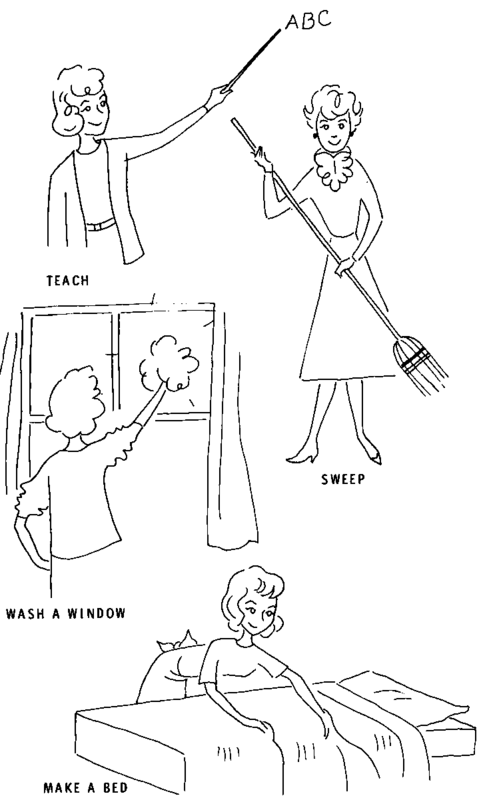
Figure 6 TRY TO WORK NATURALLY, USING YOUR ARMS AS YOU ALWAYS HAVE.
The amount of exercise which each patient needs varies with the patient's tolerance and her speed of recovery. Eventually however, full range of motion can and should be obtained.
Prosthesis-After the operative site has healed the patient will be ready for a prosthesis or artificial breast form. Many of these are available in department and specialty stores; others can be procured from special order houses. The physician is the one to decide when the patient is ready to begin wearing a prosthesis.
Some physicians discuss this matter with their patients; others delegate this responsibility to the nurse.
The patient should have the opportunity to try on several prostheses and brassieres. To insure the patient's comfort and peace of mind, it is important that both fit well.
The three most commonly utilized breast forms include cotton filled types, those made of sponge rubber, and the plastic type which contains a viscous fluid.
On occasion, patients are allergic to certain materials and it may be necessary to cover the prosthesis to prevent direct contact with the body.
The prosthesis selected should match the contour and size of the remaining breast. It should be washed frequently with lukewarm water and dried with a towel. It should be kept away from direct heat. No pins should be used to hold the form in place since piercing the form (especially the plastic type) is to be avoided. However, if the plastic fluid type is pierced, the fluid coagulates upon exposure to the air. Patients are sometimes not told this and they may be concerned about possible accidents.
The brassiere selected by the patient should fit well. It should provide firm support but should not be tight. Cotton materials are often more useful in this respect than nylon or similar materials which tend to stretch. The straps should be adjustable and wide enough to afford support and prevent cutting into the skin.
With attention to style and fit and the use of a proper brassiere most women can resume wearing bathing suits, evening dresses, and other low-cut types of wearing apparel.
Lymphedema
The lymphatic drainage of the operative side is drastically interfered with in the operative procedure. As a result fluid may accumulate in "pockets" or storage spaces. In the hospital these accumulations of fluid are usually emptied by means of drains or suctioned off by mechanical suction devices. Very often if the patient is discharged soon after surgery the wound continues to "weep" or drain even after the patient returns home. It is often helpful to teach the patient or someone in the family how to reinforce the dressing by adding gauze or abdominal pads to the outside dressing. The inside dressing should not be changed except upon orders of the physician. The drainage usually stops in a few days and the wound should dry out in a reasonable length of time. If not, the physician should be notified.
In some instances lymphedema, or swelling of the arm, may be fairly prolonged following surgery but usually disappears once collateral circulation is established. Occasionally the condition persists, and the patient's arm on the operative side becomes swollen and heavy. The reasons for prolonged lymphedema are not fully understood and treatment is not always efficacious. Some authorities feel that the chief causative factor is the interference in the lymphatic drainage caused by the surgery. Others are of the opinion that infection is the causative factor. One of the most useful control measures is the application of an arm bandage at the first sign of swelling. If this is delayed the arm will become hard and the swelling will not subside. Elevation of the arm also helps and the patient should be encouraged to put her arm up whenever she sits down. Exercise does not seem to contribute much in terms of lessening the swelling. No treatment should be instituted except on the specific order of a physician or the physical therapist to whom the physician has referred the patient.
The patient must be encouraged to keep her followup appointments with the physician, even after healing has taken place. It is important for all patients with cancer to be carefully followed at regular intervals. The patient should also be encouraged to practice self-examination of the other breast since cancer frequently spreads to the other side.
Continue to:


My Books

