


Ferula Assafoetida, Linn. Sans
Description
This section is from the book "The Materia Medica Of The Hindus", by Udoy Chand Dutt. Also available from Amazon: The Materia Medica Of The Hindus.
Ferula Assafoetida, Linn. Sans

Hingu. Vern. Hing, Beng. Hind.
Sanskrit writers describe assafoetida as an exudation from the root of the assafoetida plant which is indigenous to Persia, Khorasan and Multan.* Assafoetida is regarded as a stimulant and carminative and is much used in dyspepsia, flatulence, colic, and diseases of the nervous system. It is fried before being used internally. Raw or unfried assafoetida is said to cause vomiting.
Hingvashtaka churna.3 Take of fried assafoetida, ginger, long pepper, black pepper, ajowan, cumin seeds, nigella seeds and rock salt, equal parts ; reduce them to powder and mix. Dose, ten to twenty grains, to be taken with the first morsel of rice and clarified butter taken at breakfast. Thus administered, it is said to increase the appetite and digestive powers and to cure flatulence. Some writers recommend the above powder to be made into pills with lemon juice.
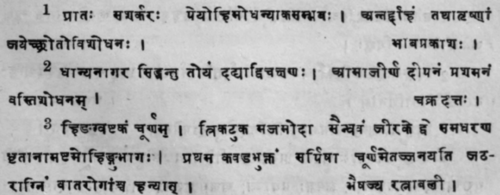
* Not now found at Multan. G. K.
In the flatulence of infants a powder composed of assafoetida, rock salt, cardamoms, ginger, and the root of Clerodendron Sipho-nanthus (bhargi), in equal parts, is prescribed by several writers.1 In flatulent colic with costiveness, a suppository made of assafoetida, rock salt and honey, and smeared over with clarified butter, is introduced into the rectum.2
In hemiplegia, stiff-neck, facial palsy, sciatica and other diseases of the nervous system, fried assafoetida is given along with a compound decoction called Mashabalάdi, (see Phaseolus Roxbur-ghii). A bit of warm assafoetida, placed in the cavity of a carious tooth, is said to relieve pain.3
Continue to:


My Books

