


Lac. Sans
Description
This section is from the book "The Materia Medica Of The Hindus", by Udoy Chand Dutt. Also available from Amazon: The Materia Medica Of The Hindus.
Lac. Sans

Lάkshά Vern. Lάkh, Hind. Gάlά, Beng.
The lac insect (Coccus lacca), has been known to the Hindus from a very ancient period. The Butea frondosa is called Lάkshά taru or lac plant in Sanskrit, this being the principal tree in which lac is said to be produced. The fluid lac-dye obtained by dissolving the crushed stick-lac in water is called A'lakta. It is used in colouring silk. Cotton coloured with this dye and pressed into flat circular pieces is sold in the bazars under the name of A'lta and is used in painting the hands and feet of Hindu females. Shell-lac is used in the preparation of sealing wax, varnish for carpenters and ornaments for women. A decoction of shell-lac is much used in the preparation of several medicinal oils, such as Lakshadi taila, Chandanadi taila, Angάraka taila, etc.
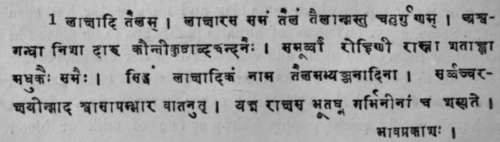
Lahshάditaila.1 Take of shell-lac two seers, water sixteen seers, boil till reduced to four seers and strain. To this decoction of shell-lac add four seers of prepared sesamum oil, sixteen seers of whey, and two tolas each of the following substances, namely, Withania somnifera (asvagandhά), turmeric, devadaru wood, root of Sanseviera Zeylanica (murvά), Pandanus odoratissimus (ketaki), Vanda Roxburghii (rάsna), dill seeds and liquorice root in the form of a paste and prepare an oil in the usual way; lastly add four tolas of camphor. This oil is much used for inunction in chronic fever and consumption. The other oils containing lac are prepared in a similar way, with the addition of various medicinal substances in the form of paste.
Continue to:


My Books

