


Nat. Order. Gramineae. Saccharum Officinarum, Linn. Etc. Sans
Description
This section is from the book "The Materia Medica Of The Hindus", by Udoy Chand Dutt. Also available from Amazon: The Materia Medica Of The Hindus.
Nat. Order. Gramineae. Saccharum Officinarum, Linn. Etc. Sans

Ikshu. Vern. Alk Beng. Uk, Hind.
The sugar-cane and its products sugar and treacle were known to the Hindus from a very early age. From the Sanskrit term sarkara are derived the Arabic sakkar, Latin, saccharum and English sugar.* Twelve varieties of sugar-cane are mentioned by

* In the Pharmacographia by Fluckiger and Hanbury it is stated; "Candy as sugar in large crystals is called, is derived from the Arabic hand or kandat a name of the same signification. An old Sanskirt name of Central Bengal is Gura whence is derived the word Gula meaning raw sugar, a term for sugar universally employed in the Malayan Archipelago, where on the other hand, they have their own names for the sugar-cane, although not for sugar. This fact again speaks, for Ritter's opinion that the preparation of sugar in a crystalline state is due to the inhabitants of Bengal." The Arabic hand is apparently derived from the Sanskrit khanda, that is treacle candied into white sand-like grains. Again the Bengali term Gura is derived from the Sanskrit Guda which is mentioned by such ancient writers as Charaka and Susruta. The manufacture of sugar there. fore was evidently understood in Upper India before it wa3 known in Bengal, at any rate there is nothing to shew that sugar was first prepared in Bengal,
Sanskrit writers, but these can not all be identified at present. The products or preparations of the sugar-cane, as described by Sanskrit writers, are as follows:-
1.

Ikshu rasa or sugar-cane juice.
2.

Phάnita or sugar-cane juice boiled down to one-fourth. It can be drawn out in threads.
3.

Guda or sugar-cane juice boiled to a thick consistence, that is treacle.
4.
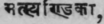
Matsyandikά is sugar-cane juice boiled down to a solid consistence but which still exudes a little fluid on drawing.
5.

Khanda is treacle partially dried or candied in white sand-like grains.
6.

Sarkara or white sugar.
7.

Sitopalά or sugar candy.
8.

Gaudi or fermented liquor obtained from treacle.
9.

Sidhu or fermented liquor obtained from sugar-cane juice.
The properties of these preparations are described separately, but it is scarcely worth while to reproduce these details here. The root of the sugar cane is considered demulcent and diuretic. Sugar and treacle are very largely used in Hindu Medicine. Old treacle is preferred to new for medicinal purposes.
Trinapancha mula.1 Under this name the roots of five sorts of grasses are used in combination. They are as follows . -
1.

Ikshu, Saccharum officinarum, Linn.
2.

Sara. Saccharum Sara, Linn.
3.

Kάsa. Saccharum spontaneum. Linn.
4.

Kusa. Poa cynosuroides, Linn.
5.

Darva. Imperata cylindrica, Beauv. Some practitioners substitute the root of Andropogon muricatus for that of Imperata cylindrica. A decoction of these roots is considered demulcent and diuretic and is largely prescribed as an adjunct to metallic medicines in gonorrhoea, strangury and suppression of urine. The following confection is also much used in these diseases.

Kusάvaleha.1 Take of the five roots above mentioned, eighty tolas each, water sixty-four seers, boil down to eight seers and strain. Then add sugar four seers, and reduce to the consistence of a thick syrup. Remove the syrup from the fire and add to it the following substances, namely, liquorice root, cucumber seeds, the seeds of Cucumis melo (karkati),bamboo-manna, emblic myro-balan, tejapatra leaves, cardamoms, cinnamon, bark of Crataeva reli-giosa (varuna), gulancha, seeds of Aglaia Roxburghiana (priyangu), and the flowers of Mesua ferrea (nagakesara), two tolas each in fine powder; stir them well with a ladle and prepare an electuary. Dose one to two tolas.
Continue to:


My Books

