


Canning Apparatus
Description
This section is from the book "Food And Health: An Elementary Textbook Of Home Making", by Helen Kinne, Anna M. Cooley. Also available from Amazon: Food And Health: An Elementary Textbook Of Home Making.
Canning Apparatus
Scales
Quart measure
A preserving kettle of good enamel ware
Plated knives
Large spoon of enamel or wood
Tablespoon and table fork
Pint and quart cans with glass tops fastened by springs
New rubber rings
Jelly glasses with covers
Cloth jelly bag
Stick on which to hang the bag
Large bowl
Boiler, in which to stand the cans
A funnel
A dipper
Old towels, or cheap cloths
Saucer and spoon for testing
Directions for work.
Thoroughly wash all the utensils just before using. Sterilize the cans and glasses by placing them in a large kettle or boiler on the stove, covering them with cold water, and allowing the water to reach the boiling point and to boil for half an hour. Covers and rubber rings should be treated in the same way.
Prepare the fruit by careful washing, picking over, paring, and cutting.
The skins may be loosened on peaches and tomatoes by pouring hot water over them.
Weigh both fruit and sugar, or measure if no scales are available. See that the cooking apparatus is in good order, that the proper heat may be continued.

Fig. 48. - A steam cooker may be a part of the canning apparatus.
Avoid rapid boiling of the fruit.
Place the cans, when they are to be filled with hot fruit, upon a towel wet in very hot wa-ter or in a pan holding an inch or so of hot water. Never hold the can or glass in the hand.
Use a dipper for putting cooked fruit into the can. A funnel is useful placed in the mouth of the jar.
Put whole fruit and halves com-pactly in the jar, using tablespoon and fork, or two tablespoons. It requires practice to do this well.
See that all air bubbles are re-moved, and fill the cans to overflowing, before putting on the glass tops and fastening on the spring. Wipe off the jars carefully, and stand them on their tops for a day in order to test the tightness of the rubbers and the fastening.
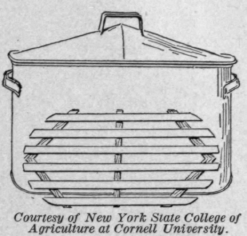
Fig. 49. - A sterilizer with a rack may be used for steriliz-ing cans and glasses.

Fig. 50. - Spring top jar.
Position of spring dur-ing cooking.
Position of spring after cooking.
After filling jelly glasses, set them at one side, and cover them all with a piece of cheesecloth until the jelly becomes firm. Then pour melted paraffin upon the jelly in each glass, and when the paraffin is cooled, put the covers on firmly.
Label the jars with the name of the fruit and the date.
Continue to:


My Books

