


Lesson 18. Breakfast Cereals Why Are Breakfast Cereals A Valuable Food?
Description
This section is from the book "Food And Health: An Elementary Textbook Of Home Making", by Helen Kinne, Anna M. Cooley. Also available from Amazon: Food And Health: An Elementary Textbook Of Home Making.
Lesson 18. Breakfast Cereals Why Are Breakfast Cereals A Valuable Food?
It is our custom to use a cereal1 for breakfast, more often than at other meals. For this reason the name "breakfast food"' is sometimes given to ground cereals. If we have learned to like these grain foods, we shall find them good for supper, and sometimes for the midday meal as well.
If you have read about life in Scotland, you know that oatmeal in porridge is one of the dishes on which the Scotch grow strong and efficient. Our forefathers found the American Indians using corn; and they themselves learned to grind the corn and to make the meal into "hasty pudding," or "mush," over the open fire, in a kettle hanging on the crane.
1 "Cereal" is derived from the Latin word "cerealis," pertaining to Ceres, the Roman goddess of agriculture.
Nowadays, we use not only the oatmeal and corn meal, but many varieties of "flaked" and rolled grains, such as wheat, barley, and even rye. We raise rice in some of our southern states; this adds one more valuable food to the wealth of our supply.
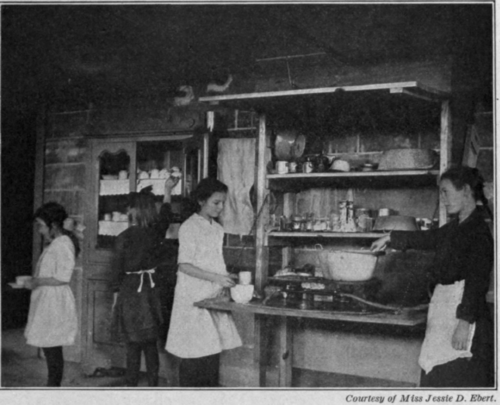
Fig. 70. - Cooking a cereal at the Big Tree School.
Why are cereals valuable to us? Recall what was said about wheat in the lessons on bread, and you can answer this question. Ground cereals are easy to prepare for eating, and this makes them welcome in a busy home.
Ready cooked cereals. The ready-to-eat breakfast cereal is a quickly prepared food for the first meal of the day. A few of these are made in clean places, but they are sometimes manufactured from poor grain. The grit that we sometimes find, shows a lack of cleanliness in the process. It is a question, too, whether or not the starch has been heated long enough, and whether these prepared cereals can be chewed enough to make the grain digestible. It is better not to give them to young children. For older people, these prepared foods add variety to the diet, but they usually cost more than the home-cooked breakfast foods, even if one counts the cost of fuel. What happens to the cereal when we cook it? Taste a grain of raw oatmeal, and you can mention several changes that the cooking makes. The raw grain is hard; the cooked grain soft. You notice a change in the flavor; and, when you look at the cooking oatmeal, you see that it is thickening as it cooks. Remember what we said about the starch in the potato, recall the way in which laundry starch thickens, and you can explain this change. These changes are brought about by moisture, heat, and time. Our great-grandmothers made "hasty" pudding, but it is better for us to take plenty of time in cooking our grains. We find two kinds of cereals on the market, - the flaked and the granular. Weigh them, and you find the granular the heavier. Which will take more water? We need enough water to soften the cereal, but not too much. If the cooked cereal is very stiff, use more water next time; if it is too thin, use less water.
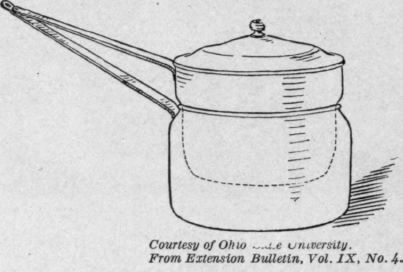
Fig. 71. - A double boiler is used for steaming cereals. The lower part should be one third full of water.
Continue to:


My Books

