


Lesson 19. The Value Of Eggs As A Food
Description
This section is from the book "Food And Health: An Elementary Textbook Of Home Making", by Helen Kinne, Anna M. Cooley. Also available from Amazon: Food And Health: An Elementary Textbook Of Home Making.
Lesson 19. The Value Of Eggs As A Food
What is there for you to learn about selling eggs and about using them at home?
It may be that you help your mother in raising poultry, and sell the eggs; and, of course, you have enough for home use, anyway.
Eggs for market. There are many pamphlets printed about poultry and eggs for profit. You may have read about the Poultry Clubs in some of our states, and perhaps you are a member. Some of these pamphlets are kept on the book shelves at the Pleasant Valley School, and the pupils try at home some of the plans suggested. The important things for poultry are a clean house, clean drinking water, good food, litter to scratch in for the winter, a "run" for good weather and for summer, fresh air, and dry feet. In a tightly shut henhouse we cannot have healthy hens that will lay. They need fresh air, but, as their bodies are about eight degrees hotter than ours, they do not need to be kept warm. The food that hens require is very much like our own; grain, some meat food, green stuff, plus something to make the eggshells hard. If you want the eggs to have the flavor that customers call "perfectly deli-cious," you must be careful to give them no table scraps that have a strong flavor. Miss Field, the young woman in Pleasant Valley who sells eggs, never gives table scraps to her laying hens. She feeds the scraps to the cockerels that will be sold for broilers.
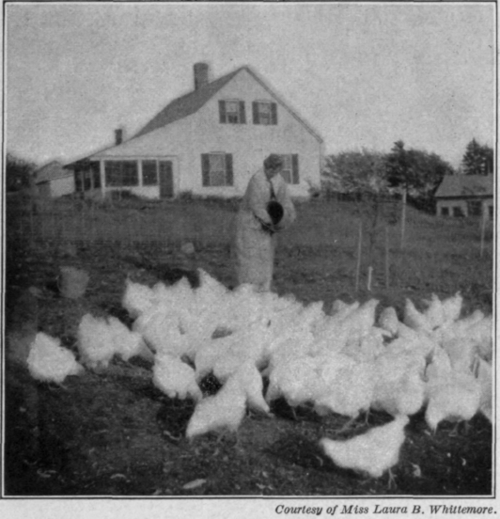
Fig. 75. - Miss Field and her flock of White Wyandottes.
Selling fresh eggs. Miss Field is very careful to send only fresh eggs to market. Her commission merchant wrote her that he never tested her eggs because he could depend upon them.
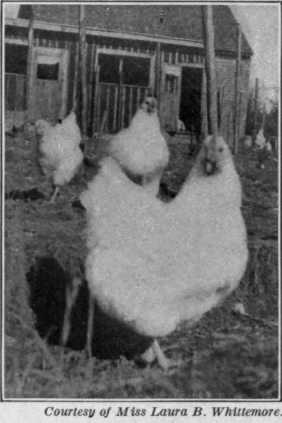
Fig. 76. - Beauty Bright. The openings in the houses are closed by shutters covered with heavy cotton cloth.
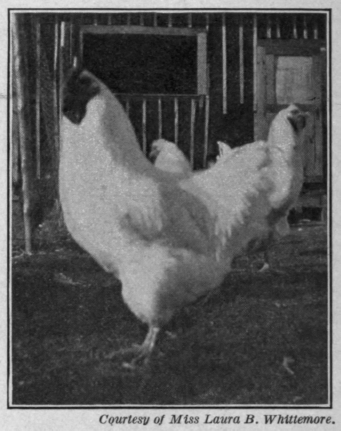
Fig. 77. - Jack, one of Miss Field's cocks, with his well-ventilated house at the back.
The Woman's Club asked Miss Field to give a talk about her poultry raising because they knew that she was practical, and that she made it pay. She warned them about taking batches of eggs of all ages to the store, and reminded them that when we buy eggs we do not like to find an old or a cooked egg or a small chicken, at thirty cents or more a dozen. Miss Field said that, if there were eggs that did not hatch in the incubator, she always opened them, and used them at home if they had not spoiled; but that she would never think of selling them. She also said selling direct to the consumer paid her better than selling on commission.
Eggs should be stored in a cool place, and on the way to market should be kept out of the sun. The picture (Fig. 78) shows that the weather is hot, because the family is using an umbrella, but there is none over the eggs !
Another important point is a clean nest for the hen. The shell of the egg is porous; so, if we wash off the dirt, we may hasten the spoiling of the egg. See if you can reason this out.
Here is one odd little point about selling eggs that Miss Field mentioned. In some places white eggs bring a higher price; in some cities, brown. You must find out about your market, and choose the kind of hen to suit. In New York City white eggs always are quoted higher than brown, and cost more at the grocery; although, when you sell direct to a customer, it does not seem to matter.
The cost of eggs. When we raise our own food it is not easy to know just what it costs in money. If we count as the money value of eggs what we can get for them, that will help us to compare them with other food, at least, and to judge whether to eat all or to sell them, or to eat some and sell some. Of course, they do take the place of ready money sometimes, and so we change them for some other kind of food. The question is, whether we do this wisely, always. Remember that the food value is as follows:
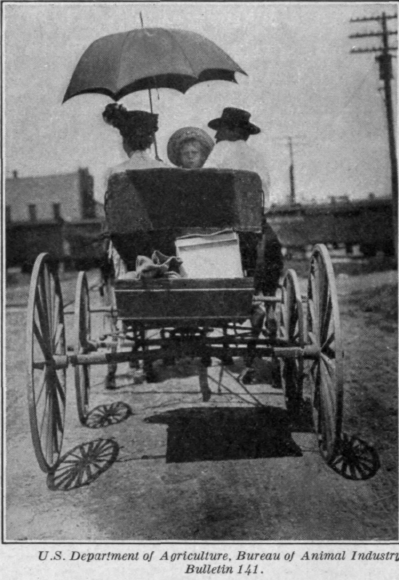
Fig. 78. - Taking eggs to market. Eggs exposed to the sun during an eight-mile drive at a temperature of 1060.
8 eggs = 1 quart good milk = 1 pound steak, about,
If the eggs are 24 cents per dozen, and the steak 24 cents per pound,1 what food value is lost if you change the eggs for the steak? Do you see what money value is lost, as well? Of course, the change gives you variety. On the other hand, when good eggs bring a high price, it is to your advantage to sell, and use fewer in cake and puddings at home. We must remember that cooked by themselves, and served in place of meat, they are valuable, especially for little children and invalids.
Food value of eggs once more. Remember that as the tiny chicken grows inside the shell, its food is there, with something taken from the shell in the way of mineral matter; and the baby chick comes from its shell, quite well grown, with energy enough to pick for its next meal. Eggs are one of the body-building foods, and for this reason are good for growing children, invalids, and people who are getting well, and who have lost flesh.
Are hard-cooked eggs digestible? Yes, if eaten properly, an egg, hard boiled or fried, is digestible. You need not be afraid to serve fried eggs; but you must remember that the hard egg and the egg with fat will take longer to digest. So, if some one at home has a rather feeble digestion, a soft or raw egg is better than the fried; and better for the little children.
1 Prices of steak per pound in a country village, Connecticut, August, 1915 : Shoulder steak, 18 cents; round, short, and sirloin, 24 cents; porterhouse, 32 cents. "Western" beef.
What happens to an egg when it is cooked? If you break an egg into a saucepan of cold water, and heat the water slowly, what changes can you see in the egg? Try it and see. There comes a change in color, first, in the white of the egg, before the water boils at all; and when the water boils, the yolk and white become hard. If you leave the egg long enough in water below the boiling point, both the yolk and white harden, the yolk being "mealy" and the white firm so that it can be cut. The cooking does not change the food value of the egg.
What do you gather from this little study of the cooking egg?
If you want an egg to be jelly-like, it must be cooked below the boiling point of water. If you like it firmer, cook it in boiling water, without being afraid that it will be indigestible. This is the latest advice from scientific people.
Beating eggs. How convenient it is that the white of egg is elastic, and that we can stretch it by beating, and can catch the air in it, and use the air for making muffins and cakes "light." The yolk becomes creamy; a bit of yolk in the white will keep the white from being stiff. Can you break an egg and drop the white in a bowl without a speck of the yolk?
There is one other important point about the yolk and the white. Do you know how the yolk hangs in the shell? By a string. Look for the string. Do you know why the hen turns the egg over? If the egg lies on one side, the yolk drops. If the egg is shaken, the string breaks, and so when we send eggs by mail or express they must be firmly packed.
Some other materials to be used with eggs for break-fast and other meals. We have spoken of dried beef in Lesson 17. If the meat for hash is rather too small in quantity, put the chopped meat with some bread crumbs in the bottom of a baking dish, break enough eggs to cover on top of the meat, and set the dish in the oven. Eggs can be made into dishes with potato, or bread or bread crumbs, with cold meat, fish, and cheese., Look back at the lesson on scalloped dishes, and plan an egg scallop for breakfast or supper, with what you have left in the house from dinner.
Eating raw eggs. A good quick lunch. An egg, swallowed whole, followed by a cracker, is a "quick lunch" that is wholesome; and it is sometimes convenient to be able to take an egg in this way. A sprinkling of salt upon it makes it taste better.
Continue to:


My Books

