


Summary On Animal Foods In The Diet
Description
This section is from the book "Food - What It Is And Does", by Edith Greer. Also available from Amazon: Food: What it is and Does.
Summary On Animal Foods In The Diet

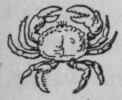
Animal Foods. Meat And Fish Chicken And Eggs Milk - Butter - Cheese
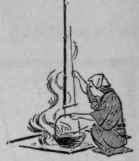
All build tissue and bone with protein and mineral salts and supply heat-energy with fats chiefly. Animal foods are all high priced, though all are not equally so.
Some fish and tougher cuts of meat are less expensive. Cooking alters animal foods significantly. It often increases their palatability but usually lessens their digestibility. Digestibility of animal foods is high - 95% and more.
Chicken - meats - eggs - fish Butter - milk - cheese.
Order of digestibility from left to right.
Time of digestion is often long, even when a food digests completely. Foods that are digested in the intestine are necessarily slow of digestion, because it takes some time for them even to reach the intestine. Eggs fail to excite a flow of gastric juice and must pass to the intestine before they are digested. Cheese too digests there, so is delayed. Eaten regularly and in small quantities with other foods it promotes their digestion; but eaten as a food intermittently it digests less generally experience shows, though laboratory experiments find it is finally totally soluble in the digestive juices. It has long been a valued work-food of Europe's workers.
Building foods are advised in less variety for the individual than vegetables, because if any do not digest, they leave dangerous waste products for the body to dispose of. Therefore those that prove fully available should be the choice in even maturity, and these not in excess of the body-need.
Development Of Humanity And Evolution Of Human Food
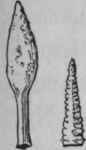
Pursuit of Food - Invasion Production of Food - Invention Manufacture of Food - Industry Preparation of Food - Science.
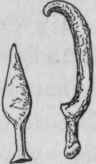
When humanity existed as one living group, human food consisted of roots, seeds, fruits. As the number of individuals increased, the means of subsistence became too limited. Humanity then began to separate into groups that scattered more and more over the surface of the earth in pursuit of food. Scientists that study human life to learn what it was like in the past, find that the ways of obtaining subsistence so differed at different times and among different groups as to mark somewhat different stages in the development of humanity itself.
Methods of production thus mark periods of growth of humanity as a whole. But development is never exactly together in any age or even fully so in any place at any time.
Humanity in its early life had not so fully emerged from its animal ancestry as to live on the ground as it now does. Humankind was then still tree-dwellers, ate roots and fruits, and began to speak articulated language. The next stage of development, marking changes that advance human life somewhat further, finds humankind eating fish and other small animals, having discovered fire, making weapons of wood and stone and using these in the hunt and war.
Neighboring groups contended for the food-sources and for the desirable locations for dwelling and hunting. They warred with one another for the actual things used in order to live, grow, develop.
Then even cannibalism was practiced.
Continue to:


My Books

