


The McClure Stove
Description
This section is from the "Blast Furnace Construction In America" book, by J. E. Johnson, Jr.. Also see Amazon: Blast Furnace Construction In America.
The McClure Stove
These two ideas underlie the design of the McClure stove, which is one of the best-known types of 3-pass stoves, built by the George W. McClure & Sons Co. This is shown in sectional elevation by Fig. 130, the horizontal section at the level of hot-blast outlet is shown in Fig. 131, a horizontal section of the checker work is shown in Fig. 132. It will be seen from Figs. 130 and 131 that gas and combustion air are introduced at the bottom, pass up through the central combustion chamber, down through the first four rings of checker work to the bottom of the stove, where they pass through arches in its intermediate wall, and so up through the exterior row of checkers to the top, where they pass out through the chimney valve and up the stack. The stove is drawn as "on blast,". so the chimney valve is shown shut and the arrows are shown in the reverse direction to that described and illustrate the course of the blast as it passes through the stove and finally out the hot-blast opening.
It will be seen that the stove contains two domes, one a spherical one resting on the intermediate wall which separates the second and third passes of the gas and one a conical one which lines the conical steel dome of the stove shell and prevents its destruction by heat. Fig. 133 shows a perspective view in section of the lower portion of this stove.
The cold-blast valve is a flat bell valve rising against a seat bolted into the top of the stove and renewable through the door in the stack in case of necessity. The cold-blast elbow directs the air up against the under side of this valve in order to keep it cool and by this means dispenses with water-cooling for it.
Figs. 134, 135. Roberts three-paw stove.
Cleaning doors for the space outside the spherical dome are provided just below the top of the cylindrical portion of the stove, while cleaning doors for the portion inside the stove dome are a short distance below these and give access to doorways through the intermediate wall which are bricked up when the stove is in operation but which may be opened to allow passage into the stove for cleaning.
Clean-out doors are also provided at the base of the stove, opposite the arches which furnish communication between the second and third gas passes.
The Roberts Three-Pass Stove
The stove, the design of Messrs. Frank C. Roberts & Co. of Philadelphia, and shown by Figs. 134, 135, 136, 137, and 138, also uses the central combustion chamber principle, but instead of having the second and third passes annular, the space outside the combustion chamber is divided into eight sections by two pairs of parallel walls at right angles to one another whose distance apart is about the same as the diameter of the combustion chamber. This makes four square spaces at the opposite ends of the two principal axes of the stove, and four triangular spaces between these, as shown by Fig. 137.
Figs. 136, 137. Roberta three-pass stove.
The intermediate dome of the stove, instead of being a segment of a sphere, is cross-shaped in plan, the tops of the two crosses being arched over with intersecting arches. The gases of combustion pass up through the central combustion chamber, then down through the four square areas within and under this cross-shaped intermediate dome, to the bottom, then up again through the triangular areas, and so to the stack. The stove, instead of being built of circle bricks and straight bricks laid on the flat, as is the case with the McClure stove, is built up of tiles set on edge and interlocking with one another, as shown by the isometric view, Fig. 138. The checkers are square, instead of having radial ends and circular sides, as in the McClure stove.
This design is used so as to control the gas current to some extent and prevent its traveling too much on one side or another, as it has sometimes been claimed to do in the case of the annular passages of the McClure stove. The cold-blast valve and inlet pipe are necessarily located at the top and the current of air is directed against the chimney valve to keep it cooled as in the McClure stove.
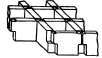
Fig. 138. Checker work for Roberts three-pass stove.
Continue to:


My Books

