


37. Breast Or House Derricks
Description
This section is from the "Safety In Building Construction" book, by The Travelers Insurance Company Hartford, Connecticut. Also see Amazon: Safety In Building Construction.
37. Breast Or House Derricks
In building construction, derricks of this type are principally used for setting stone. They are usually operated by hand, and as a rule are not equipped with brakes. Mechanical brakes can easily be provided, however, and this should be done in every case. The usual method for braking a breast derrick, when no mechanical brake is provided, is by means of a "bull-tail." This consists merely of a length of rope, which is wrapped about the shaft several times; one end is then secured to the frame of the derrick, the other end, or "tail," being held by a workman when lowering a load. By pulling upon the rope sufficient friction may be brought upon the shaft to stop and hold loads of considerable weight. The most efficient bull-tail is made by separating the strands of a 3-strand rope, and braiding them together so as to form a flat surface to bear against the shaft The men sometimes have their hands and fingers crushed when using these bull-tails, and the rope sometimes breaks and allows the load to drop. For these reasons, among others, we strongly prefer special mechanical brakes, as already explained.
A hole should be drilled in each end of the gear shaft, outside of the corresponding handle or operating lever, and a cotter pin should be placed in each hole so that the handle cannot work off from the shaft. Accidents often result from neglect of this precaution. Nails, pieces of wire, and other similar objects are sometimes used in place of cotter pins, but this should never be allowed. When lowering loads the handles should always be removed, so that no one can be struck by them.
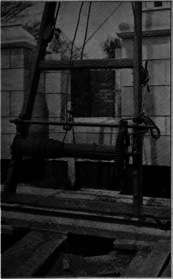
Fig. 55. A Breast Derrick with Unprotected Gears.

Fig. 56. A Row of Breast Derricks Used for Setting Stone.
(These derricks are guyed from the front as well as from the back, as required by good practice.
Gear guards and mechanical brakes are lacking, however).
As a rule, breast derricks are guyed from only one direction, and under ordinary circumstances this would be sufficient. When moving the derricks, however, they are straightened up, and are then likely to tip over backward; and the same trouble will occur if a heavy object should drop on the guys, or if the hoisting rope should suddenly break while raising a load. To guard against a possibility of this kind, a front or head guy should be secured to the derrick and to some fixed object on the floor above. If there is no higher floor, the derrick should be made secure against falling back-ward by some other method.

Fig. 57. Broken Boom of a Steel Derrick.
All breast derricks should be set on heavy planks or timbers, of sufficient length to extend from one girder or floor beam to another. They should never be allowed to rest directly upon floor arches, - this counsel being specially important when the arches are newly laid. The base of each derrick should be secured in a suitable manner by means of ropes or cables, or by timber bracing, so that it cannot become displaced.
38. General Precautions In The Use Of Derricks
When leaving the work, either for the night or at any other time, it is advisable to lay the derrick booms down, if possible, or to "top them up" (that is, raise them into a vertical position). This will prevent the booms from swinging about and fouling cables or doing other damage, in case of high winds. They should also be secured by guys or otherwise, if the conditions are such that this appears to be necessary or desirable. At least as often as every other day, all parts of every derrick should be inspected, and the moving parts thoroughly lubricated. Special attention should be given to the gudgeon pin at the mast head, and to the bearing at the foot of the mast, for these will wear rapidly if allowed to run dry. Every derrick should be equipped with adequate and effective mechanical brakes, and the brakes should be tested frequently to make sure that they are in good order. All hand-operated derricks should also have suitable ratchets and pawls. The loads should be lowered slowly, and never at a rate of speed exceeding the hoisting speed; when depositing the loads special care should be taken to avoid shocks and jars. Provide substantial and effective guards for all exposed gears, and for all projecting set-screws, keys, and other dangerous moving parts.
Continue to:


My Books

