


VI. Scaffolds. 39. Introductory
Description
This section is from the "Safety In Building Construction" book, by The Travelers Insurance Company Hartford, Connecticut. Also see Amazon: Safety In Building Construction.
VI. Scaffolds. 39. Introductory
Only a few general suggestions with regard to scaffolds can be given in this place, because many different types are used, and there is so much to be said about them that an entire volume would be required to treat the subject adequately. The Engineering and Inspection Division of The Travelers Insurance Company has made a special study of scaffolds, however, and has published a large and exhaustive treatise on the subject.
Scaffolds for building construction include the forms used by bricklayers, masons, carpenters, and artisans of certain other classes. The types that are used chiefly by bricklayers and masons may be divided into three main classes which may be designated, according to their respective natures, as "pole scaffolds," "suspended scaffolds," and "outrigger scaffolds".
40. Pole Scaffolds
Pole scaffolds are by far the commonest of the three types just mentioned. They are of two general kinds: (1) the bricklayers' pole scaffold, and (2) the independent pole scaffold. With the bricklayers' pole scaffold a single row of poles is used and these poles are set solidly on the ground at a distance of not more than 4 ft. 6 ins. from the outer face of the wall. The weight of the platform on which the men stand while at work is supported by ledgers (also called stringers or running strips) which run parallel to the wall of the building and are nailed to the poles, and by putlogs (colloquially known as putlocks, puds, and spuds). The putlogs run perpendicularly to the wall, and one end of each rests upon a ledger, while the other end is supported by the wall, a brick being omitted from the face course for this purpose, so that the end of the putlog may enter the wall and have a proper bearing.
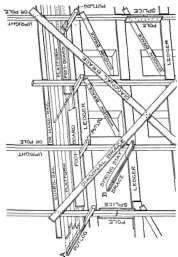
Fig. 58. General Scheme of a Bricklayers' Pole Scaffold.
(At A and B, respectively, the putlog and the spring-stay brace enter the wall of the building).

Fig. 59. Design for an Independent Pole Scaffold.
The independent pole scaffold (also called the masons'scaffold) is quite similar to the bricklayers' pole scaffold, with the essential difference that no part of it is supported by the wall. Two rows of poles or uprights are used, one of which sets near the wall, while the other stands far enough away from it to allow a proper space for the platform. Ledgers or running strips are nailed to both sets of poles, but the cross-pieces that run at right angles to the wall and support the platform planks are called bearers, bearer-bars, or cross-bars, instead of putlogs. Figs. 58 and 59 show the general arrangement of the bricklayers' pole scaffold and the independent pole scaffold, respectively.
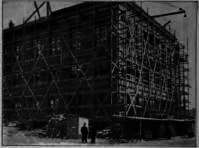
Fig. 60. A Well-braced Independent Pole Scaffold.
Pole scaffolds are often built of utterly unsuitable material, and erected in defiance of constructive principles that would be considered supremely important in a permanent structure. Great care should be given to their design and construction, and a plentiful amount of first-class lumber should be used in erecting them. Pole scaffolds often fail for lack of proper bracing, and men often fall from them because guard-rails are omitted or other important safety features are neglected.
Continue to:


My Books

