


41. Suspended Scaffolds
Description
This section is from the "Safety In Building Construction" book, by The Travelers Insurance Company Hartford, Connecticut. Also see Amazon: Safety In Building Construction.
41. Suspended Scaffolds
The suspended scaffold, as used in construction work and in making repairs and alterations about buildings, consists essentially of a platform that is hung from overhead supports (or "thrust-outs") by means of wire cables, and which can be raised with more or less ease as the work proceeds, by winding up the suspension cables so that the bricklayers may always stand at a convenient height with respect to the part of the wall upon which the work is being done.
The two types of suspended scaffolds now most generally used differ from each other mainly in the location of the machines by which the suspension cables are wound up, and in the means by which these machines are operated.
With one type, which we shall call the "platform" type, the winding drums and their attachments are secured to the platform itself, and move with it when it is raised. These platform machines wind up the suspension cables at their lower ends, and are operated from the platforms by means of levers or cranks.

Fig. 61. Suspended Scaffold, with Platform-type Machines.
With the other form of machines, which we shall call the "overhead" type, the drums and their attachments are located high overhead and are mounted upon thrust-outs that are secured to the framework of the building. These overhead machines wind up the cables at their upper ends, and are operated from the scaffold platform by means of endless manila ropes running over pulleys or sheaves connected with the drums, and hanging down freely to the lowest level that the platform will occupy in the course of the work.
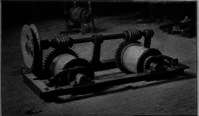
Fig. 62. An Overhead-type Scaffold Machine.
This brief description, together with the accompanying illustrations which show the two types of machines mentioned, will give a general idea of the construction and installation of suspended-scaffold machines. Detailed information concerning them is given in the large treatise on scaffolds, to which we have previously referred.

Fig. 63. Supports for Overhead-type Machines.
We may profitably direct attention to several points that are of particular importance in securing safety in the use of suspended scaffolds. Special attention should be given to the selection and care of the cables used for supporting the platforms. They should be not less than half an inch in diameter, of steel wire, and should have an ultimate tensile strength of not less than five tons. "Standard hoisting rope," galvanized to order, is usually recommended by the builders of scaffold machines, and galvanized cast-steel running rope, out of ordinary stock, should not be used.
Particular care should be exercised in securing the ends of the cables; and if the method is employed of fastening the ends into sockets by running in melted metal, the work should be done by an experienced and careful man. The cables and their fastenings should be thoroughly inspected, from time to time, to see that they remain in good condition; and if there is any question whatsoever about their absolute safety, they should be replaced at once.
The suspension cables upon scaffold machines of either type are usually from 75 to 100 feet in length, and therefore in the erection of a high building it is necessary to change the position of the thrust-outs to which the upper ends of the suspension cables are secured, every time the height of the wall has increased by approximately one cable length.
These shifts should be made with special care, because accidents are quite likely to occur in this part of the work unless it is superintended by a person who understands it thoroughly. The builders of scaffold machines often specify, in leasing them, that they shall be notified when it is necessary to make the shift, so that they can send trained men of their own to supervise the work; and we strongly recommend that this be done whenever it is feasible.
The men who have to secure or shift the thrust-outs, and particularly those who have to adjust or inspect overhead machines or attach the upper ends of the cables of platform-type machines, must crawl out upon the thrust-outs, and be exposed thereby to death from falling. A stout life-belt should therefore be provided for every man who must go out upon a thrust-out, - the belt being securely attached to a strong, new rope, the end of which should be made fast to some part of the framework of the building (preferably not the thrust-out itself) before the man is permitted to go out upon the thrust-out. The rope should only be long enough to enable the man to do his work without inconvenience; because if there is a needless amount of slack, the fall of the man would subject the rope to a snapping stress of unnecessary severity, and it would be more likely to break than it would be if it were shorter. (See also paragraph 68).

Fig. 64. One of the Hazards Connected with the Use of Suspended Scaffolds in Building Operations.
No man should be permitted to go out upon a thrust-out, except for some definite object the attainment of which appears to be worth the chances that are involved; and even in this case no one should be permitted to do so except the man or men designated for the purpose by the foreman in charge of the work.
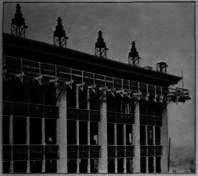
Fig. 65. A Well-constructed Outrigger Scaffold.
Continue to:


My Books

