


28. Protection Of Signal Cords
Description
This section is from the "Safety In Building Construction" book, by The Travelers Insurance Company Hartford, Connecticut. Also see Amazon: Safety In Building Construction.
28. Protection Of Signal Cords
It is extremely important to guard the cords used for signaling to the hoisting engineer, in such a manner that nothing can accidentally strike them and cause the gong to ring. It is often possible to run them through suitably arranged two-inch pipes firmly secured in place and leading from the hoisting engine to the signalman's station; or they may be boxed in on each floor to a height of not less than 7 feet above the floor. Cords with wire cores should be used for signaling. There should be no knots in them, and when it is necessary to lengthen them the ends should be carefully joined by smooth, strong connections. Inspect the cords frequently for the purpose of discovering worn or frayed places in them, and add new lengths if any defective portions are found. The breaking of a signal cord at a critical moment may result in serious injury or extensive property damage.
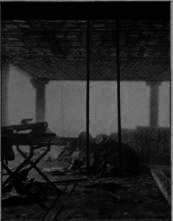
Fig. 22. The Signal Cords are Here Inclosed in Iron Pipes.
29. Hoisting Cables And Sheaves
It is equally important to guard the hoisting cables at all points where persons or materials might come in contact with them. When the cables pass along near the floor level they not only present a tripping hazard, but while they are in motion there is also danger that the clothing of passing workmen may be caught. The danger is greatly increased when two hoisting cables that run in opposite directions are placed close together.
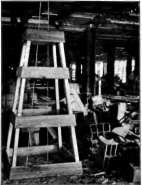
Fig. 23. Protection for the Signal Cords.
Provide suitable inclosures for all horizontal or inclined hoisting cables that are less than 7 feet above the floor level, and also inclose all vertical cables to a height of 7 feet above each floor. Take special care to guard cables that pass over stairways, and over or through passageways, and near ladderways. Workmen carrying planks, boards, and other materials are likely to be injured by having their loads caught by the moving cables, unless efficient protection is provided.
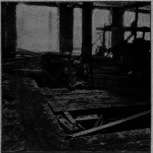
Fig. 24. An Approved Method for Protecting Lead Blocks and Cables.
Take special precautions to prevent cables from chafing or rubbing against steelwork, floor tiles, and other objects. Cables that pass through floors composed of tile or concrete should be protected by wooden boxes about 8 inches square, set in the floors.
Inspect all cables frequently and thoroughly, and replace any that are found to be dangerously worn or frayed, or partially broken. With hoisting apparatus it is not always practicable to use sheaves as large as a proper regard for the relation between the size of the sheaves and the diameter of the cables would require, and the cables are therefore subject to bending strains much more severe than they would experience if the cables and sheaves were correctly proportioned. This results in shortening the useful life of the cables, and makes careful inspection exceedingly important.
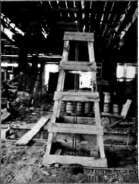
Fig. 25. An Effective Guard for Hoisting Cables.
(A similar guard, at least oeven feet high, should be installed on every floor. The framework should be covered with wire mesh, however, so that the cables cannot be touched by hand).
Blocks that were originally designed for use with manila ropes are sometimes used with wire cables. This is a bad practice, however, and should be prohibited, because the cables often do not fit the grooves in the sheaves, and both the sheaves and the cables are therefore subjected to undue wear. Blocks that are used to change the direction of the cables, and that are located near the floor or in other exposed places, should be inclosed or otherwise effectively guarded so that nothing can be drawn into them.
Provide ample and suitable lubrication for all sheaves and pulleys, and see that they are properly alined so that the cables will not run off. Whenever possible, the blocks should be equipped with self-lubricating cast-steel sheaves. Test all cast-iron sheaves and pulleys frequently with a hammer, to make sure that none of them are cracked or broken.
Continue to:


My Books

