


30. Material Hoists
Description
This section is from the "Safety In Building Construction" book, by The Travelers Insurance Company Hartford, Connecticut. Also see Amazon: Safety In Building Construction.
30. Material Hoists
All material-hoist openings should preferably be tightly inclosed throughout their entire length, and the entrances to them at each floor should be protected by vertical-lift gates of ample height, which should always be kept in position. When this is not practicable, the sides of the hoistways not used for entrances should be inclosed at each floor to a height of at least 8 feet, with wire netting of not less than No. 10 United States standard gage, and having openings not greater than 11/2 inches each way, and preferably smaller. When two material hoists are installed close together, similar protection should be provided between the hoistways, as shown in Fig. 26. The entrance sides should be protected by bar-guards of sound, strong wood, not less than 2 in. by 3 in. in section, placed at a height of 3 feet above the floor, and at a distance of 16 or 18 inches from the edges of the openings. Each bar should be bolted to the hoist fencing at one end by a single bolt on which the bar may swing, and a hook or wooden button should be provided, to hold the bar up out of the way while loading or unloading the hoist. A slot should be provided at the opposite side of the hoist fencing, to receive the end of the bar when it is lowered to its normal position. Fences or barricades of slat construction are sometimes used for hoisting inclosures, but these are less desirable than the other forms of protection already described, because there is danger that small objects may fall between the slats. If inclosures of this kind are used, the slats should be spaced not more than 4 inches apart, and the fences should extend to a height of at least 8 feet above the floors. Bar-guards should be provided, similar to those recommended for use with the wire-mesh barricades.

Fig. 26. An Approved Type of Material-hoist Fencing.

Fig. 27. An Unguarded Shaftway for a Material Hoist.

Fig. 28. An Unprotected Material Hoist and Shaftway.

Fig. 29. Dangerous Hoistway Openings.
The guide rails of the hoists should be kept rigid and in correct alinement at all times. This is a point to which proper attention is seldom given, and yet it is most important.
Install protective coverings above the overhead work of all material hoists, to prevent objects from falling down the hoistways, - these coverings to be removed and replaced whenever the increased height of the building necessitates changing the location of the overhead sheaves of the hoists.
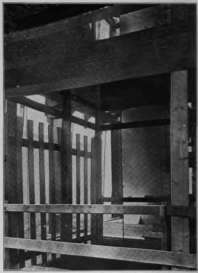
Fig. 30. Protection, near the Ceiling, about a Hoistway.

Fig. 31. Showing the Danger of Working without the Protection Illustrated in Fig. 30.

Fig. 32. Protective Covering for the Overhead-work of a Material Hoist.
Also, install framed covers of planking or heavy wire mesh on the crossheads of all material hoists, to prevent falling objects from striking workmen when loading or unloading the hoists. These covers should be made in two sections, and each of them should be secured to the crosshead by hinges, so that either section or both may be raised when hoisting long material.
When using a hoist for transporting long material such as boards, planks, and pipes, the several pieces should be securely fastened together, and the whole made fast to the hoist in such a way that no part of the load can fall off, or project beyond the sides of the hoist and be caught; and when hoisting this long material to the upper part of the building care should be taken to avoid jamming it into or against the overhead sheaves, or the protective covering over the hoistway. Heavy and massive materials, such as beams and building stones, should be hoisted outside of the buildings whenever this is feasible, and never through stairway openings.

Fig. 33. Overhead Covering for the Cage of a Material Hoist.
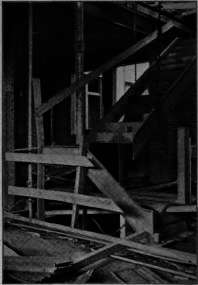
Fig. 34. An Iron Stairway, Broken by a Falling Load of Material.
Provide suitable guides or blocks on all hoists upon which wheelbarrows are transported, to hold the barrows securely in place. (See also paragraph 66).
The men should never be allowed to stand or ride on the material hoists; many serious accidents have resulted when this caution has been neglected. Contractors and foremen should refrain from riding upon the hoists, not only on account of the danger, but also because it is easy to set a bad example to the men, who can see no reason why they should not ride, if their superiors consider it safe to do so.
Continue to:


My Books

