


48. Stairways
Description
This section is from the "Safety In Building Construction" book, by The Travelers Insurance Company Hartford, Connecticut. Also see Amazon: Safety In Building Construction.
48. Stairways
The stairways should be installed as rapidly as the progress of the work will permit, - temporary stairways being installed in preference to ladders, whenever practicable. Stairway openings should be effectively guarded by toe-boards, and all treads, risers, and railings, whether permanent or temporary, should be of sound, strong material, firmly secured in place. No openings should be left through which objects of any kind may fall, and the stairs should be kept free from bolts, nuts, rivets, small pieces of brick or tile, and other similar objects that might cause the men to fall. Storing material on stairways should be strictly prohibited, and an earnest effort should be made to keep every stairway entirely free from obstructions, so that a safe passage will be assured. To prevent falls that might be caused by tripping, install a suitable platform or landing wherever a riser at the top of the stairway projects above the floor arches or the temporary floor levels. Be sure that ample light is provided on all stairways during the entire working period.
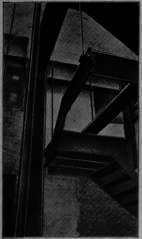
Fig. 75. A Dangerous Stairway.
49. Runways
All runways should be substantially constructed, and effectively braced or otherwise supported, to prevent bending, swaying, or vibration. Single-plank runways for wheelbarrows should not be used. It is far better to make the runways at least three planks wide, because this gives a sufficient width for most purposes, and it also affords a good track for the wheel of the barrow, which then has a full plank for its support instead of having to travel along a crack, as is the case when two planks are used. Runways on which wheelbarrows or trucks have to pass one another should consist of from five to seven planks. All runways that are four feet or more above the ground should be provided with substantial handrails, and cleats should be nailed to them, whenever necessary, to afford a firm footing for the workmen. A clear space of moderate width, free from cleats, may be left in the center, if necessary, for the wheels of the barrows. Runways that are six feet or more above the ground should also have foot-boards along their sides. See that all runways are kept free from projecting nails and screws, and also from slivers and splinters. Sand, stone, and other materials which would interfere with the free movement of wheelbarrows on the runways, should be removed as often as may be necessary. If the planks of the runway are laid so that they lap over each other, a beveled piece of wood, running crosswise with respect to the runway, should be fastened against the ends of the overlapping planks. The piece so used should be at least nine inches wide, and it should be of the same thickness as the planks on one side, and be thinned down nearly to an edge on the other side. If the planks of the runways are laid flush with one another for the purpose of avoiding overlapping, the supports upon which they abut must be of ample width to insure safety, and in such cases it is also important to nail the planks firmly to the cross-pieces upon which they rest.
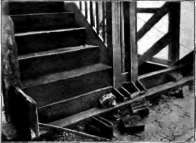
Fig. 76. A Dangerous Condition on a Stairway.
(This condition is common in buildings under construction. Fig. 77 shows bow it may be remedied).
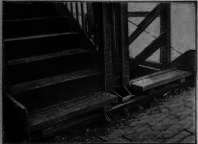
Fig. 77. Temporary Treads for a Stairway.

Fig. 78. A Stairway which Invites Accidents.
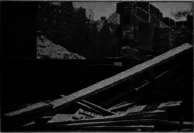
Fig. 79. A Steep Single-plank Runway.
Continue to:


My Books

