


VIII. Steelworkers. 50 Erecting Gangs
Description
This section is from the "Safety In Building Construction" book, by The Travelers Insurance Company Hartford, Connecticut. Also see Amazon: Safety In Building Construction.
VIII. Steelworkers. 50 Erecting Gangs
The work of erecting the steel framework of a large building is extremely hazardous, and there is little that can be done to safeguard the men in some of the operations. Dependence must mainly be placed, in such cases, upon the caution, skill, and good judgment of the men themselves. They should never be allowed to expose themselves to danger unnecessarily, nor to ride upon loads, nor on the hooks, cables, or slings of the hoisting apparatus, nor to slide down ropes or cables. Proper ladders should be used for giving access to the work, wherever possible, and the men should not climb up nor slide down on columns. Work should be discontinued during severe storms and high winds, and also when the steelwork is slippery from ice or frost; and the men should not be allowed to work in exposed places more than a reasonable number of hours, nor to become unduly fatigued.
Steelworkers should avoid wearing shoes with the soles and heels nailed on, because nails are likely to cause the men to slip when walking about on the steel beams. Leather shoes with rubber soles and heels are recommended. It is an almost universal custom among steel-erectors to wear gloves while at their work, and many cuts and bruises on the hands are thus prevented. The gloves should not have stiff gauntlets, however, and it is better to avoid gauntlets altogether, because they may catch upon projections, and thereby cause the men to lose their balance. They may also catch upon tools that are lying about, and cause the tools to fall.
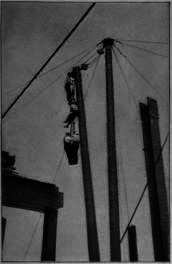
Fig. 80. Steelmen being Lifted to their Work.
Riveters and heaters need the protection afforded by gauntlets, to prevent burns on the lower parts of the arms caused by hot scale and sparks. The foregoing rule does not apply to these men, therefore; but the men should be mindful of the increased possibility of accidents due to the wearing of gauntlets, and should exercise correspondingly greater care.
51. Erecting Floors
Cover over the erecting floor tightly so that there will be no openings left through which tools, bolts, rivets, or other small objects may fall. The men should not leave drift pins, dollies, wrenches, or other objects lying on beams or in other elevated positions. (See also paragraph 63).
When leaving the work care should be taken to secure all objects, or to place them where they cannot be disturbed by the wind. Rivet-heating forges should receive attention in this respect, and empty rivet kegs, paint pots, and other similar objects should be safely stowed.
52. Rivet-Heaters' Platforms
Lack of care is often noticeable in the location and erection of the platforms for rivet-heaters' forges. These platforms should be at least 13 feet long and 8 feet wide, should be provided with toe-boards, and should be located as near as possible to the point where the riveting is being done. The planks should also be laid closely together, so that nothing can fall between them.
53. Throwing Rivets
Rivets should never be thrown across shaftways or toward the outside of a building. When riveting is being done on an outside wall the rivets should be passed by hand or should be thrown as nearly as possible in a direction parallel to the wall. Buckets with flaring sides are not recommended for catching rivets, because the rivets are more likely to bound out of them than out of buckets or cans with straight sides. If metal buckets, pails, or cans are used, false bottoms of soft wood should be placed in them, to prevent the rivets from rebounding. It is often possible to pass rivets for considerable distances through suitably-arranged iron pipes, and this should be done, if feasible, whenever the forges are located some distance away from, and above, the place where the riveting is being done. (See also paragraph 44).
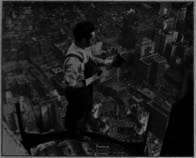
Fig. 81. A Workman Taking Unnecessary Chances.
(Photograph by Brown Brothers).
54. Pneumatic Hammers
The snaps and plungers of pneumatic riveting hammers sometimes drop out, and they may even fly out with considerable force, and injure persons. To prevent this, one end of a piece of No. 8 annealed iron wire should be secured around the snap and the other end around the handle of the hammer, in such a way that there will be sufficient slack to permit the hammer to operate properly, but not enough to allow the snap to drop out of place.
55. Care Of Air Hose
Riveters should carefully avoid allowing the air hose to become wrapped about their legs or other parts of their bodies, because it is likely to twist and turn, and may cause them to lose their balance and fall. The playing of so-called "practical jokes" with compressed air should be absolutely forbidden, because severe injuries are often caused in this way.
56. Handling Structural Steel
When hoisting a load of structural steel from the street, a rope should be attached to it by which a man stationed on the street may guide the load until it reaches the level at which the steel is to be erected. The load should then be "boomed over," and one or more men on the erecting floor should take hold of the guide rope and pull the load into the proper position. In this way it is possible to avoid, in large measure, the danger to which steel-workers are exposed when they have to push or pull the loads into position while standing on narrow beams, or in other places where the footing is insecure.
Continue to:


My Books

