


Plumbing Fixtures. Part 4
Description
This section is from the book "A Working Manual Of American Plumbing Practice", by William Beall Gray, Charles B. Ball. Also available from Amazon: Plumbing.
Plumbing Fixtures. Part 4
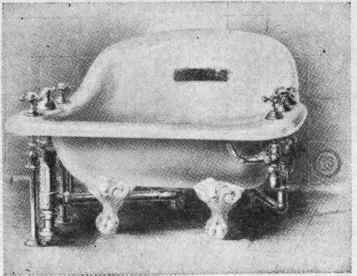
Fig. 1.7 Enameled-lron Sitz Bath with Complete Fittings.
Courtesy of Crane Company, Chicago
Drinking Fountains. Drinking fountains are now frequently used in stores, schools, and residences, the various fixtures adapted to such installations being readily obtainable. The basins or drip-slabs for public indoor fountains, are often cut to order by the manufacturer; and the cooling and faucet arrangements are provided by the plumber. Porcelain, enameled-iron, and marble fountains of stock designs are made. Most municipal regulations for schools require rough-like basins to be provided with sanitary drinking cups, Fig. 19, to prevent infection. The fixture shown in Fig. 20, consisting of solid porcelain, in which the drain-slab and the high back constitute a single piece, is of recent design, presents an excellent appearance, and has the advantage of being easily kept in immaculate condition. The two fountain drinking cups are built low to give a plentiful flow without spattering, and the compression cocks below are easy of manipulation.
One device which serves well for common use, is the ordinary lavatory, provided with a stiff perforated bottom fitting extending well up toward the top of the bowl. This, with a proper faucet on the slab, and a cup-chain fitted to the extra faucet-hole, makes a useful but not attractive fixture. Recessed porcelain and enameled fountains designed to be placed in wall niches, and having concealed connections, as suggested by Fig. 21, are neat, and require very little room outside the finished wall line. Countersunk slabs with strainer waste, with back either integral or separate, as design or material dictates, are made in marble and porcelain. Marble fountains are adaptable to any location, because the slab and back can be cut to any shape or dimensions preferred. The fountain proper, faucet, cup, and pipe waste connection, with strainer, are all that is supplied by the makers.
A type of fountain shown in Fig. 22, is provided with a flowing jet of water from which one can drink without placing the lips in contact with any metal surface. The small central bowl or cup is constantly submerged and cleansed in the stream of water which passes outwardly over it, thus avoiding the danger incident to the common use of the same drinking cup by many persons. The surface does not afford lodgment to possible germs of disease, which are most liable to transmit contagion when allowed to become dry and adhere to a surface. In fact, city ordinances require that all public drinking fountains be of the sanitary type.

Fig. 18. Porcelain Foot Bath with Standard Fittings.
Courtesy of Federal-Huber Company, Chicago.
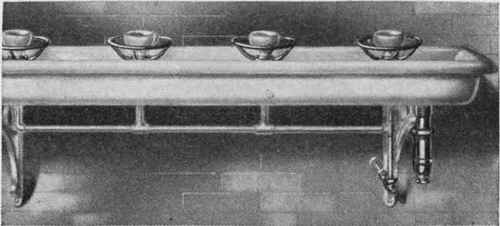
Fig. 19. Enameled-Iron Fountain Receptor with Self-Closing Heads Particularly Designed for Schools and Other Public Places.
Courtesy of Crane Company, Chicago
Lavatories. Lavatories are made from porcelain, enameled iron, marble, and onyx, in numerous patterns. The number of designs is so large that they are best understood if considered in the classes into which they may be divided. In marble and onyx fixtures, the slab, back, and bowl are necessarily separate pieces. In any but very accurate fitting and erecting, the unavoidable joints soon invite the accumulation of dirt. Poor workmanship, settling, abortive countersinks, and faucet bosses not cut free within the countersink, have in many cases brought slab types of basins into unjust repute, or, at least, have given basis for strong talking points against them, which have been effectively so used. If made and installed in the most approved manner, these styles, properly cared for, offer little reason for severe criticism. One fact, however, must be borne in mind when comparing marble with other materials used for plumbing fixtures - namely, that marble is not an impermeable stone. Nearly all marbles (excepting only the very hardest and most dense) are quite absorbent, and depend upon the surface finish given to the slab to resist the entrance of liquids into the body of the stone. As soon as the surface becomes roughened by wear, the greasy and acid wastes penetrate into the pores, and the marble becomes permanently discolored. Only a limited observation of the bad condition of marble floors or urinal slabs which have been subjected to use for a few years, is necessary to confirm this statement.
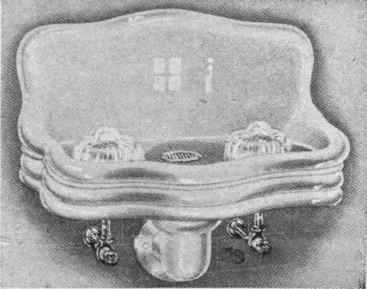
Fig. 20. Double Vitreous China Fountain with Integral Back and Separate Trap Shield
Courtesy of Federal-Huber Company, Chicago
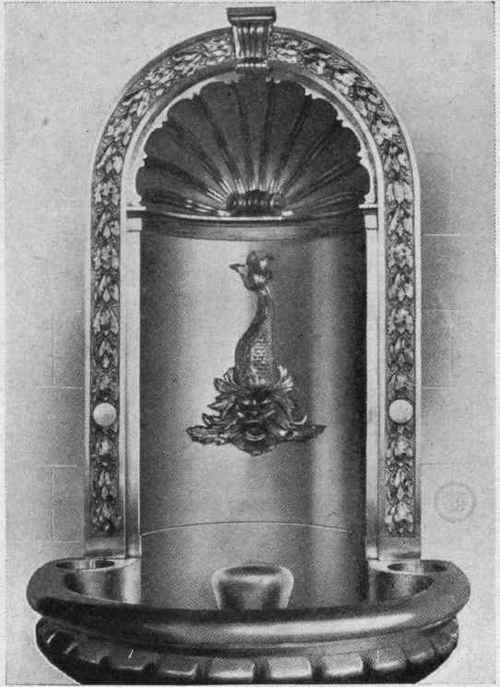
Fig. 21. Cast Bronze Recessed Drinking Fountain Courtesy of Crane Company, Chicago.
Ordinary Tennessee, Veined Italian, Hawkins County Tennessee, and Statuary Italian marble, range in cost in the order mentioned. Fancy imported marbles and onyx are much more expensive. Tennessee marble varies in color from grayish brown to very dark reddish brown, uniformly intermixed with light specks. The Hawkins County marble is bright reddish and white-mottled. All the ordinary materials are cut in stock sizes, and may also be had to order, like the more costly, in any size and shape desired The type with apron or skirting, has legs, and the slab is supported by the skirting. When supported by brackets or leg-brackets, the strength of the slab is alone usually depended upon for support between the bearings. If brackets are properly spaced (as far from the ends as fittings will permit will never be too close together for any ordinary size), the weight is so balanced as to leave very little sagging strain on the slab.
Continue to:


My Books

