


Economizing Pipe
Description
This section is from the book "Plumbing Estimates And Contracts", by J. J. Cosgrove. Also available from Amazon: Plumbing estimates and contracts.
Economizing Pipe
When plumbing details of the roughing-in of various toilet rooms form part of the working drawings in a set, there is not much choice left the plumber but to comply with the requirements. When, however, leeway is given him to lay out the work for himself, as is the case in 99 per cent. of plans now prepared, simplicity in design should be his aim; for every foot of pipe that is not absolutely necessary to an installation, instead of improving the work, is actually detrimental besides unnecessarily increasing the cost. This is well shown by the two following examples: Fig. 23 shows the layout for nine lavatories actually installed according to this design. To rough-in this work a number of angle fittings, such as 1/8 bends, and Y branches, were used which require more care and time to measure and install than do equal amounts of pipe made up with right-angle fittings. As the angle fittings in this ease did not contribute one bit to the efficiency of the installation their use was unnecessary. Owing to the height that the vents are carried before intersecting the main stack, the workmen had to build a scaffold, and in addition to the time wasted in this labor the extra time required to do a certain work on a staging must be considered. Again, more fittings and a greater amount of pipe were used to install this work than would be required to install it according to Fig. 24, where all the work is easily accessible from the ground and in which the installation would be equally sanitary and far less costly. It will readily be seen, therefore, that of two men estimating on this installation the one figuring on doing the work according to Fig. 24 would effect quite a saving over the one estimating to do the work according to Fig. 23. Study the layout of all the work you have to install, cultivate the practice of laying out on paper the roughing-in for each group of fixtures, and change, rearrange and alter the drawing until the very best arrangement, requiring the least amount of pipe, fittings and labor, is obtained. After a time, the planning of work will become a pleasure and the saving effected will go a long way toward securing work.
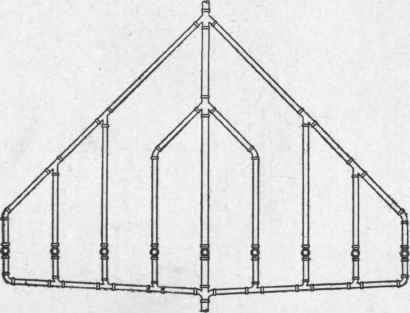
Fig. 23.
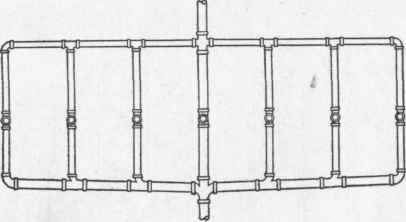
Fig. 24
Continue to:


My Books

